Archive

2025

Browsing

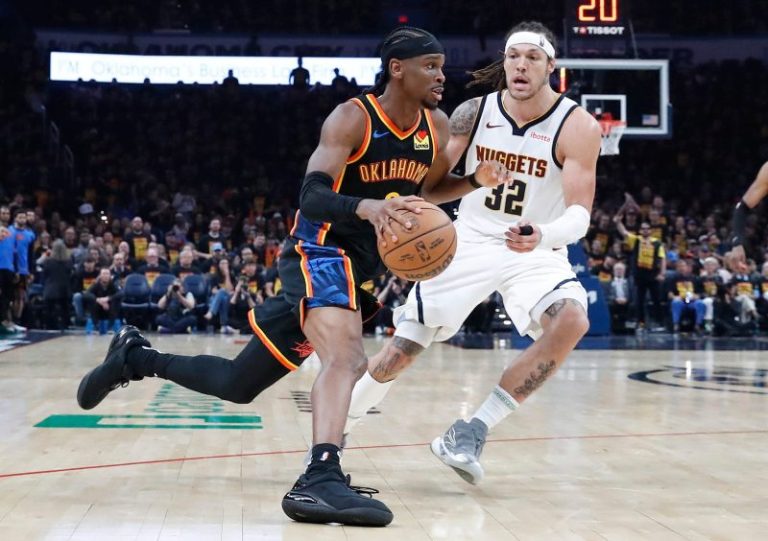
Coming off a second-place finish in last season’s MVP voting, Oklahoma City Thunder star guard Shai Gilgeous-Alexander had 28 points, eight assists, seven rebounds, three blocks and two steals in OKC’s 2024-25 season-opening victory against the Denver Nuggets.

Two games later, he had 35 points, 11 rebounds, nine assists, three steals and three blocks. Two games after that, 30 points, and in the Thunder’s 11th game, he scored 45 points, delivered nine assists and had five steals in a 134-128 victory against the Los Angeles Clippers.

Gilgeous-Alexander got off to a great start. He kept playing like an MVP, and Oklahoma City kept winning.

The Thunder finished 68-14 and earned the No. 1 seed in the Western Conference, and Gilgeous-Alexander is one of three finalists for MVP after averaging a league-best and career-high 32.7 points, 6.4 assists, 5.0 rebounds, 1.7 steals and 1.0 blocks and shooting 51.9% from the field, 37.5% on 3-pointers and 89.8% on free throws. No guard attempted more free throws per game (8.8) and he led the league in free throws made per game (7.9).

An All-Star and first-team All-NBA guard who is the best player on the best team deserves the MVP.

That’s Gilgeous-Alexander.

To be fair in this conversation, there is no best, most correct answer between Gilgeous-Alexander and Denver Nuggets center Nikola Jokic, another finalist and the winner of three of the past four MVPs. Milwaukee Bucks forward Giannis Antetokounmpo is the other finalist.

Gilgeous-Alexander is a two-way star. The Thunder were No. 1 defensively and No. 3 offensively, allowing 106.6 points and scoring 119.2 points per 100 possessions for a league-best plus-12.7 net rating. They were the only team to finish in the top-3 in offensive and defensive rating, and Gilgeous-Alexander had a major role on both ends of the court.

Gilgeous-Alexander’s performance efficiency rating (PER) – which is a measurement of the good and bad a player does on the court – was second-best at 30.73, and it’s rare for a guard to reach a per of of at least 30. James Harden in 2018-19 was the last guard to hit 30, and Gilgeous-Alexander’s mark is the second-highest of any guard in the past decade, only behind Steph Curry’s 31.56 in 2015-16.

Gilgeous-Alexander’s consistency was elite from start to finish. There were no down months, and in March, he averaged 34.7 points and 7.4 assists and shot 51.7% from the field, 41.3% on 3s and 92.9% on free throws.

It was a career year – one that should make him the NBA’s 2024-25 MVP.

The NBA MVP award winner will be announced Wednesday night before Game 1 of the Eastern Conference semifinals (7 ET, TNT).

Follow NBA reporter Jeff Zillgitt on social media @JeffZillgitt
This post appeared first on USA TODAY

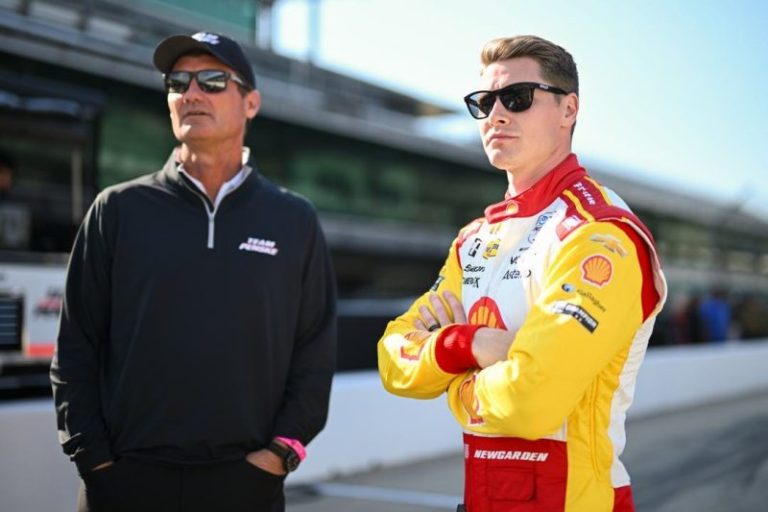
INDIANAPOLIS — Team Penske has parted ways with the three highest members of its IndyCar leadership team, the organization announced Wednesday on social media.

Four days ahead of the Indianapolis 500, team president Tim Cindric, who had more than a 25-year tenure with the organization, managing director Ron Ruzewski and general manager Kyle Moyer — the strategists on the team’s Nos. 2, 12 and 3 IndyCar entries of Josef Newgarden, Will Power and Scott McLaughlin — are no longer with the organization in the wake of Sunday’s tech inspection violations on Day 2 of qualifying for the Indianapolis 500.

‘Nothing is more important than the integrity of our sport and our race teams. We have had organizational failures during the last two years, and we had to make necessary changes,’ Team Penske, IndyCar and IMS owner Roger Penske said in a statement released Wednesday. ‘I apologize to our fans, our partners and our organization for letting them down.’

The cars of Newgarden and Power were found to be sporting illegally altered attenuators — a part IndyCar’s rulebook requires to remain on the car unaltered — leading to them forgo Fast 12 qualifying runs. Power’s car went through inspection but was pulled off pit lane after Newgarden’s No. 2 was flagged by IndyCar technical director Kevin Blanch. It was deemed Newgarden would start 11th and Power 12th based on Saturday’s qualifying times.

IndyCar president Doug Boles planned to address the situation after the Indy 500, but had a change of heart.

“As you realize the gravity of this event, it certainly makes you feel like, ‘You know what? We shouldn’t be treating this like any other event,’” he said Monday. “We should be treating this like the event that I tell everybody it is. It’s the greatest race on earth, and it needs to be treated differently. So we got to that point sometime shortly after that conversation.”

He levied penalties Monday morning against Team Penske. Cindric and Ruzewski were suspended through the remainder of the 500 and $100,000 fines hit the Nos. 2 and 12 entries, the loss of points gained from qualifying and the loss of Indy 500 pit selection.

Most importantly, both cars were moved to the final two starting spots of the 500, where Newgarden and Power will start Sunday 32nd and 33rd, respectively.

Boles said he called Roger Penske to inform him of his decision, an important one in the wake of growing unrest and frustration in the paddock over another scandal involving the team Penske owns, and that he owns the series and Indianapolis Motor Speedway, too. Never mind the fact it was the second scandal in 14 months.

“I can tell you that Roger Penske would not condone this. In fact, I had a chance to talk with Roger, and I can tell that this is devastating to him. Nothing means more to Roger Penske than the Indianapolis Motor Speedway and the Indianapolis 500,” Boles said. “He certainly loves racing across the board. This is something that I think he’s going to have to address at some point in time.”

Team Penske was found to have illegally used push-to-pass during the 2024 season opener at the Streets of St. Pete. And journalists and fans on social media have compiled apparent evidence that Team Penske had been modifying the attenuators on at least one of its cars dating back to last year’s Indy 500 as Newgarden’s winning car showed that modification while on display at the IMS Museum.

Some in the paddock voiced their frustrations to IndyStar anonymously. Others were more open with their thoughts. Pato O’Ward finished second to Newgarden in last year’ 500 and spoke Sunday night before the revelation of Newgarden’s 2024 car apparently not in compliance.

‘They weren’t accidentally doing it because they had the blowtorch right there in order to get it out,’ he said. ‘Honestly, I feel for (Jacob) Abel and for everybody that did the disqualifications or the last chance qualifying. Those cars weren’t in regulations.

‘I’m not an engineer, so I can’t tell you what they were doing, how much speed that it is or if it is any speed. Obviously it’s not in regulation. The rule is pretty black and white. … Obviously they didn’t do anything in the Fast 12, but they should have been brought into the (last chance qualifying) because they had that (Saturday), I guarantee you. Until someone pointed it out today. Those cars, if they’re disqualified today, they should have been disqualified yesterday.

‘It’s a shame really because they don’t need to be doing that stuff. They’re a great team. They have got great drivers. Why are doing that? It makes no sense.’

Rival owner Chip Ganassi took to Kevin Harvick’s podcast to address the situation, for which he had a heated moment Sunday upon witnessing it.

‘There’s a lot of spec parts on these cars, and they had a spec part that was modified on their car and they were trying to get it off before they got penalized, and that’s sort of a penalty in itself,’ Ganassi said. ‘They had an issue there, and I think … all teams have a certain responsibility to uphold the integrity of the sport in any series, and no team more than Team Penske. They’ve had so much success over the years, and it’s a team everybody knows and everybody’s heard of, and they have a lot of success around the world in a lot of different series, so I think they need to be held to an even higher standard to protect the sport.

‘Especially with the investment Roger Penske has at the Indianapolis Motor Speedway and in the IndyCar Series and in all these other series he’s involved in and his businesses for that matter. So they have a responsibility to respect the sport, and we all need to. Everyone that’s in it has to protect the sport, and it’s certainly a problem when the pursuit of winning compromises integrity and sportsmanship. That’s what you have.’

Wednesday’s move by Penske to move on from a loyal leader in Cindric, two executives and all three strategists, including that of No. 3 Scott McLaughlin, is an answer to the scrutiny he has faced in the wake of two scandals in 14 months.

This post appeared first on USA TODAY

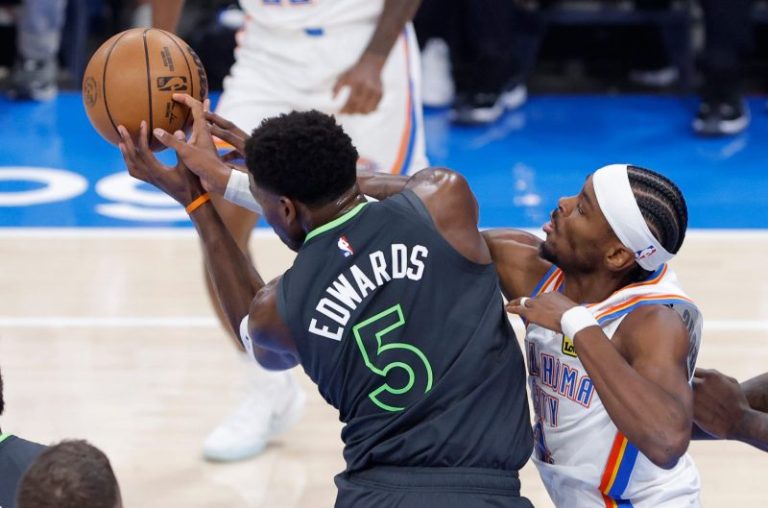
Oklahoma City Thunder star Shai Gilgeous-Alexander missed his first four shot attempts against the Minnesota Timberwolves on Tuesday night.

One of three finalists for MVP and likely the winner when it is announced, Gilgeous-Alexander was a not-very-MVP-like 2-for-13 shooting in the first half. It matched the most missed shots for him in a half this season.

But it’s the NBA Western Conference finals, deep in the playoffs and that happens. He kept at it, trusting his game and trusting his teammates and eventually helping himself and his teammates.

Gilgeous-Alexander rediscovered his offensive touch in the second half, starting with a 12-point third quarter and finishing with a 20-point second half on 8-for-14 shooting as the Thunder defeated the Timberwolves 114-88 in Game 1 of the Western Conference finals.

“He’s got a great emotional temperament,” Thunder coach Mark Daigneault said. “I’ve always marveled at that about him. … he just keeps himself in it. He doesn’t get emotional. He just plays the next play.

‘I thought he was really in attack mode tonight. He did a great job of pounding the paint with the ball. He had a good blend, especially in the second half of his early passes, but he was really driving it and putting a lot of pressure on them, which is what you have to do against that level of pressure and physicality.”

Gilgeous-Alexander finished with 31 points, nine assists, five rebounds and three steals. Eleven of his points came at the free throw line, validating Daigneault’s claim that his leader and star was in attack mode.

It was his eighth 30-point game of the playoffs, and his fourth consecutive playoff game with at least 30 points.

“Obviously, (my shot) wasn’t falling like it usually does and I would like it to,” Gilgeous-Alexander said. “It’s part of the game. Nothing really in my mindset. I just tried to continue to be aggressive, continue to trust my work and it worked out for me in the second (half).”

In a battle of stars, the Thunder won Round 1. Minnesota’s Anthony Edwards had a quiet 18 points on 5-for-13 shooting. He needs to be better if the Timberwolves are going to win a game on the road against the West’s top seed.

Of course the game is more than two players. Oklahoma City’s league-best defense held the Timberwolves under 90 points and to just 40 in the second half, and its impressive starting five and versatile depth played significant roles in the result. Four starters reached double figures, and All-Star Jalen Williams had 19 points, eight rebounds, five assists and five steals. Five reserves played at least 10 minutes.

But you need stars – a team’s best player – to help you win games, especially in May.

That’s what Gilgeous-Alexander did as the Thunder pulled away late in the third quarter and into the fourth. During a 20-6 OKC run to end the third, Gilgeous-Alexander had nine points.

“He’s a great player that just stays present,” Daigneault said. “If you’re worried about your efficiency, you’re worried about the past or the future and he’s a very present player. He just plays the possession in front of him. He doesn’t really change his game. He doesn’t change his mindset. I thought that was on full display tonight and he was huge for us.”

Follow NBA columnist Jeff Zillgitt on social media @JeffZillgitt
This post appeared first on USA TODAY

Let me try and understand this, because I’m a little fuzzy after decades of deceit and distrust.  

It now appears that college football is headed toward the implementation of a commissioner, a czar of sorts who will control enforcement and whose rulings will be final.

Unless, of course, you want to head to arbitration.  

A commissioner, or CEO or whatever you want to call him or her, whose office will control oversight of all things NIL and declare what deals are within fair-market range. 

In a free-market economy.

A commissioner who, despite this brand new power and influence given to them by university presidents (see: fox, meet henhouse), will have zero – and when I say zero, I mean zero – control over player movement. 

The most pressing problem for which there is no legal answer, short of players becoming employees and collectively bargaining.

A commissioner who will be paid a boatload of cash to do, in theory, what current NCAA president Charlie Baker should’ve been doing all along — if given the opportunity.

Apparently, a man who ran one of the largest state budgets as governor of Massachusetts needs another multimillion dollar salaried colleague to pull college sports from its self-induced mess.

I have no doubt this, too, will be a resounding success. That’s sarcasm, everyone. 

Want to blame someone for this never-ending, unwieldy morass? Blame the eggheads at the very top of the food chain. 

The same university presidents that have no business sticking their noses in the business of college sports, but do so, anyway. Why, you ask? 

Because the last thing they need is for athletics to encroach onto academics, for athletics to need financial support from the university. Most university presidents are hired for fundraising first, and everything else second. 

That everything else doesn’t include paying for athletics.

So don’t blame SEC commissioner Greg Sankey, or Big Ten commissioner Tony Petitti for the ills of college football. They’re doing what their respective university presidents – their bosses who sign their paychecks – tell them to do. 

The same university presidents who have lost in nearly every single legal case brought against their association of schools.

What’s constantly lost in these inevitable screwups is the NCAA is nothing more than a conglomeration of 300-plus university presidents, each with egos the size of Desmond Watson. These presidents vote each other and their subordinate athletic directors into various committees and subcommittees that eventually decide Boise State will be placed on probation for buying a recruit a bagel.

Or that North Carolina won’t be placed on probation because years of fake classes to keep athletes eligible were – and I still can’t believe I’m writing this – also available to the rest of the student population.

So excuse me if I’m a little hesitant about this latest iteration of change from a group of men and women at the highest level of higher education. The same group that not long ago swore up and down there would never be “second semester” football.

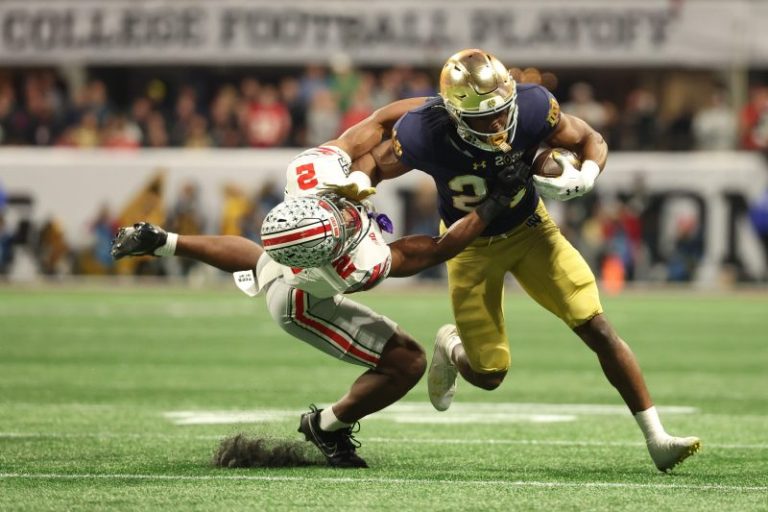
Now the College Football Playoff ends in late January, well into the second semester. And competes for television ratings against the big, bad NFL ― a losing proposition by anyone or anything that has tried.

The same university presidents who not long ago swore up and down that pay for play would never work for any number of reasons, the least of which was Title IX. There’s no way to pay men to play, and then pay women equally, they declared. 

Women, they said, deserve the same opportunities as men. 

Now we’re days away from a U.S. District judge potentially signing off on the House case – another devastating loss for the sharp legal minds at the NCAA – and more than $2 billion in back pay for former student athletes, complete with a future revenue sharing plan that will give nearly 90 percent of a salary pool of $20 million-23 million to football and men’s basketball.

But buddy, you better believe they have it figured out this time. This new commissioner or CEO or czar will solve all problems.

There’s no chance he’ll strike down an NIL deal because it isn’t fair, and the NCAA – or whatever they’ll eventually call the elite football-playing schools – won’t be sued and lose again.

Look, I have no law degree, but I did pay attention in college during ECON 101. The market dictates what services are worth.

Not some doofus plopped into a position by 300-plus university presidents, whose sole purpose is to protect their own asses at all cost. 

Yeah, this new CEO will be a resounding success. 

Matt Hayes is the senior national college football writer for USA TODAY Sports Network. Follow him on X at @MattHayesCFB.

This post appeared first on USA TODAY

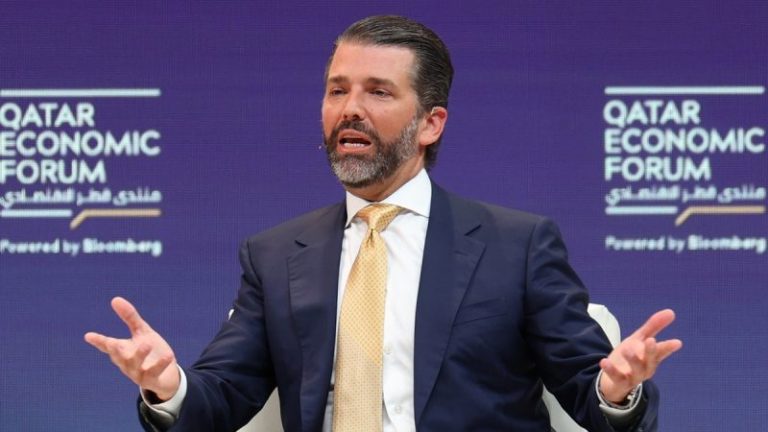
Donald Trump Jr. is not ruling out the possibility of a political future, but asserts that he has no interest in making a run ‘anytime soon.’

At the Qatar Economic Forum, he fielded a question about the possibility of running for office after his father steps down. 

During his response he did not close the door on the prospect, saying, ‘I don’t know. Maybe one day… that calling is there.’

But he asserted in a post on X that he is not at all interested in pursuing office in 2028.

‘And FWIW, I’ve always said, while I’ll never 100% rule it out down the line, I have ZERO interest in running for office in 28 or anytime soon,’ he said in a portion of that post.

Donald Trump Jr. is President Donald Trump’s eldest child.

The president just began his second term about four months ago.

There have been two father-son pairs in U.S. history who both served as president: George H.W. Bush and George W. Bush, and John Adams and John Quincy Adams.

This post appeared first on FOX NEWS

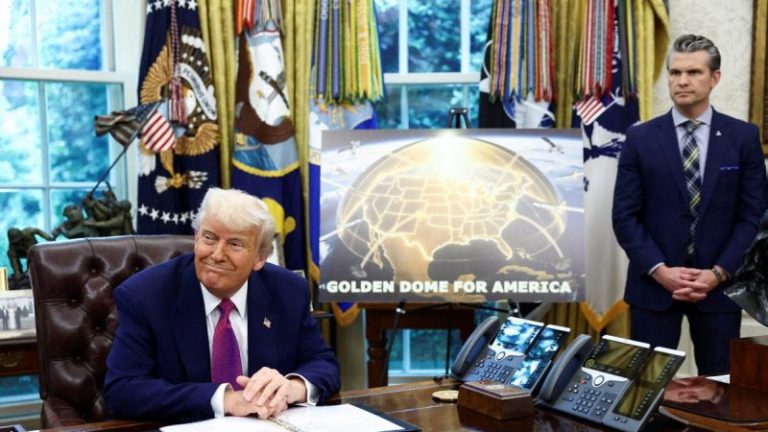
Before President Donald Trump’s dramatic reveal of the ‘Golden Dome’ missile defense project on Tuesday, the proposal wasn’t even on the radar of many lawmakers on Capitol Hill.

Several senators told Fox News Digital they had received no briefing on the initiative’s costs – and some hadn’t heard of it at all.

‘I don’t support blank checks. I haven’t seen the cost figures,’ Sen. John Kennedy, R-La., told Fox News Digital. 

Two senior members of the Senate Appropriations Defense Subcommittee, one Republican and one Democrat, asked, ‘what’s Golden Dome?’ in response to questions about the project Trump commissioned in January. 

Trump’s sweeping plan – pitched as an American version of Israel’s Iron Dome – carries an ambitious price tag and timeline. He’s floated a $125 billion estimated cost and says it could be built in three years, by the end of his term. A government funding package moving through Congress, dubbed the One Big Beautiful Bill Act, includes $25 billion to jumpstart the project.

But defense experts and even some Republican allies anticipate the cost to be much higher. 

‘This is not going to be a $25 billion or $35 billion project. It will likely cost in the trillions if and when Golden Dome is completed,’ said Sen. Tim Sheehy, R-Mont., who announced plans to form a Golden Dome Caucus during a recent Washington Times defense industry event earlier this month. 

Sheehy warned that simply scaling up Israel’s Iron Dome to protect the U.S. is ‘a fundamentally different technological proposition.’

‘The challenges don’t scale linearly with the size of Israel, which is the size of New Jersey,’ he added.

The nonpartisan Congressional Budget Office (CBO) has estimated the project could cost around $500 billion – though some believe even that figure is likely too low.

CBO estimated that the space-based interceptors portion of the dome could cost at least $161 billion but up to $542 billion. But it didn’t account for any ground-based interceptors in that cost. 

‘I’ve been 34 years in this business, and I’ve never seen an early estimate that was too high,’ said Space Force chief of space operations Gen. Chance Saltzman. ‘We don’t always understand the full level of complexity until you’re actually in execution, doing the detailed planning.’

Some Republican lawmakers suggest the potential benefits outweigh the massive spending required.

‘It might very well prevent a war,’ Sen. Mike Rounds, R-N.D., said. ‘When we talk about spending billions on defense, that is small compared to one single major war – not only in trillions of dollars, but in bloodshed.’

Once a missile is launched toward the U.S. homeland, the Golden Dome system aims to detect it, and orbital systems would aim to hit the missile during its ‘boost’ phase, either with a laser or a kinetic interceptor. Otherwise, ground-based systems could deploy to knock it off its path.  

Others noted competing defense priorities.

‘That’s gonna be a long, drawn-out process, and it’s gonna cost a lot of money,’ said Sen. Tommy Tuberville, R-Ala. ‘Right now, we’re redoing our missile silos… we’re transitioning to different types of warfare. If we’re gonna do [Golden Dome], we do it the right way.’

Supporters of the plan argue that technological advances have dramatically lowered the cost of missile defense, enough to potentially flip decades-old strategic assumptions.

Chuck DeVore, a defense expert at the Texas Public Policy Foundation and former Reagan administration official, said the old logic – that it’s always cheaper to build offensive missiles than defenses – may no longer apply.

‘That calculation is changing now,’ DeVore said. ‘With low-cost orbit launches and inexpensive electronics, it may actually be less expensive to defend against nuclear missiles than to build them. If that’s the case, we’re at a truly revolutionary inflection point.’

DeVore also warned that traditionalists in the defense establishment may push back.

‘You’re going to see people defending the status quo,’ he said. ‘They’ll say we need that money for more conventional defense – more divisions, more jet fighters, maybe another aircraft carrier.’

Still, DeVore argued that a homeland missile defense system is overdue.

‘The ability to truly defend the homeland and save American lives is better than mutual assured destruction – especially in an age of nuclear proliferation where we can’t always be sure where the threat is coming from.’

Sen. Markwayne Mullin, R-Okla., agreed on the project’s importance, even as he said he hadn’t been briefed on the cost and needs of the project. 

‘I think it’s the most important thing we could do to keep our homeland safe.’

This post appeared first on FOX NEWS

Bombshell developments continue to emerge about former President Joe Biden’s declining health along with allegations of a White House cover-up. In response, a top Republican is urging the Justice Department to investigate whether any laws were broken in how Biden’s condition was presented to the public.

Sen. John Cornyn of Texas is expected to write Wednesday afternoon to Attorney General Pam Bondi demanding that the DOJ open a probe into ‘any potential violations of federal law surrounding the representations made to the American people about the health and wellbeing (sic) of then-President Biden.’

In the letter obtained by Fox News Digital, Cornyn cited the May 18 report from Biden’s camp that he is battling late-stage aggressive prostate cancer that had metastasized to his bones.

‘This announcement follows the publication of news reports calling into question the former president’s capacity and awareness during his time in office,’ Cornyn said as other Biden critics questioned what then-White House physician Dr. Kevin O’Connor knew while treating the president.

In the letter, Cornyn expressed concern that Biden’s ‘associates,’ including O’Connor, misrepresented or made ‘material omissions’ to the public about his mental and physical fitness.

Conservatives beat the drum of Biden’s alleged senility for years but were often lambasted by the mainstream media for questioning the White House’s line on the matter.

‘I fear the American people were deliberately misled about President Biden’s health. Instead of providing full transparency, which is the obligation of the commander-in-chief, important information was kept secret,’ Cornyn wrote.

‘I do not have confidence in the former president’s aides and staff, including medical staff, or their ability to be honest and straightforward about President Biden’s cancer diagnosis.’

He noted how President Donald Trump assented to calls that he take a cognitive test to demonstrate fitness for office while contrasting that with Biden’s refusal, which famously resulted in a tense exchange with a CBS News correspondent when the then-president asked, ‘Why the hell should I take a test?’ and asked if the Black news anchor was ‘a junkie’ who might want to undergo a test for cocaine in his system.

Cornyn contrasted White House claims that Biden was ‘fit for duty’ with revelations, including those in a CNN anchor’s new book, that he was only capable of working ‘four to six good hours’ per day.

‘These positions are in direct conflict,’ Cornyn will tell Bondi, adding that despite having the world’s best medical care at his fingertips, Americans have been asked to ‘accept coincidence after coincidence’ involving his health.

He also cited the 25th Amendment, which he noted provides Americans an insurance policy that their government can continue to function if the infirmity or death of a president should occur.

‘These actions potentially impacted the trust the American people have in their government and weakened us on the world stage.’

He cited a report from earlier this week that White House staff had secretly discussed the possibility that Biden would be confined to a wheelchair while still putting on a brave face to the public.

Former President Franklin Roosevelt, stricken by polio, conducted the nation’s business from a wheelchair.

‘I encourage the Department to conduct a full investigation and ensure that no federal laws were violated during the previous administration,’ Cornyn concluded.

Fox News Digital reached out to a Biden representative for comment.

This post appeared first on FOX NEWS

President Donald Trump has officially accepted Qatar’s Boeing 747 jet gift to be refitted as Air Force One, the Pentagon revealed. 

‘The Secretary of Defense has accepted a Boeing 747 from Qatar in accordance with all federal rules and regulations,’ chief spokesperson Sean Parnell confirmed to Fox News. ‘The Department of Defense will work to ensure proper security measures and functional-mission requirements are considered for an aircraft used to transport the President of the United States. For additional information, we refer you to the United States Air Force.’

News of the deal prompted concerns from lawmakers, both over how to retrofit a foreign nation’s plane to serve as a mobile Oval Office with the highest levels of security and over what Qatar might want from Trump in return for the gift. 

Trump ally Sen. Ted Cruz, R-Texas, has said the plane poses ‘significant espionage and surveillance problems’ while liberal Sen. Bernie Sanders, I-Vt., declared, ‘Trump cannot accept a $400 million flying palace from the royal family of Qatar. Not only is this farcically corrupt, it is blatantly unconstitutional.’

‘Qatar is not, in my opinion, a great ally. I mean, they support Hamas. So what I’m worried about is the safety of the president,’ Sen. Rick Scott, R-Fla., told reporters last week. 

When asked about the latest news, Trump told a reporter at the White House, ‘They’re giving the United States Air Force a jet, okay, and it’s a great thing.’ 

‘You’re a terrible reporter. You don’t have what it takes to be a reporter,’ he said.  

He boasted that he secured $5.1 trillion in investments during his trip to the Middle East last week. 

Earlier, Trump had said of the criticisms, ‘So the fact that the Defense Department is getting a GIFT, FREE OF CHARGE, of a 747 aircraft to replace the 40 year old Air Force One, temporarily, in a very public and transparent transaction, so bothers the Crooked Democrats that they insist we pay, TOP DOLLAR, for the plane,’ Trump wrote. ‘Anybody can do that! The Dems are World Class Losers!!! MAGA.’

Trump in 2018 awarded Boeing a $3.9 billion fixed-price agreement to manufacture two new jets, after months of haggling over the price. The jets were supposed to be delivered in 2024, but the project is around five years behind schedule and already $2.5 billion over budget. 

Fox News’ Liz Friden contributed to this report. 

This post appeared first on FOX NEWS

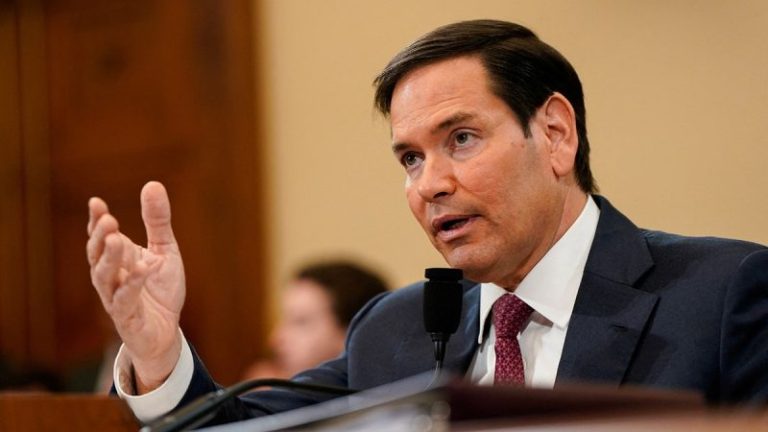
Secretary of State Marco Rubio clashed with Rep. Brad Sherman during a House hearing on Wednesday, telling the California Democrat that ‘this is not a game show’ when Sherman demanded that he only answer questions with a ‘yes’ or a ‘no.’

Rubio testified before the House Foreign Affairs Committee in Washington, D.C., fielding questions on foreign aid, nuclear proliferation in Saudi Arabia and Iran, the war in Ukraine and more. Sparks began to fly early on when Sherman questioned Rubio on a potential nuclear cooperation agreement with Saudi Arabia.

‘First, I will tell you that there has been no conversation about entering into one. For example, during the recent trip,’ Rubio began before Sherman cut him off.

‘I’ve got limited time,’ the congressman interjected. ‘Either give me a yes or a no.’

‘Well, I’m going to give you my answer if you want my answer,’ Rubio replied.

But Sherman cut Rubio off, stating that he was reclaiming his time.

‘Well, reclaim your time. But it’s not a game show,’ Rubio said. ‘I get to answer. These are complex questions.’

‘Mr. Secretary, I’m reclaiming my time,’ Sherman said. ‘The filibustering takes place in the Senate. Not here.’

‘I’m not filibustering. I’m trying to answer your question,’ Rubio replied.

Sherman then moved on to his next question, asking whether Rubio could assure Congress that the Trump administration would continue sanctions on Iran until they verifiably agree to abandon all nuclear enrichment.

‘That’s a yes or no question,’ Sherman told Rubio.

Rubio replied: ‘No, it’s not.’

‘Well, can you give me a yes or no? Should I go on to go on to the next?’ Sherman asked.

‘We believe that Iran should not be allowed to enrich uranium, correct,’ Rubio answered. 

‘You believe that?’ Sherman asked.

‘We believe that an acceptable deal with Iran is one in which they cannot enrich, because if they can enrich, they can weaponize,’ Rubio said.

‘I know why we don’t want – I asked you will we agree, will we continue the sanctions until they verifiably agree to get rid of enrichments.’

‘Oh, you have nothing to worry about,’ Rubio said. ‘The worry was the previous administration. This administration–’ 

‘Your refusal to give me an answer is loud and clear,’ Sherman interjected before shouting over Rubio that he was reclaiming his time.

The House hearing brought Rubio to testify on the State Department’s posture on protecting American interests. Throughout the hearing, Rubio asserted that any actions taken by the government must have measurable outcomes for the American people, specifically making the country safer, stronger or more prosperous.

This post appeared first on FOX NEWS

President Donald Trump appeared to distance the U.S. from the conflict between Russia and Ukraine — just two days after speaking over the phone with Russian President Vladimir Putin. 

Trump, who called Ukrainian President Volodymyr Zelenskyy Monday after speaking to Putin, told reporters Wednesday that the conflict didn’t involve the U.S., despite the fact that the U.S. has adopted the role of mediator between the two countries since Trump came into the White House in January. 

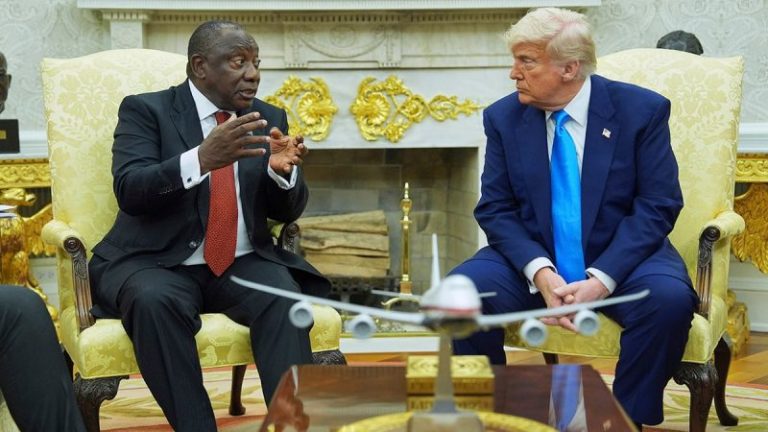
‘It’s not our people, it’s not our soldiers … it’s Ukraine and it’s Russia,’ Trump said in the Oval Office Wednesday while hosting South African President Cyril Ramaphosa. 

Trump also mentioned speaking with Zelenskyy while the Ukrainian president was traveling to South Africa. Zelenskyy visited Ramaphosa in April, but cut his trip short amid attacks from Russia against Kyiv. 

‘I called Zelensky and they said, he’s in South Africa. I said, what the hell is he doing in South Africa?’ Trump said. 

Ramaphosa responded that Zelenskyy was talking with South Africa speaking with him about securing peace. 

‘He’s trying to make peace,’ he said. 

Trump also said Wednesday he believed he ‘made a lot of progress’ with Putin in his Monday call, during which both countries ultimately agreed to a ceasefire and to advance peace talks. However, Trump also indicated that both Moscow and Kyiv would need to take the lead on future talks. 

‘The conditions for that will be negotiated between the two parties, as it can only be, because they know the details of a negotiation that nobody else would be aware of,’ Trump said in a Monday post on Truth Social. 

Trump and other members of his administration have signaled in recent weeks that the U.S. is willing to step aside from peace talks between Moscow and Kyiv. For example, Vice President JD Vance said Monday that the discussions between the two had reached a bit of an ‘impasse’ and that the U.S. was ‘more than willing’ to step aside from the talks. 

‘There is fundamental mistrust between Russia and the West. It’s one of the things the president thinks is, frankly, stupid,’ Vance told reporters Monday. ‘That we should be able to move beyond. The mistakes that have been made in the past, but … That takes two to tango.’ 

‘I know the president’s willing to do that, but if Russia’s not willing to that then we’re eventually just going to have to say… This is not our war,’ Vance said. ‘It’s Joe Biden’s war, it’s Vladimir Putin’s war. It’s not our war. We’re going to try to end it, but if we can’t end it we’re eventually going to say, you know what? That was worth a try, but we’re not doing it anymore.’

This is a breaking news story and will be updated.

This post appeared first on FOX NEWS