Archive

2025

Browsing

Why do athletic directors need to be on CFP committee? Answer: They don’t.
Alabama, Miami were fine playoff picks, but process became a farce.
Pick the 12 best teams for CFP bracket. Period.

Did the College Football Playoff committee get the bracket right? Well, that depends on your perspective and your rooting interests. The bubble got awfully crowded, so not everyone was going to come away happy.

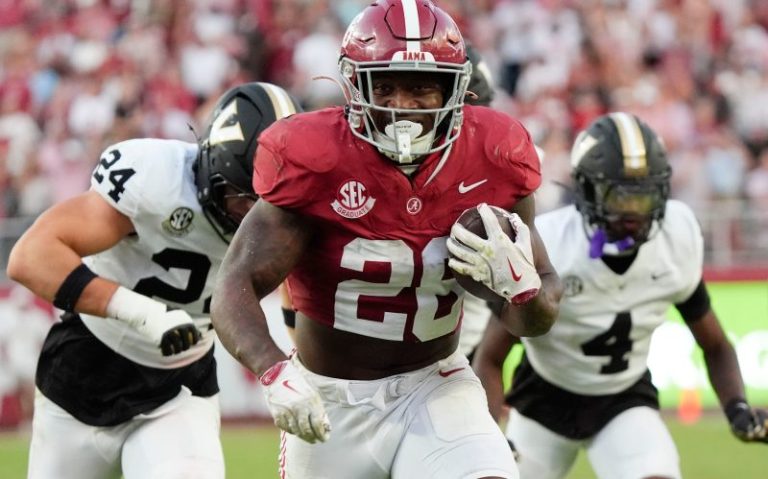
Overall, Alabama and Miami seem like fair choices, but the course the committee charted to reach that destination became an exercise of the absurd.

On this edition of ‘SEC Football Unfiltered,’ a podcast from the USA TODAY Network, hosts Blake Toppmeyer and John Adams offer their biggest grievances with this bracket — and with this committee — and propose a different way to approach the playoff.

Here are four thoughts about how to improve the system:

Is this season proof that playoff expansion is necessary? No. There’s an argument for 16 teams. It’s a worthy idea, but there’s also a case for staying at 12, with format alterations.

∎ Whether 12 or 16 teams, how should the bids be allocated? Get rid of automatic bids. Conferences have become so big that conference championships are no guarantee of pitting the league’s two best teams against one another. Also, with apology to the little guy, no conference should be guaranteed a bid. That includes the Group of Five. Pick the best teams, period. No automatic bids. All at-large selection.

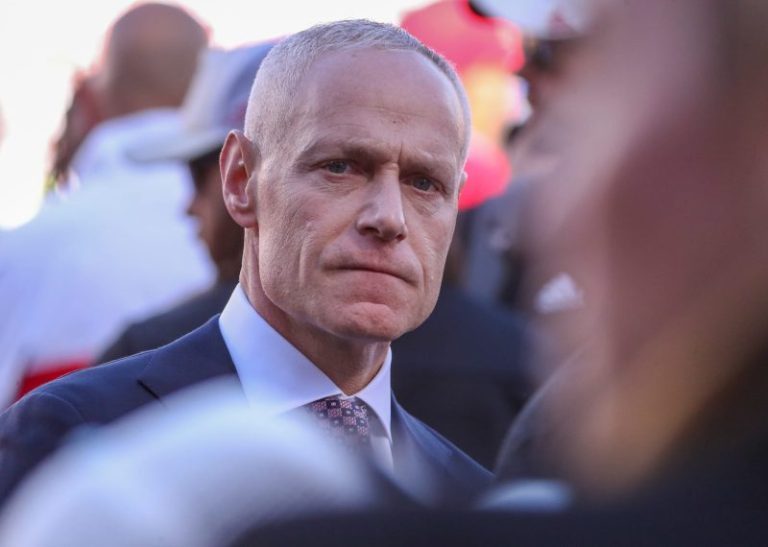
So, that means keeping the committee? Yes, but with changes to the construction of the committee. No sitting or former athletic director should be allowed on the committee. There’s nothing about being an AD that makes you an expert at ranking football teams. Also, athletic directors give off the appearance of bias, if not outright inserting bias. ADs have big jobs. CFP committee chairman Hunter Yurachek had to hire a football coach at Arkansas while being the front man of the selection process. That’s an inappropriate ask, and it’s unfair to fans to have someone juggle a coaching search and a selection process.

∎ So, who would be on the committee? Boot the ADs, and come up with a mix of former coaches and media members. Perhaps, include an analytics nerd, as well. If this sounds crazy, remember that for many, many years, the national championship was awarded based on AP (media) and coaches’ polls. So, removing ADs in favor of coaches and media to devise the CFP rankings aligns with the sport’s history.

Also in this episode

∎ The hosts discuss potential playoff upsets, and they predict the national champion, offering divergent choices.

Where to listen to SEC Football Unfiltered

Apple
Spotify
iHeart
Google

Blake Toppmeyer is the USA TODAY Network’s national college football columnist. John Adams is the senior sports columnist for the Knoxville News Sentinel. Subscribe to the SEC Football Unfiltered podcast, and check out the SEC Unfiltered newsletter, delivered straight to your inbox.
This post appeared first on USA TODAY

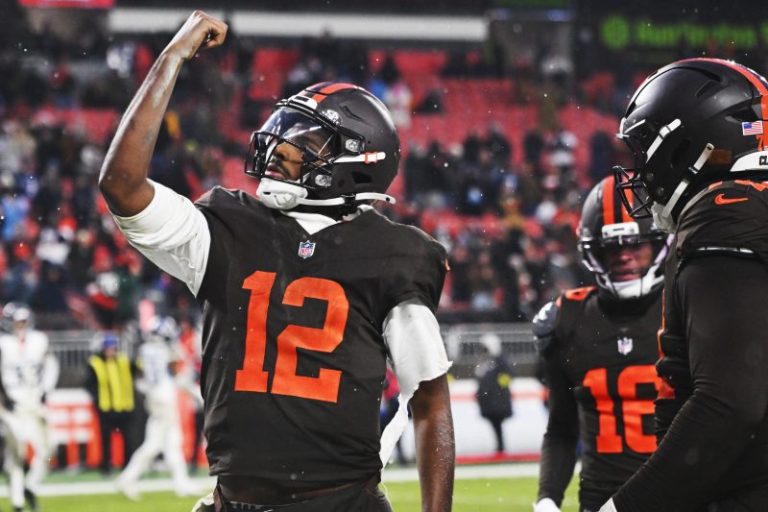
A viral image led to speculation that Browns quarterback Shedeur Sanders was wearing a thong during a game.
Shedeur Sanders clarified the image actually showed tape for a previous back injury.
Shilo Sanders, who is out of football, is now pursuing music, acting, and brand deals.

Shedeur and Shilo Sanders have gotten to the bottom of one of the biggest mysteries this week in the NFL.

Was Shedeur, the Cleveland Browns starting quarterback, wearing a thong under his uniform during a 31-29 loss against the Tennessee Titans on Dec. 7?

It kind of looked like it, according to a screen shot after one play. Shilo, his older brother, conducted a not-so-serious investigation about it and then posted the findings on YouTube.

“Let’s cut to the business, bro,” Shilo said to Shedeur by phone. “Did you wear a thong or not?”

“Come on bro,” Shedeur replied.

“What’s going on with you, bro?” Shilo persisted.

“You forget I have a back injury, right?” Shedeur said. “So I get my back taped. So it is crazy that I did look like that… That is funny, though.”

Shedeur suffered a fractured back during the 2023 season at Colorado.  Shilo and Shedeur are sons and former players of Colorado head coach Deion Sanders.  

What is Shilo Sanders doing now?

Shilo is out of football after being waived by the Tampa Bay Buccaneers before the season. In the video, he said he is moving from Tampa to Miami, where he said he is looking for a chef to cook for him and has been working on a rap album. He also said he was considering acting classes and has been doing YouTube videos and brand deals.

Shilo filed for bankruptcy in 2023 in a case that remains pending.  In general, he is entitled to earnings he made after the filing.

“In the future, I definitely want to build that up – the music and the acting, the modeling, all that,” he said.

Shilo modeled with his brother in Paris in January 2024.

Follow reporter Brent Schrotenboer @Schrotenboer. Email: bschrotenb@usatoday.com

This post appeared first on USA TODAY

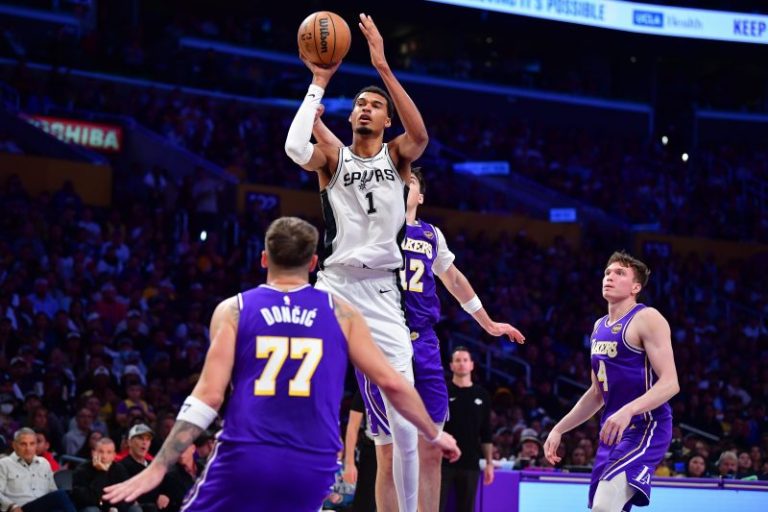
There was a different energy when Victor Wembanyama entered the practice gym with a trio of injured San Antonio Spurs players earlier this week, coach Mitch Johnson told reporters before the team’s most recent win over the New Orleans Pelicans, and he made one promise regarding his 7-foot-5 center.

‘He’s going to be on that plane to LA, for sure. He better be,’ Johnson said.

Wembanyama is nearing a return to the court for the first time in almost a month as the Spurs (16-7) get set to face the Los Angeles Lakers (17-6) in an NBA Cup West quarterfinal game on Wednesday, Dec. 10. The third-year French star is making progress, joining his Spurs teammates on their current road trip and participating in multiple workouts in recent days.

San Antonio recently welcomed 2025 NBA Rookie of the Year Stephon Castle and big man Luke Kornet back to the lineup from injury. Will Wembanyama join them and play in the opening knockout round of the league’s in-season tournament?

Here’s the latest update on Wembanyama’s injury situation, as well as his game status when the Spurs play the Lakers in the 2025 NBA Cup quarterfinals on Wednesday:

Is Victor Wembanyama playing today?

No, Wembanyama will miss Wednesday’s contest. He was listed as out on the Spurs’ latest injury report on Tuesday, Dec. 9 ahead of their NBA Cup game against the Los Angeles Lakers. He has missed the team’s previous 11 games.

Victor Wembanyama injury update

Wembanyama joined the team in New Orleans after not traveling to start this current road trip and was a full participant in a practice on Sunday, according to the San Antonio Express-News. He then did a workout after the team’s morning shootaround on Monday and warmed up before the Spurs’ game against the Pelicans. Johnson noted, however, that the team would not place added importance on Wednesday’s game being part of the NBA Cup in terms of determining Wembanyama’s potental return.

Wembanyama appeared in just 46 games last season after being diagnosed with deep vein thrombosis in his right shoulder.

Victor Wembanyama stats

Wembanyama was off to a strong start in his third NBA season, leading the league in blocks again (3.6 per game) and ranking second in rebounds (12.9). The 2024 NBA Rookie of the Year is averaging a career-best 26.2 points while shooting better than 50% from the floor through 12 games of the 2025-26 season.

This post appeared first on USA TODAY

Notre Dame’s exclusion from the College Football Playoff marked the end of the season for coach Marcus Freeman’s team, but the beginning of a war of words.

On Monday, fewer than 24 hours after the Fighting Irish didn’t see their name revealed on the 12-team playoff bracket, Notre Dame athletic director Pete Bevacqua went on “The Dan Patrick Show” to lash out at the ACC, saying the league that houses most of the school’s non-football sports had “done permanent damage to the relationship” between the two parties after the conference publicly lobbied for Miami to make the playoff field over the Fighting Irish.

Bevacqua’s comments received widespread criticism — including from one of his fellow power brokers in the world of college athletics.

During a sit-down interview at Sports Business Journal’s Intercollegiate Athletics Forum in Las Vegas, Big 12 commissioner Brett Yormark slammed Bevacqua’s criticism of the ACC, describing the administrator’s words as “egregious.”

“I don’t like how Notre Dame’s reacted to it,” Yormark said. “I think Pete’s behavior has been egregious. It’s been egregious going after (ACC commissioner) Jim Phillips when they saved Notre Dame during COVID.”

While Notre Dame is an independent in football, 24 of the university’s athletic programs are members of the ACC. Additionally, the school has had a football scheduling agreement with the ACC since 2014, one in which the Fighting Irish have to play an average of five ACC programs a year over the life of the deal. In 2020, in the middle of the COVID-19 pandemic, the ACC allowed Notre Dame to play 10 ACC teams on its 11-game schedule that season and be eligible for the league’s championship game. On the back of that ACC-heavy schedule, the Fighting Irish made the ACC championship game, where it lost to Clemson, and was selected for the then-four-team College Football Playoff.

As the debate waged last week over which combination of Notre Dame, Miami and Alabama should earn the final two at-large spots in the playoff, the ACC campaigned for Miami, the only one of the trio that is a football member of the conference. 

On Nov. 10, the league’s official account on X (formerly Twitter) posted a graphic comparing the respective resumes of the Hurricanes and Fighting Irish while highlighting Miami’s head-to-head victory against Notre Dame and its higher number of wins against top-25 opponents. The ACC Network also aired the Hurricanes’ 27-24 Week 1 victory over the Fighting Irish more than a dozen times last week in the days leading up to the final playoff bracket reveal. Miami ultimately earned the final at-large spot after being behind Notre Dame for each of the previous weekly ranking unveilings.

Those actions irked Bevacqua, who has voiced his displeasure with the conference of which his school’s football program isn’t a member.

‘I understand they have to stand up for their teams in football,’ Bevacqua said on Tuesday, Dec. 9. ‘We just think there’s other ways to do it, and it has created damage. I’m not going to shy away from that, and that’s just not me speaking. People a lot more important at this university than me feel the same way.”

ACC commissioner Jim Phillips had responded to Bevacqua’s comments on Monday in a statement in which he said that “when it comes to football, we have a responsibility to support and advocate for all 17 of our football-playing member institutions, and I stand behind our conference efforts to do just that leading up to the College Football Playoff Committee selections on Sunday.”

Though Notre Dame’s coaches and players may have understandably felt blindsided by the playoff selection committee’s final ranking, Yormark believes the clues for Miami leapfrogging the Fighting Irish were apparent all along. And, to him, that makes Bevacqua’s behavior even more unacceptable.

“(Playoff selection committee chairman) Hunter (Yurachek) was very transparent about it, the chair, that as Notre Dame and Miami got closer together, head-to-head would be a factor,” Yormark said. “BYU lost. They became closer and head-to-head made a difference in that decision. I think he’s totally out of bounds in his approach and if he was in the room, I’d tell him the same thing.”

This post appeared first on USA TODAY

An international human rights group filed a complaint with the ethics committee of world soccer’s governing body to look into FIFA President Gianni Infantino, accusing him of a possible breach of political neutrality.

FairSquare, based in London, which says its company promotes ‘systemic change and stops human rights abuses,’ filed an eight-page complaint with FIFA’s Ethics Committee over the organization’s decision to give its inaugural Peace Prize to President Donald Trump, a decision that was met with swift condemnation.

“The award of a prize of this nature to a sitting political leader is in and of itself a clear breach of FIFA’s duty of neutrality,” FairSquare said in its complaint.

“If Mr. Infantino acted unilaterally and without any statutory authority, this should be considered an egregious abuse of power.’

FIFA’s ethics bylaws require neutrality in all political matters, and violations can carry a two-year ban from the sport.

Infantino and Trump were together at the Kennedy Center in Washington, DC, for the World Cup draw. The 2026 tournament, which is being held in North America, starts June 11.

FairSquare also said Infantino’s attendance at Trump’s inauguration in January ‘indicates support for President Trump’s political agenda.’

‘This complaint is about a lot more than Infantino’s support for President Donald Trump’s political agenda,’ said Nicholas McGeehan, FairSquare’s program director.

‘More broadly this is about how FIFA’s absurd governance structure has allowed Gianni Infantino to openly flout the organisation’s rules and act in ways that are both dangerous and directly contrary to the interests of the world’s most popular sport.’

This post appeared first on USA TODAY

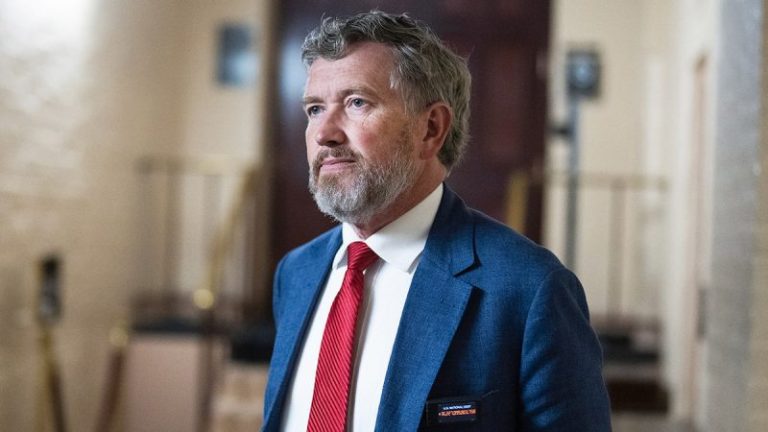
Republican Rep. Thomas Massie of Kentucky announced on Tuesday that he had introduced a measure to remove the U.S. from the North Atlantic Treaty Organization, arguing that the decades-old alliance is obsolete, has been costly for American taxpayers and puts the nation at risk of engagement in foreign wars.

‘NATO is a Cold War relic. The United States should withdraw from NATO and use that money to defend our country, not socialist countries. Today, I introduced HR 6508 to end our NATO membership,’ Massie said in a post on X.

GOP Rep. Anna Paulina Luna of Florida shared Massie’s post and wrote, ‘Co-sponsoring this.’

‘NATO was created to counter the Soviet Union, which collapsed over thirty years ago. Since then, U.S. participation has cost taxpayers trillions of dollars and continues to risk U.S. involvement in foreign wars. Our Constitution did not authorize permanent foreign entanglements, something our Founding Fathers explicitly warned us against. America should not be the world’s security blanket—especially when wealthy countries refuse to pay for their own defense,’ Massie said, according to a press release.

Republican Sen. Mike Lee of Utah introduced the ‘Not a Trusted Organization Act,’ or ‘NATO Act’ in the Senate earlier this year — Massie is now fielding companion legislation in the House.

Article 13 of the North Atlantic Treaty stipulates that ‘After the Treaty has been in force for twenty years, any Party may cease to be a Party one year after its notice of denunciation has been given to the Government of the United States of America, which will inform the Governments of the other Parties of the deposit of each notice of denunciation.’

The proposal advanced by Lee and Massie would use this escape hatch to extract the U.S. from the longstanding NATO alliance.

‘Consistent with Article 13 of the North Atlantic Treaty, done at Washington April 4, 1949, not later than 30 days after the date of the enactment of this Act, the President shall give notice of denunciation of the North Atlantic Treaty for purposes of withdrawing the United States from the North Atlantic Treaty Organization,’ the proposal declares.

‘No funds authorized to be appropriated, appropriated, or otherwise made available by any Act may be used to fund, directly or indirectly, United States contributions to the common-funded budgets of the North Atlantic Treaty Organization, including the civil budget, the military budget, or the Security Investment Program,’ the text of the measure stipulates.

This post appeared first on FOX NEWS

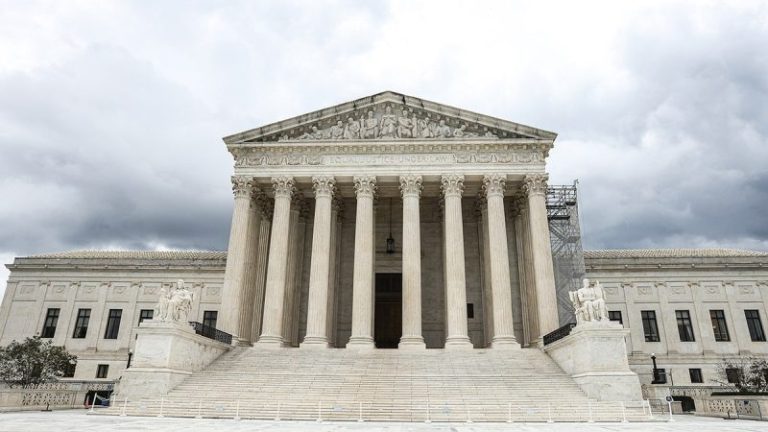
On Friday, the Supreme Court announced that it would hear challenges to President Donald Trump’s executive order to end birthright citizenship. The Fourteenth Amendment automatically makes all babies born on American territory citizens. Trump’s effort to overturn the traditional reading of the constitutional text and history should not succeed.

Ratified in 1868, the Fourteenth Amendment provided a constitutional definition of citizenship for the first time. It declares that ‘all persons born or naturalized in the United States, and subject to the jurisdiction thereof, are citizens of the United States and of the state wherein they reside.’ In antebellum America, states granted citizenship: they all followed the British rule of jus soli (citizenship determined by place of birth) rather than the European rule of jus sanguinis (citizenship determined by parental lineage). As the 18th-century English jurist William Blackstone explained: ‘the children of aliens, born here in England, are, generally speaking, natural-born subjects, and entitled to all the privileges of such.’ Upon independence, the American states incorporated the British rule into their own laws.

Congress did not draft the Fourteenth Amendment to change this practice, but to affirm it in the face of the most grievous travesty in American constitutional history: slavery. In Dred Scott v. Sandford (1857), Chief Justice Roger Taney concluded that slaves — even those born in the United States — could never become American citizens. According to Taney, the Founders believed that Black Americans could never become equal, even though the Constitution did not exclude them from citizenship nor prevent Congress or the states from protecting their rights.

The Fourteenth Amendment directly overruled Dred Scott. It forever prevents the government from depriving any ethnic, religious or political group of citizenship.

The only way to avoid this clear reading of the constitutional text is to misread the phrase ‘subject to the jurisdiction thereof.’ Claremont Institute scholars (many of whom I count as friends) laid the intellectual foundations for the Trump executive order; they argue that this phrase created an exception to jus soli. Claremont scholars Edward Erler and John Eastman argue that ‘subject to the jurisdiction thereof’ requires that a citizen not only be born on American territory, but that his parents also be legally present. Because aliens owe allegiance to another nation, they maintain, they are not ‘subject to the jurisdiction’ of the United States.

The Claremont Institute reading implausibly holds that the Reconstruction Congress simultaneously narrowed citizenship for aliens even as it dramatically expanded citizenship for freed slaves. There is little reason to understand Reconstruction — which was responsible for the greatest expansion of constitutional rights since the Bill of Rights — in this way.

This argument also misreads the text of ‘subject to the jurisdiction thereof.’ Everyone on our territory, even aliens, falls under the jurisdiction of the United States. Imagine reading the rule differently. If aliens did not fall within our jurisdiction while on our territory, they could violate the law and claim that the government had no jurisdiction to arrest, try and punish them.

Critics, however, respond that ‘subject to the jurisdiction thereof’ must refer to citizen parents or risk being redundant when being born on U.S. territory. But at the time of the Fourteenth Amendment’s ratification, domestic and international law recognized that narrow categories of people could be within American territory but not under its laws. Foreign diplomats and enemy soldiers occupying U.S. territory, for example, are immune from our domestic laws even when present on our soil. A third important category demonstrates that ‘subject to the jurisdiction thereof’ was no mere surplusage. At the time of Reconstruction, American Indians residing on tribal lands were not considered subject to U.S. jurisdiction. Once the federal government reduced tribal sovereignty in the late 19th and early 20th centuries, it extended birthright citizenship to Indians in 1924.

The Fourteenth Amendment’s drafting supports this straightforward reading. The 1866 Civil Rights Act, passed just two years before ratification of the Fourteenth Amendment, extended birthright citizenship to those born in the U.S. except those ‘subject to any foreign power’ and ‘Indians not taxed.’ The Reconstruction Congress passed the Fourteenth Amendment because of uncertainty over federal power to enact the 1866 Act. If the Amendment’s drafters had wanted ‘jurisdiction’ to exclude children of aliens, they could have simply borrowed the exact language from the 1866 Act to extend citizenship only to those born to parents with no ‘allegiance to a foreign power.’

We have few records of the Fourteenth Amendment’s ratification debates in state legislatures, which is why constitutional practice and common-law history are of such central importance. But the few instances in which Congress addressed the issue appear to support birthright citizenship. When the Fourteenth Amendment came to the floor, for example, congressional critics recognized the broad sweep of the birthright citizenship language. Pennsylvania Sen. Edgar Cowan asked supporters of the amendment: ‘Is the child of the Chinese immigrant in California a citizen? Is the child born of a Gypsy born in Pennsylvania a citizen?’ California Sen. John Conness responded in the affirmative. Conness would lose re-election due to anti-Chinese sentiment in California.

Courts have never questioned this understanding of the Fourteenth Amendment. In United States v. Wong Kim Ark (1898), the Supreme Court upheld the citizenship of a child born in San Francisco to Chinese parents. The Chinese Exclusion Acts barred the parents from citizenship, but the government could not deny citizenship to the child. The Court declared that ‘the Fourteenth Amendment affirms the ancient and fundamental rule of citizenship by birth within the territory, in the allegiance and protection of the country, including all children here born of resident aliens.’ The Court rejected the claim that aliens are not within ‘the jurisdiction’ of the United States. Critics respond that Wong Kim Ark does not apply to illegal aliens because the parents were in the United States legally. But at the time, the federal government had yet to pass comprehensive immigration laws that distinguished between legal and illegal aliens. The parents’ legal status made no difference.

President Trump is entitled to ask the Court to overturn Wong Kim Ark. But his administration must persuade the justices to disregard the plain text of the Constitution, the weight of the historical evidence from the time of the Fourteenth Amendment’s ratification and more than 140 years of unbroken government practice and judicial interpretation. 

A conservative, originalist Supreme Court is unlikely to reject the traditional American understanding of citizenship held from the time of the Founding through Reconstruction to today.

This post appeared first on FOX NEWS

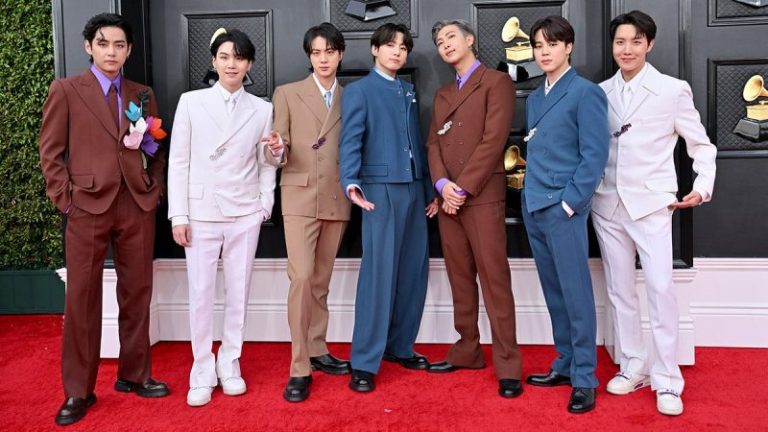
When the South Korean boy band/K-pop sensation BTS takes the stage in Seoul this June, ending a four-year touring hiatus, it will mark more than just a comeback — it will validate one of the shrewdest soft-power decisions in recent memory.  

In 2022, at the absolute apex of their global dominance, the group’s seven members chose to fulfill their mandatory military service rather than seek exemptions, which would almost certainly been granted. Their management company, HYBE, supported the decision. The world got a masterclass in how cultural power is created. 

The cynics predicted career suicide. Instead, BTS demonstrated that soft power isn’t built on avoiding obligations — it’s built on embracing them. When they reunite on stage, they’ll do so with enhanced credibility, having proven their success didn’t exempt them from the responsibilities of ordinary citizens. Americans remember Elvis taking a similar course at the height of his fame.  

The great thing about soft power is that, while generated by creative individuals and companies, it’s to the entire nation’s benefit. Like economic and martial power, soft power generates influence that can be used to bolster a nation’s standing. Examples of soft power abound from Britain’s cricket legacy and rock ’n’ roll ‘invasion’ of the 1960s to French and Italian cinema to America’s NBA, jazz music and Hollywood’s entertainment machine. Now, South Korea is stepping up.

Thus, it is almost tragic that while BTS was serving in the military, the ecosystem that made the band possible faces mounting scrutiny. South Korea has become expert at creating cultural phenomena that captivate the world — and equally expert at treating the architects of that success with suspicion once they achieve scale. This is a pattern South Korea cannot afford.   

South Korea’s cultural preeminence did not emerge from a government plan. It sprang from creative ambition, commercial ruthlessness, and just enough regulatory space for experimentation. The K-pop system requires massive capital investment, sophisticated global distribution and executives willing to bet nine figures on whether teenagers in Jakarta and São Paulo will stream the same songs. 

Yet, there’s a reflex in South Korean public life that treats popularity itself as evidence of wrongdoing. Bang Si-hyuk, the producer who built HYBE and shaped BTS into a global phenomenon, now faces legal scrutiny over stock transactions — the kind of corporate governance questions that seem to emerge almost inevitably once South Korean companies achieve sufficient scale.   

The particulars matter less than the pattern: bold risk-taking generates soft power, then invites investigation once it succeeds. 

Executives who might build the next BTS or international TV steaming sensation like, ‘Crash Landing on You,’ watch what happens to those who came before and recalibrate their ambition accordingly. In cultural soft power, this reflex is potentially fatal. 

South Korea’s competitors are watching. China has spent billions trying to manufacture soft power through state-directed enterprises. The PRC has largely failed — because audiences smell propaganda. South Korean free enterprise is succeeding in creating cultural exports that are simultaneously local and universal, specific enough to feel authentic in Seoul and accessible enough to travel across the globe.  

This is South Korea’s opportunity. Japan was given a similar window in the 1990s with anime and video games, but largely failed to capitalize on the trend because of governmental missteps. South Korea could easily repeat that mistake and lose the global influence that comes with serious national soft power. 

South Korea needs to recognize soft-power assets as strategic resources. France protects its luxury brands because Paris recognizes these companies project French taste globally in ways no government agency could. South Korea should ask: What institutional arrangements allow us to maintain standards while protecting our champions? 

South Korea’s cultural preeminence did not emerge from a government plan. It sprang from creative ambition, commercial ruthlessness, and just enough regulatory space for experimentation. 

BTS’s decision to fulfill their national military service obligations demonstrates what’s possible when artists, companies and national interest align voluntarily. HYBE supported that choice. But South Korea can’t count on such choices being made repeatedly if the system treats success as inherently suspect.

In June 2026, when BTS embarks on a global tour generating billions in economic impact and incalculable goodwill toward South Korea, remember this moment almost didn’t happen. The members could have sought exemptions. Instead, they chose service and came back stronger. 

But South Korea can’t count on such choices if the message to cultural entrepreneurs is that success invites scrutiny. The next generation is watching, deciding whether to aim for global impact or settle for domestic safety.

South Korea stumbled into becoming a cultural superpower. It doesn’t have to stumble out of it. But that requires recognizing that the bold, imperfect figures who build global cultural enterprises are assets to be protected, not problems to be managed. 

BTS made their choice — they bet on their country. Now, South Korea needs to decide if it’s going to bet on the people who create the next BTS, or put them under investigation instead. 

This post appeared first on FOX NEWS

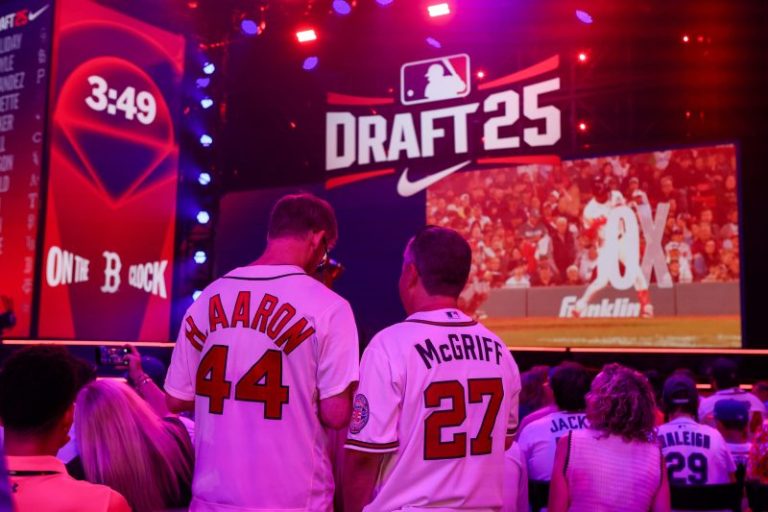
The Chicago White Sox won Major League Baseball’s 2026 draft lottery on Dec. 9 at the winter meetings and will have the No. 1 overall pick for the first time since 1977, and just the club’s third in franchise history.

The new Pope’s favorite team entered the lottery with the best odds (27.73%) to land the No. 1 pick, baseball’s fourth year with a draft lottery.

The Colorado Rockies had MLB’s worst record (43-119) and would have had the best odds but were ineligible for the lottery as they picked in the top six the past two years.

While the White Sox won out, two oof the teams with the worst chances – the San Francisco Giants (1.01%) and Kansas City Royals (0.84%) – defied the odds and snuck into the top six.

Here’s a look at the order for the 2026 MLB draft:

MLB draft lottery results

1. Chicago White Sox
2. Tampa Bay Rays
3. Minnesota Twins
4. San Francisco Giants
5. Pittsburgh Pirates
6. Kansas City Royals
7. Baltimore Orioles
8. Athletics
9. Atlanta Braves
10. Colorado Rockies
11. Washington Nationals
12. Los Angeles Angels
13. St. Louis Cardinals
14. Miami Marlins
15. Arizona Diamondbacks
16. Texas Rangers
17. Houston Astros
18. Cincinnati Reds

When is MLB draft lottery? How to watch, TV channel

Time: 5:30 p.m. ET
TV channel: MLB Network

MLB draft lottery odds 2026

White Sox: 27.73%
Twins: 22.18%
Pirates: 16.81%
Orioles: 9.24%
Athletics: 6.55%
Braves: 4.54%
Rays: 3.03%
Cardinals: 2.35%
Marlins: 1.85%
Diamondbacks: 1.51%
Rangers: 1.34%
Giants: 1.01%
Royals: 0.84%
Mets: 0.67%
Astros: 0.34%
Rockies: ineligible
Nationals: ineligible
Angels: ineligible

The Colorado Rockies had the worst record in baseball but are are ineligible for the lottery because a team can’t receive a top-six pick three years in a row, after the team had such picks in 2024 and 2025. The Washington Nationals and Los Angeles Angels are also ineligible as ‘payor’ teams, unable to receive back-to-back lottery picks.

This post appeared first on USA TODAY

The East semifinals in the NBA Cup are set.

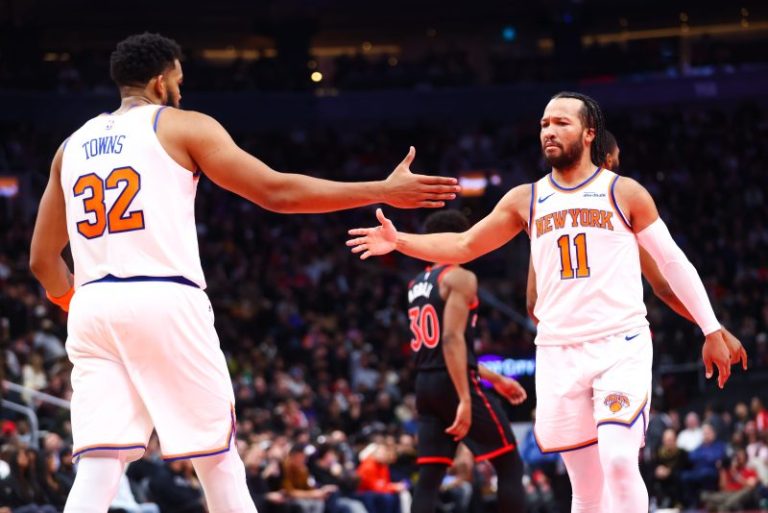
The New York Knicks thumped the Toronto Raptors on Tuesday, Dec. 9 in a 117-101 victory fueled by a massive night from Jalen Brunson, who scored 20 of his 35 points in the first quarter. And so now New York will play the Orlando Magic in the NBA Cup East semifinal.

New York controlled the game after it held the Raptors to 13 points on 5 field goals in the second quarter. The Knicks outscored Toronto 34-13 in the period and never relinquished control.

The Knicks had six players reach double figures in scoring, with Josh Hart chipping in 21 points, 6 rebounds and 4 assists.

Brandon Ingram recorded 31 points, 6 rebounds and 6 assists, but the Raptors were only able to get 13 points from Scottie Barnes. The Knicks blitzed Barnes with double teams to force the ball out of his hands, limiting his effectiveness on offense.

The Knicks have won eight of their last nine games, while the Raptors have lost four consecutive.

The Knicks and Magic will play Saturday, Dec. 13 at 5:30 p.m. ET from Las Vegas.

Knicks vs. Raptors highlights

End Q3: Knicks 94, Raptors 79

The good news for the Raptors: they did far better in the third quarter than they did in the second. The bad news: Toronto is still carrying a 15-point deficit into the fourth quarter, and its chances at securing a berth in the NBA Cup East Semis seems unlikely.

The Raptors did cut into New York’s biggest lead in the third (24), but Josh Hart had a massive quarter and heads into the fourth with 18 points on 7-of-8 shooting, including 3-of-4 from 3-point range, with 5 rebounds and 2 assists.

Jalen Brunson leads all players with 33, while the Raptors have struggled for players beside Brandon Ingram to score; Ingram has a team-high 27 points, and the next closest Raptor, Jamal Shead, has 17. After him, two players are tied for just 10 points.

End Q2: Knicks 69, Raptors 52

There were seven ties and nine lead changes in the first half, but the Knicks opened a monster lead in the second quarter.

Toronto started the period shooting just 1-of-9 from the floor, but the operation could not stabilize even after Brandon Ingram returned to the floor after catching a breather. The Raptors scored just 13 points in the quarter and finished just 5-of-21 (23.8%) from the field in the second.

The Knicks outscored Toronto 34-13 in the period.

After his 17-point first quarter, Ingram added just 2 points in the second, though he started the period on the bench.

The Knicks now have three players — Jalen Brunson (26), Karl-Anthony Towns (10) and OG Anunoby (10) — who have reached double figures in scoring.

End Q1: Raptors 39, Knicks 35

It was a quarter of runs, but the Raptors ended the first quarter of their NBA Cup East Quarterfinal game against the Knicks with a four-point edge.

From 5-0 (New York) to start the game, to a 7-0 (Raptors) run to close the gap, to a 10-3 Knicks spurt to pull ahead, both teams repeatedly found ways to answer. And for New York, the solution, by and large, was Jalen Brunson, who drained 7-of-9 shots in the period to open the game with 20 points.

Not to be outdone, Brandon Ingram continued his hot start to this season with 17 first quarter points of his own, adding 3 rebounds, 2 assists and 2 steals in the period.

Both teams shot the ball incredibly well, with New York flushing them at a 65% clip, while Toronto hit 57.7% of its shots.

With the Magic already clinched, Knicks vs. Raptors is underway

The Orlando Magic took down the Heat to clinch the first spot in the NBA Cup East Semifinal Saturday, Dec. 13 in Las Vegas, and they’ll play the winner between the Knicks and Raptors.

New York started hot, making its first four shots, though turnovers allowed Toronto to claw back into it. The Raptors went on a 7-0 run to take an early 15-11 lead.

Knicks vs. Raptors start time update

The Knicks-Raptors game is slated to tip at 8:47 p.m. ET, the Knicks said.

New York Knicks starting lineup

Josh Hart
OG Anunoby
Jalen Brunson
Mikal Bridges
Karl-Anthony Towns

Toronto Raptors starting lineup

Jamal Shead
Scottie Barnes
Ochai Agbaji
Brandon Ingram
Jakob Poeltl

What time is Knicks vs. Raptors NBA Cup game today?

The Toronto Raptors will host the New York Knicks on Tuesday, Dec. 9 at 8:30 p.m. ET at Scotiabank Arena in Toronto.

How to watch Knicks vs. Raptors NBA Cup game: TV, live streaming

The game between the Toronto Raptors and New York Knicks will be live streamed nationally on Amazon Prime Video.

Date: Dec. 9, 2025
Time: 8:30 p.m. ET
Location: Scotiabank Arena (Toronto)
TV: None
Streaming: Amazon Prime Video

Watch NBA Cup games with Amazon Prime

Knicks, Raptors injury updates

New York Knicks star Karl-Anthony Towns is listed as questionable on the injury report with left calf tightness and will be a game-time decision, while Landry Shamet is out with a right shoulder sprain.

The Raptors, meanwhile, will be without RJ Barrett, who is dealing with a right knee sprain.

This post appeared first on USA TODAY