Archive

2025

Browsing

Tyler Skaggs’ relapse into opioid addiction was not evident to many of his closest associates, including his agent, who testified Wednesday, Dec. 3, in the wrongful death lawsuit of the pitcher who died after ingesting a fentanyl-laced pill in 2019.

‘Before he died, I did not think he was using,’ Ryan Hamill, the pitcher’s longtime agent, said in court, according to The Athletic.

Hamill played an active role in what’s been described as an intervention with Skaggs in 2013, when the left-handed pitcher was addicted to Percocet. Skaggs underwent Tommy John elbow reconstruction surgery a year later, before which Skaggs’ mother, Debbie Hetman, cautioned surgeon Neal ElAttrache about Skaggs’ painkiller dependency, she testified earlier.

ElAttrache, the Los Angeles Dodgers’ longtime team orthopedist, testified Dec. 3 that he couldn’t recall being told of Skaggs’ past Percocet use.

Skaggs and Hamill had a text message exchange in 2018 as Skaggs dealt with a leg injury, and Hamill suggested asking the Angels to prescribe a Dose Pack to deal with inflammation. The team declined, citing potential side effects, including liver damage.

Skaggs, The Athletic reported, then asked Hamill if he could procure one.

‘I could go to jail for that,’ Hamill responded.

He also recounted a 2019 conversation in which he noted that Skaggs’ wife, Carli, had not accompanied him on road trips. Skaggs responded: ‘I do my own thing on the road.’

Hamill did not press the matter, testifying that ‘there are certain things as an agent you don’t want to know,’ though he had no inclination Skaggs’ comment regarded drug use.

Skaggs’ family is seeking $118 million in lost wages in addition to punitive damages, claiming the Angels knew or should have known that club employee Eric Kay was providing painkillers to Skaggs and other players. Kay is serving a 22-year sentence after a Texas jury convicted him of providing Skaggs the Fentanyl-laced Oxycodone pill that contributed to the pitcher’s death.

This post appeared first on USA TODAY

Milwaukee Bucks star Giannis Antetokounmpo could be out until the calendar turns to 2026 after exiting Wednesday’s win over the Detroit Pistons early with a calf injury, according to a new update.

Antetokounmpo is expected to miss 2-4 weeks with a right calf strain, ESPN reported on Thursday, Dec. 4, and the longer end of that timeline would put his streak of all-NBA appearances in jeopardy due to the league’s eligibility rule about playing a minimum of 65 games.

Antetokounmpo left Wednesday’s game in the first quarter when he went down suddenly while heading back up the court after feeding AJ Green for a layup. The two-time MVP headed back to the locker room and the Bucks ruled him out for the game a short time later.

Bucks coach Doc Rivers told reporters during his postgame availability that Antetokounmpo was getting an MRI ‘right now.’ He added the team believed it was not an Achilles injury.

Antetokounmpo only recently returned from a strained adductor injury that cost him four games last month and has been the subject of trade rumors again this week.

This post appeared first on USA TODAY
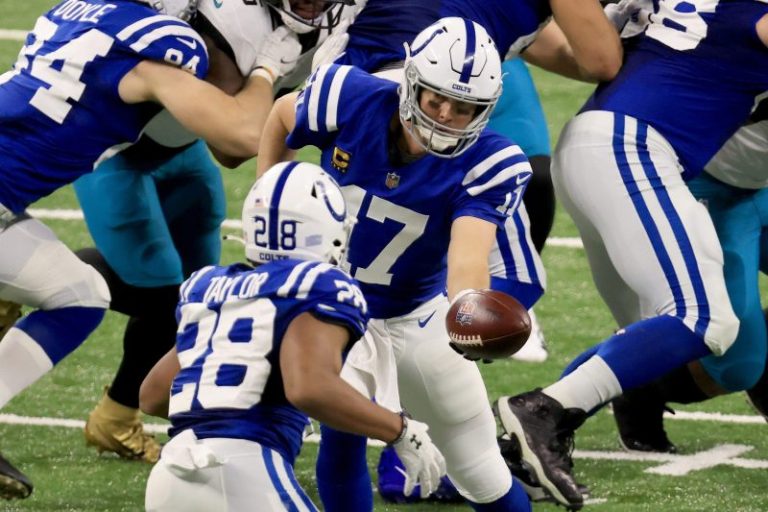
Travis Kelce is again a nominee for one of the NFL’s most prestigious awards.

The tight end on Thursday was named the Kansas City Chiefs’ club winner for the Walter Payton NFL Man of the Year Award, making him one of 32 league-wide finalists for the honor.

Kelce, 36, was also the team’s nominee for the 2024 season, when the Jacksonville Jaguars’ Arik Armstead won the award.

The Walter Payton NFL Man of the Year Award is recognized as one of the league’s highest honors, with a focus on recognizing players for high-impact work in their communities as well as on the field.

Why Travis Kelce was nominated for Walter Payton award

Kelce has been at the forefront of multiple charitable endeavors, including his work with the Eighty-Seven & Running Foundation, a nonprofit organization he founded in 2015 that aims to ’empower disadvantaged youth to achieve success by providing resources and support to their communities and cultivating their talent in the areas of education, business, athletics, stem, and the arts.’

The winner for the award will be unveiled on Feb. 5 at NFL Honors, which will be held in San Francisco ahead of Super Bowl 60.

‘To be chosen as the team’s Walter Payton NFL Man of the Year is such a great honor,’ Kelce said in a statement. ‘I have so much love for Kansas City and the Chiefs organization, and to be selected once again means everything to me.

‘The opportunity to be involved and help kids through Eighty-Seven & Running and working with Operation Breakthrough as well as Ignition Lab has been such a tremendous experience. Coming from Cleveland Heights and having a strong support system has taught me the importance of having the right people around, that show up for you and want to see you succeed. Being able to give back to Kansas City and to my hometown, places that have done so much for me, has been a dream come true, and I’ll never take that for granted. Representing the team, the Hunt family, our fans, and my foundation is incredibly special and I’m very grateful.’

Walter Payton NFL Man of the Year Award nominees from all 32 teams

Atlanta Falcons: A.J. Terrell Jr.

Baltimore Ravens: Derrick Henry

Buffalo Bills: Dion Dawkins

Carolina Panthers: Austin Corbett

Chicago Bears: DJ Moore

Cincinnati Bengals: Ted Karras

Cleveland Browns: Grant Delpit

Dallas Cowboys: Solomon Thomas

Denver Broncos: Garett Bolles

Detroit Lions: DJ Reader

Green Bay Packers: Jordan Love

Houston Texans: Azeez Al-Shaair

Indianapolis Colts: Kenny Moore II

Jacksonville Jaguars: Logan Cooke

Las Vegas Raiders: Maxx Crosby

Los Angeles Chargers: Cameron Dicker

Los Angeles Rams: Kyren Williams

Miami Dolphins: Bradley Chubb

Minnesota Vikings: C.J. Ham

New England Patriots: Hunter Henry

New Orleans Saints: Demario Davis

New York Giants: Bobby Okereke

New York Jets: Quincy Williams

Philadelphia Eagles: Jordan Mailata

Pittsburgh Steelers: Alex Highsmith

San Francisco 49ers: Curtis Robinson

Seattle Seahawks: Julian Love

Tampa Bay Buccaneers: Baker Mayfield

Tennessee Titans: Jeffery Simmons

Washington Commanders: Bobby Wagner

This post appeared first on USA TODAY
When Michelle Akers boarded a flight from New York to Italy for the USWNT’s first international match in 1985 at 19, she didn’t understand the gravity of the moment. 

‘I literally was just there to play. No money, no fanfare, no audience, nothing. It was just because we loved it,’ Akers, a member of the National Soccer Hall of Fame, told USA TODAY Sports. ‘It took me a game to understand, holy s—, I’m playing for America.’

Akers and the 16 founding members of the USWNT embarked on a seismic journey armed with $10 a day, Adidas cleats and hand-me-down men’s uniforms. What the original 85ers lacked in resources was made up by sacrifice, grit and belief in each other.

It’s the DNA and mentality that laid the foundation for the USWNT dynasty to become the most dominant team in women’s sports history. Yet, the 17 trailblazers that started it all rarely get that recognition.

Until now. Storied Sports partnered with Adidas to release a seven-part audio series, titled, “Origin Story: The 85ers,’ which premieres Dec. 10 in celebration of the 40th anniversary of the inaugural 1985 team. Akers, who served as co-producer on the project, said it’s an ’emotional’ story she’s been trying to tell for decades.

‘You’ve spent and invested your blood, sweat, tears, your dreams, your identity into building change and building lasting, empowered opportunity and equality,’ said Akers, an Olympic gold medalist (1996) and two-time World Cup champion (1991, 1999).

‘To look back 40 years later, from that first U.S. women’s national team, and see that it’s not only changed and elevated the USWNT, it’s changed women’s sports all around the world. And that, to me, is incredible.’

1985 USWNT was made of ‘warriors’

The origin of the USWNT dates back to the 1985 U.S. Olympic Sports Festival in Baton Rouge, Louisiana, more than a decade before the U.S. women won the first Olympic gold medal. The USWNT would be to be selected at the end of the tournament.

Players anxiously sat bleachers after the festival concluded, Akers recalled. And then USWNT head coach Mike Ryan read aloud a list of names that would form the first USWNT to compete overseas: Michelle Akers, Pam Baughman Cornell, Denise Bender, Denise Boyer-Merdich, Tara Buckley, Laurie Bylin, Stacey Enos, Linda Gancitano, Cindy Gordon, Ruth Harker, Tuca Healy, Lori Henry, Sharon McMurtry, Ann Orrison, Emily Pickering, Kathy Ridgewell and Kim Wyant.

‘They read the list of names and we got on a plane and went to New York … had a training camp, and the team was chosen and we left for Italy. So they made the team in three days,’ said Akers, who noted that their airfare was covered otherwise she ‘never would’ve been able to go.’

Akers said Ryan reminded the team of the opportunity ‘He’s yelling at us. You don’t understand what it is the privilege and honor it is to play for your country!’ and to a certain extent, she agreed. Akers didn’t realize what the USWNT would become. Consider: there was no women’s World Cup, it started in 1991, and Olympic women’s soccer tournament, it began in 1996.

Akers, one of the youngest of the bunch, said her teammates saw the bigger picture. Little did Akers know she was ushering in a program that would transcend not only the sport and the country, but the world.

‘Some of my other teammates, they had more vision I think, than I did. So for me, going there, I was so excited to play at the highest level in the world for the U.S.,’ she said. ‘It took a minute to let that sink in and feel the privilege of that, but also the opportunity to wear that jersey.’

Akers said she and her teammates had to hand-sew Team USA patches on their jerseys, old men’s uniforms that were given a second life by the women’s team. And although they didn’t have their last names on the back, Akers felt a tremendous amount of pride wearing it, an honor she feels to this day.

The USWNT lost to Italy 1-0 in its first international match on Aug. 18, 1985. They finished in a 2-2 draw against Denmark in their second match, before ending the tournament with losses to England (3-1) and Denmark (1-0).

‘Playing against Italy, that first game, and we got our asses kicked,’ Akers said. ‘… They were true soccer football players. And I recognize we had a long way to go.’

But the Americans’ confidence grew each time they took the pitch and Akers knew they had something special: ‘We were warriors. We wanted to win. That’s that mentality… It carries on over 40 years.’

‘We’ll outwork you, outplay you and never ever give up,’ Akers said. ‘And we see that time and time again in every competition, the USA plays in.’

‘Origin Story: The 85ers’: A sisterhood revisited

Ahead of every USWNT match, U.S. players enthusiastically chant ‘Ooosa, Ooosa, Ooosa’ before taking the pitch. It’s a tradition that dates back to the founding members being greeted by Italian fans cheering for ‘USA’ upon their arrival in 1985, an endearing connection between the past and present.

‘It makes my heart explode with pride and just a sisterhood,’ Akers said. ‘This thread continues and it’s represented by this cheer from that very first team. So it’s, it’s really, really special.’

Sisterhood is a central theme of the documentary-style audio series ‘Origin Story: The 85ers,’ which reunites the original members through conversations, memories and shared experiences. Forty years may have passed, but ‘nothing’s changed at all,’ Akers joked, likening her teammates to the cast of ‘A League Of Their Own.’

‘These are the characters of my teammates. They are off the hook,’ she added. ‘They’re completely authentic. They did things no one has ever done before, and they’re still doing it because that’s who they are. So I think as serious and intense it can be, it’s funny and emotional too.’

Akers said the reunion was extra special because it was the first time some of her teammates revisited 1985. Although Akers went on to have a prolific soccer career that stretched until 2000, many of her teammates hung up their cleats after that trip to Italy to pursue a job, families, education or anything deemed legitimate, because ‘soccer wasn’t a thing’ back then, Akers recalled.

‘Some of them literally packed their gear away in the attic and never looked at it again. And then when we started developing this project, they took it out of the attic and it was so emotional,’ Akers said. ‘The thought that now finally they’re being recognized and what they did is special.’

The 85ers ‘lit that spark’ that turned into a wildfire

In addition to the 17 members of the 1985 team, many USWNT icons — Brandi Chastain, Julie Foudy, Lindsey Heaps, Kristine Lilly, Becky Sauerbrunn and Abby Wambach — make appearances throughout the seven-part audio series to reflect on the 85ers legacy. The voices highlight how far the program has come.

‘You can’t understand the rise of women’s sports today without understanding and appreciating the women who built it,’ said Jaymee Messler, co-founder and co-CEO of Storied Sports. ‘I feel like it closes a loop that honors the past while acknowledging how deeply it’s shaped the present. And it feels like the 85ers lit that spark that this next generation turned into a wildfire.’

It’s appropriate the series is presented by Adidas, who was part of their story from the beginning ‘before there were lights, cameras or sponsorship dollars,’ Messler added. Adidas provided the first USWNT jersey.

Storied Sports is doing more than sharing the story. The content studio created an athlete-owned team LLC, where all 17 players are represented and trademarked in an effort to turn ‘history into equity.’

‘There’s so much investment going into women’s sports right now,’ Messler said, ‘and Michelle and I and our team have been focusing on how to create some of that investment into the women themselves that have built these sports.’

The USA TODAY app gets you to the heart of the news — fastDownload for award-winning coverage, crosswords, audio storytelling, the eNewspaper and more. 

This post appeared first on USA TODAY
The National Women’s Soccer League wants to keep Washington Spirit star Trinity Rodman in the league for years to come.

But Rodman’s services will come at a cost, and according to multiple media reports, NWSL commissioner Jessica Berman vetoed a deal that would have kept Rodman in the league. According to The Athletic, the 23-year-old Rodman was ready to accept a multi-million-dollar deal from Washington, only for Berman to nix it.

According to The Athletic, Berman believed the proposed deal would have violated league rules. The league’s players’ union has commenced a grievance filing on Rodman’s behalf, The Athletic reported.

‘Our goal is to ensure that the very best players in the world, including Trinity, continue to call this league home. We will do everything we can, utilizing every lever available within our rules to keep Trinity Rodman here,’ a league spokesperson said in a statement.

The deal would have been worth more than $1 million per season, and Berman has previously stated that owners not being able to outspend each other promotes parity. The team salary cap is $3.5 million for the 2026 season.

Rodman became a free agent last month after her Spirit team lost in the NWSL championship to Gotham FC.

This post appeared first on USA TODAY
Ralph Lauren designed the opening and closing ceremony uniforms for Team USA at the 2026 Winter Olympics.
The opening ceremony uniform features a white wool coat, while the closing ceremony outfit includes a color-blocked puffer jacket.
All items in the uniforms are manufactured in the United States.
Team USA athletes praised the new designs for their style, warmth, and comfort.

One of the fashion world’s fashion capitals, Milan carries a reputation that should motivate designers to bring their best while outfitting the elite athletes for the opening and closing ceremonies of the upcoming 2026 Winter Olympics. 

That was precisely Ralph Lauren’s goal for Team USA. 

“It’s the proudest moment for our country, as these athletes take the stage,” Ralph Lauren chief branding and innovation officer David Lauren told USA TODAY Sports. “If we can make them look great in Italy, we’ve scored.” 

Ralph Lauren has designed the ceremony outfits for 20 consecutive Olympics, including the Milan Games. The opening ceremony uniform features a white coat made of wool with heritage-inspired wooden toggles and an iconic American flag knitted onto the sleeves. Athletes walking in the festivities on Feb. 6 will wear a wool turtleneck sweater and tailored wool trousers.

Get our Chasing Gold Olympics newsletter in your inbox for coverage of your favorite Team USA athletes

The baggier fit appeals to snowboarder Red Gerard, who is a fan of the winter white color and the casual nature it exudes.

“And they’re warm,” Gerard told USA TODAY Sports, “which is really nice. A lot of times people forget that even though it’s the opening ceremony, it’s the ‘Winter Olympics.’ Really cold.” 

A two-time Olympian and gold medalist from the 2018 slopestyle event, Gerard said walking out with Team USA teammates at the opening ceremony is “when it hits you that this is bigger than any other competition.” 

The fits are a reminder that Gerard is representing something much bigger than himself. 

“This is by far my favorite opening, closing ceremony outfits,” said Gerard, who is also a “sucker for a good sweater.” 

Get Olympics updates in your texts! Join USA TODAY Sports’ WhatsApp Channel

Paralympic snowboarder Brenna Huckaby prefers the closing ceremony set, which draws inspiration from vintage ski racing kits and features a “sporty and modern” color-blocked puffer jacket with bold Team USA graphics and a wool turtleneck sweater in a patriotic color palette, paired with a crisp white utility pant. 

“It’s fast,” Huckaby told USA TODAY Sports. “It looks like we’re going to go really fast on our snowboards.

Huckaby appreciates that the Paralympic and Olympic athletes wear the same uniforms, with either the Olympic or Paralympic logo emblazoned on the jackets. 

“It feels very uniting,” Huckaby said.  

All items in each uniform are produced in the United States. Both looks are completed with red, white and blue knit hats and mittens, a leather belt and brown suede alpine boots with spirited red laces. The company works about 2.5 years on the ceremony clothing to “try to bring to life the clothing and tell a story of what America is about,” Lauren said.

Some pieces make excellent gifts or can be worn again, Huckaby said. She stashes her favorite items away to maybe one day give to either of her daughters, ages 9 and 5. The turtleneck sweater is her favorite part of the Milan ceremony wardrobe. Trading clothing items isn’t uncommon in the athlete villages, Huckaby said, but that won’t be the case for Huckaby in Italy. 

“It’s just so chic and clean,” she said. “I don’t know. I would wear everything outside of opening and closing ceremonies. It fits.” 

This post appeared first on USA TODAY
First lady Melania Trump announced Thursday that an additional seven Ukrainian children have returned to their families in the war-torn country as part of a Russia-Ukraine youth reunification initiative.

‘My dedication to guaranteeing the safe return of children to their families in this region is unwavering,’ Melania Trump said in a statement shared by the White House, which noted that six boys and one girl were involved.

‘I commend the leadership and persistent diplomacy of Russia and Ukraine in the pursuit of the reunification of children and families. Their bridge-building has created a tangible collaborative environment — an anchor for optimism. This cooperation will continue to drive the process forward through the next phase,’ she added.

‘In close partnership, my representative and I have provided humanitarian support from the United States to enhance the reunification initiative’s outcome. My hope is that, ultimately, our collective efforts will lead to broader regional stability,’ Melania Trump also said.

The first lady previously wrote a ‘peace letter’ to Russian President Vladimir Putin telling him ‘it is time’ to protect children and future generations around the globe, Fox News Digital reported in August.

President Donald Trump then hand-delivered the message to the Russian leader before their summit in Alaska that month.

In October, Melania Trump said eight Ukrainian children displaced during the ongoing war with Russia had been reunited with their families.

‘Each child has lived in turmoil because of the war in Ukraine. Three were separated from their parents and displaced to the Russian Federation because of frontline fighting. The other five were separated from family members across borders because of the conflict, including one young girl who has now been reunited from Ukraine to Russia,’ Melania Trump said at the time.

‘My ongoing mission is twofold: to prioritize and optimize a transparent, free flow of health-related information surrounding all children who have [fallen] victim to this war, and to facilitate the reunification of children with their families until each individual returns home,’ Melania Trump said. 

Fox News Digital’s Brooke Singman and Rachel Wolf contributed to this report.

This post appeared first on FOX NEWS

Former Honduran President Juan Orlando Hernández thanked President Donald Trump for pardoning him, writing on social media that he was ‘wrongfully convicted.’

‘My profound gratitude goes to President @realDonaldTrump for having the courage to defend justice at a moment when a weaponized system refused to acknowledge the truth. You reviewed the facts, recognized the injustice, and acted with conviction. You changed my life, sir, and I will never forget it,’ Hernández wrote on X in his first remarks since he was released by the Bureau of Prisons.

‘I was set up by the Biden Harris administration and the deep state through a rigged trial. There was no real evidence, only the accusations of criminals who sought revenge. Yet the truth of my innocence prevailed,’ he said in part.

Hernández was sentenced to 45 years in prison in June 2024 for conspiring to distribute more than 400 tons of cocaine and for related firearms offenses.

Former Attorney General Merrick Garland said the ex-two-term president used his power to support one of the largest and most violent drug trafficking conspiracies in the world.

‘Hernández received millions of dollars of drug money from some of the largest and most violent drug-trafficking organizations in Honduras, Mexico, and elsewhere, and used those bribes to fuel his rise in Honduran politics,’ the Department of Justice said.

Hernández’s brother, Juan Antonio Hernández Alvarado, was also convicted in October 2019 and sentenced to life in prison.

Trump said he pardoned the former Honduran leader because ‘a lot of people in Honduras’ asked him to, adding he feels ‘very good about it.’

‘Well, he was the president, and they had some drugs being sold in their country, and because he was the president, they went after him – that was a Biden horrible witch hunt,’ Trump told reporters Tuesday.

Several GOP lawmakers criticized the pardon amid the White House’s targeting of alleged drug boats off the coast of Venezuela.

Sen. Bill Cassidy, R-La., criticized the decision to pardon Hernández, saying it made little sense to free him while the U.S. continues to pursue Venezuelan President Nicolás Maduro on federal narco-terrorism charges.

Sen. Thom Tillis, R-N.C., also criticized the move in an interview on CNN, saying he couldn’t understand how the U.S. could ‘threaten a potential land war against a thug and a narco-terrorist who plays like he’s the president of Venezuela, and then go easy on someone whose investigation that led to an indictment started in the Trump administration.’

This post appeared first on FOX NEWS

The suspect who allegedly planted pipe bombs blocks from the U.S. Capitol on January 5, 2021, has been identified as Brian Cole Jr. of Woodbridge, Va., according to two sources briefed on the arrest.

The sources say Cole, 30, is in FBI custody as of Thursday following roughly five years of investigation.

The FBI arrested Cole in northern Virginia. 

Authorities have not released further details about the man, but one federal law enforcement source told Fox that the FBI is carrying out ‘court-enforced activity’ at Cole’s residence.

Authorities discovered the two pipe bombs near the Republican and Democratic National Committees’ headquarters around the same time that thousands of protesters a few blocks away began to storm the Capitol over the 2020 election results.

Neither bomb detonated, but authorities say both were viable and dangerous.

Video footage released by the FBI showed the suspect placing the pipe bombs near the two headquarters more than 16 hours before law enforcement found them.

The suspect was seen wearing a gray hoodie, Nike Air Max Speed Turf sneakers, a mask, glasses and gloves, but Cole’s identity had long been unknown.

This post appeared first on FOX NEWS

HURRICANE MILLS, T.N . – Two medics rolled Ashlee Sokalski onto a backboard and fitted the 19-year-old with a neck brace in the middle of the dirt motocross track.

Other teen racers whizzed past on their off-road motorcycles, no halt to the race, no safety flaggers in sight.

Sokalski had sharpened her race skills for years and finally broke through a Mideast regional qualifier to be here at Loretta Lynn’s Ranch among the dust and roar of the sport that ran in her family’s blood.

But just minutes into the race, Sokalski flew off her Yamaha YZ250 motorcycle and another rider ran her over.

Her neck, skull, shoulder, leg and wrist were broken. Her right lung was crushed. She was barely breathing and had a faint pulse.

The record of the 2010 national motocross championship listed Sokalski’s official result as DNF: Did not finish.

The injuries would kill her.

A USA TODAY investigation found that at least 158 children and teens have died on dirt bikes and at motocross tracks since 2000, more than six per year. That makes it the deadliest sport for young people – roughly seven times greater than tackle football.

Nineteen of the fatalities involved riders 10 years old or younger.

The sport is inherently dangerous, but fatal incidents follow a pattern where safeguards are ignored. The investigation showed riders of significantly different ages and sizes compete on the same courses, many of which include obstacles such as fences, trees, and vehicles too close to the tracks.

Can’t see the track graphic above? Please click here to reload the page.

Sokalski arrived at Nashville’s Vanderbilt Trauma Center three hours after her crash. She never regained consciousness and died five days later with her family at her side.

A devoted cohort of America’s young dirt bike racers nationwide are pulled to the sport that culminates each July at Loretta Lynn’s Ranch. The week-long competition is filled with deafening engines, colorful race uniforms and the odor of race fuel exhaust in the air.

Those annual championship races are sanctioned and produced by the biggest names in amateur motocross racing, the American Motorcyclist Association and MX Sports. Track owners and race promoters nationwide often don’t enforce their own safety rules, the newspaper found.

Only a handful of states mandate safety requirements for motocross tracks, and most do not set age minimums. Some parents sign off on children as young as 4 driving motorbikes competitively.

A spokesperson for the AMA said it has longstanding safety protocols for its sanctioned events and can’t control unaffiliated tracks. Skirting standards results in expulsion from the AMA and participation in their preferred insurance program, the statement said.

Of the 158 deaths, nearly two-thirds occurred at a track. The others occurred at other off-road venues like dunes, trails and backyards. The review excluded on-road incidents.

Of the on-track wrecks, USA TODAY identified 65 deaths at tracks that host AMA-sanctioned events. It’s unclear in some cases if those deaths occurred during practice sessions or races.

Sanctioning and AMA-insurance requires track owners to attest they will adhere to safety requirements and watch two risk management YouTube videos.

The organization declined to release its own data on injuries and deaths but said “multiple tracks” had been stripped of their sanctioning in recent years.

“The overwhelming majority of youth fatalities do not occur at AMA-sanctioned events or AMA-insured tracks,” the AMA wrote in a statement. “The environment, supervision, and safety standards at non-sanctioned facilities vary widely and often do not reflect AMA requirements.”

USA TODAY was unable to confirm a tally of deaths at AMA-sanctioned events and insured facilities.

Similarly, race promoter MX Sports said it has no influence over the races it doesn’t produce.

MX Sports said its records showed two young riders had died at its own events since 2000. However, to qualify for those events, racers must compete at non-MX Sports competitions. USA TODAY’s analysis found 23 deaths at races that serve as qualifiers toward MX Sports’ flagship event.

National standards could prevent youth deaths. Tracks could have onsite medical staff, trained flaggers, split track times for different ages, insurance requirements and safety barricades.

On the floor of the Massachusetts Legislature last summer, MX Sports Event Director Tim Cotter testified in favor of more regulation and safety measures.

“They all sound difficult, but they are not and could be easily done,” Cotter said. “Every track in America should have those minimum standards.”

But they don’t, and the death rate that’s sevenfold football’s rate is making it the most dangerous youth sport, according to the review. In 2025, approximately 17,000 kids from ages 4 to 19 competed in an AMA-sanctioned motocross event, according to the organization.

The higher death rate associated with motocross aligns with research on race competition injuries that show it causes 20 injuries per 1,000 young riders. That’s compared to 4 per 1,000 in all high school sports and 12 per 1,000 in football.

Motocross deaths often go unexamined and uncounted when they occur on private property and without foul play. Highway motorcycle wrecks flow into a federal database, but deaths on off-road dirt bikes don’t.

Reporters scoured news accounts and online discussion boards and obtained ambulance, police and coroners’ reports to verify the number of deaths.

David Pingree, a former professional racer who covers the sport as a journalist, has become a critic of safety lapses that go unexamined.

“It’s not acceptable to go, ah, so sad. All right, on to the next race,” Pingree, now a firefighter paramedic, told USA TODAY. “This isn’t about finger pointing … when you have somebody die in an event you have to stop. Let’s analyze this. What happened here?”

Young and mixed riders

Dirt bike riding appeals to families since it has bikes for all rider sizes. You might see a 5-year-old on a miniature 50 cc bike that weighs 100 pounds riding on the same track as adults 50 years older on bikes that are 150 pounds heavier.

At races, competitors are strictly grouped by age and skill level. But on some tracks, everyone practices at the same time no matter what they’re riding. That means a child can operate a three-foot tall dirt bike that tops out at 25 mph alongside an adult on a race-machine tuned to hit 80 mph.

Because that disparity, known as “mixed riding,” can result in death or serious injury when crashes occur, the rules at most tracks ban it. The AMA, MX Sports and other major promoters agree that mixed track times should be avoided. But it’s largely an honor system at local tracks that assume parents are monitoring their children.

USA TODAY’s analysis found 12 children who died under such circumstances between 2000 and 2025. The youngest was 5-year-old Cody Fidler, who died at a North Carolina track in 2007 after colliding with 12-year-old boy on a bigger motorcycle. His family sued the track for not enforcing its rule against mixed riders. The case settled out of court.

The operators of a track in Wareham, Massachusetts didn’t enforce its rule banning mixed riders, according to a lawsuit filed in 2023. If they had, 13-year-old Ava Pioppi may have lived to realize her dream of becoming a pro rider.

Ava’s coach encouraged her to ride on the track on Labor Day 2021 even though older riders with bigger bikes were already there, according to the lawsuit.

Ava crashed after a jump and was crushed by a man on a larger motorcycle.

Her family’s wrongful death lawsuit against the track operators alleges they were negligent in mixing rider sizes and in failing to have liability insurance.

‘We know this lawsuit won’t bring Ava back, but we are continuing to try to cope with this loss,’ Ava’s mother, Wendy, said when the suit was filed in 2023. ‘We want to start by holding (her coach) and the track accountable for their actions in Ava’s death. We hope that speaking out will begin a discussion about how to make motocross safer for kids.’

The suit remained pending in the state’s Superior Court as of December 2025 and may be scheduled for trial in 2026. An owner of the Wareham track has denied they should be liable for the death.

Even when children ride beginner tracks with other kids on small bikes, the speed and awkward landings can make crashes deadly.

Those crashes lead to concussions, musculoskeletal injuries and fatal internal bleeding, said Charles Jennissen, an Iowa pediatric emergency doctor who specializes in off-road vehicle injury research.

“You’ll hear around the track you don’t dress for the ride, you dress for the crash. It’s an expectation you will get injured doing this,” Jennissen said. “Should we be doing that to our kids?”

Alexis Jones was the youngest child to die identified during the USA TODAY review.

The 4-year-old was wearing all the recommended safety gear, including a helmet and chest protector, when she clipped a tractor tire barrier at a track outside Medina, Ohio in 2011.

Alexis’ mother, Toni, said they bore the brunt of community criticism after the crash. But she pointed to nearly 400 children who die in swimming pools each year by comparison.

“It was a fluke accident. This was a place we spent family time together,” Jones said. “As a bereaved parent you play the blame game, but you won’t ever get those answers.”

Her daughter’s dirt bike had training wheels.

Medical care is lacking

Ashlee Sokalski’s mother, Tanya Burgess, traveled from Michigan to Tennessee for what turned out to be her daughter’s final race.

She assumed the major national event would have top-tier medical care and was shocked that, in her view, it did not. She later found out the assigned medical director for the race, James McGee, did not help Ashlee because he was lining up for his own race, set to begin minutes after the women’s event.

Instead, Burgess, a trauma nurse, and her husband, a paramedic, set Ashlee’s IV and assisted in her ventilation in the back of an ambulance themselves.

Ashlee and her sister, Amanda, began riding on the same bike as their dad in the backyard while in elementary school. By 10 they started bugging him for their own bikes and by 15 they had become regulars in the local racing scene in Michigan.

Racing became a way of life, traveling the Midwest and scrimping together money for fuel and parts.

“Amanda and Ashlee would feed off one another,” their father, Mike Sokalski, recalled. “They pushed one another, and it just was constant. It didn’t matter if we were in the woods or at the track.”

Amanda rushed from Michigan to the intensive care unit in Nashville in 2010 and arrived just seconds before her older sister took her final breaths.

In the years following Sokalski’s death, the safety of the sport became a crusade for her family.

Burgess launched a nonprofit to provide money for rider safety gear and to advocate for more medical care at the national races. The family bought a Freightliner box truck with a sleeper cab so Burgess could travel the country, pouring her grief into the effort.

“I was in deep. It became an obsession,” she said. “The sport doesn’t want to talk about injuries or death, it’s taboo. But that doesn’t mean you should ignore the danger and call it a day. We have to make it safer.”

Other tracks haven’t followed suit. In many cases, there are still no medics on hand during practice sessions nationwide.

The lack of onsite first responders and dangers on tracks came as a surprise to Massachusetts parents Eric and Tammy Lippincott. They encouraged their son, Colby, to transition from riding the trails near their home to a local track to be safer. The eighth grader was not allowed to race despite dreaming of one day turning pro.

In the summer of 2024, the 14-year-old went to Diamond MX in Wareham, Mass. to ride and crashed into a tree. His father, a former police officer, saw the aftermath of the wreck and called 911, but there was no immediate service available in the township. It took 30 minutes for help to arrive.

Colby died at a nearby hospital.

“They didn’t just take his life — we’ll never get to see him graduate, we’ll never see him as the man he would have become,” Tammy Lippincott said. “Our joy is stolen, our laughter, our peace. This wasn’t a freak accident. It was a failure of oversight.”

In February, 12-year-old Dalton Hill of Milledgeville, Georgia died during an AMA-sanctioned race at Echeconnee MX motocross track in Lizella, Georgia.

His father, Phillip, believes flaggers contributed to his son’s death and the family filed a lawsuit in November. He said he thinks the flaggers were in the wrong location and inexperienced. The track owners have yet to file a response to the suit.

“They didn’t stop the race to give my son a chance to even get proper medical attention,’’ Phillip Hill said. His son crashed on the backside of a jump and was hit by two other racers.

“Where’s the flags at?’’ Phillip Hill said. “Now they’re trying to get to him. They can’t get to him because they can’t stop the race. So 15 minutes later, by then he’s done lost all his air, there’s no medical equipment out there (on the track), no red flag. It was really just a disaster.’’

Practice sessions around the country have even fewer emergency resources on site.

Levi Willis, 14, crashed and died waiting for an ambulance as another rider performed CPR on him in 2022 in Kentucky. Connor Webb, 18, crashed while practicing for an event in Las Vegas in 2019 — he died after safety officials didn’t realize the severity of his internal injuries.

A 13-year-old in Alaska died in 2008 after a crash racing his 85 cc bike – a model with a small engine designed for riders ages 11 to 14.

He overshot a jump and landed his bike’s front tire before flipping forward, Alaska State Troopers records show. The hospital was 17 miles away, and it took the ambulance 40 minutes to get him there.

In Massachusetts, the Lippincotts are lobbying for “Colby’s Law,” which would require tracks to maintain insurance, be inspected by the state and have minimum safety standards, including barriers and netting, emergency response plans and defibrillators. Tracks that did not comply would face fines of up to $5,000.

The law passed out of a committee in October and remained pending as of December 2025.

Some riders have pushed back, vocally opposing new safety measures in Massachusetts. One online petition said the changes, “not only threaten the sport but also the livelihoods and economic stability of those who operate these tracks.” The AMA also opposes the measure.

“We’re motocross enthusiasts. We’re not trying to get rid of the little guys,” Tammy Lippincott said. “The AMA, MX Sports, they have standard procedures in place, but some of these tracks fly under the radar and have none of it. Don’t wait for another family to lose everything.”

At the time of Colby’s accident, his parents didn’t know Diamond MX had been the site of Pioppi’s death two years earlier under previous ownership.

Kids die, little legislation is filed to help

New Jersey is among the few states that specifically require track safety standards, and California’s negligence laws say track owners have a duty to minimize risk to racers crashing into others with a warning system, such as flaggers.

Some states, including Arizona, New Mexico, Oregon and Wisconsin have youth age restrictions and require safety classes. Those rules apply to riding on public land, not tracks.

Nearly all states are like Massachusetts. They don’t regulate motocross tracks or set any safety standards. That means tracks can keep operating even if multiple children die.

That’s what happened at the Village Creek track in Fort Worth, Texas.

In April 2007, Justin Sutterer, 17, was competing at Village Creek in a qualifier to reach Loretta Lynn’s Amateur National event. The Missouri teen wrecked his motorcycle on the back side of a jump, was hit by two other riders and suffered a fatal neck injury. He was studying to become an engineer.

A month later, 18-year-old Justin Taylor was leading a race at Village Creek, on his way to qualifying for Ponca City nationals in Oklahoma. He lost control of his bike and crashed at nearly the same place as Sutterer and died. The teen was studying at an Austin community college and was engaged to be married.

At the time, Tarrant County Sheriff officials questioned why the track never notified police about the incident.

“Obviously there’s nothing that would indicate any kind of criminal activity, but nonetheless, it’s an unattended, unexpected death, so it had to be reported to the proper authorities, and an investigation has to be done,” Deputy Chief Jay Six told the Fort Worth Star-Telegram.

The track was the scene of a third high-profile incident in 2019 when an 11-year-old rode his dirt bike into an unmarked 15-foot deep ditch, breaking his arm and both femurs.

His family sued. A jury ruled that the boy was riding without parental consent and the track failed to provide safety barriers around the ditch. It issued a $900,000 civil penalty against track owner Terry Cordray and his mother, who owns the land. Cordray didn’t have insurance and declared bankruptcy because he couldn’t afford to pay the judgment.

He reopened the track in March with a new name: Metroplex Motocross Park. Today, signs, in all caps, are posted at the entrance:

“Warning: Texas law limits the liability of a motorized off-road vehicle entity for injuries or death of a motorized off-road vehicle activity participant.”

Texas Gov. Greg Abbott signed that law in June 2025. Arkansas passed a similar law this year. Iowa and Missouri are considering comparable legislation — at the backing of the sport’s governing body, the AMA.

And while the AMA’s statement to USA TODAY said tracks that don’t follow its rules can’t get insurance via its preferred providers, Cordray had no problem doing so after reopening and enrolling in the AMA’s program.

He now is covered through Jones Birdsong, the insurance broker affiliated with the AMA.

The firm is a retail agent that finds policies by underwriters, said Matt Mowan, vice president of motorsports insurance.

The coverage has several requirements that must be attested to during an application: riders must be AMA members, races must have flaggers and onsite ambulances, and practices must have two licensed medical professionals in attendance. Both races and practices must divide riders by skill, bike size and class.

“The insurance companies don’t make the rules. They expect the promoters to follow an industry standard,” Mowan said. “The AMA will go down to 4 years old. This is an assumed risk. It’s a high-risk sport… When you’re doing a high-risk sport, accidents happen. People get injured, and when injuries are significant, they want to blame somebody.”

Family sport draws grieving families back together

Three weeks after Ashlee Sokalski’s funeral, her family organized a memorial ride at a track near their home in Michigan.

California rider Kristin Cosby, who had landed on the teen during the fatal race, didn’t attend and never returned to competitive racing.

“I sold my bikes right after that,” said Cosby, now 35, who said she struggled with alcohol abuse after the traumatic incident.

But Ashlee’s little sister, who used to share boots with her to save money, got back on her own Yamaha for the memorial.

Amanda Henderson finished college, started her career in financial planning, but would dedicate the next eight years of her spare time to racing. She says she did it for Ashlee.

Henderson, now 32, stopped competing in 2018. But on most summer days she can be found on the homemade tracks near her home, with her 4, 6 and 14-year-old children riding beside her.

Deciding whether to let them participate in the sport that turned fatal for her sister has been a struggle for Henderson, which she revisits often. So far, that has meant letting them get on dirt bikes for fun, but not in competition.

“People might think I’m a bit hypocritical because I won’t let them race, but it’s just not worth it to me,” Henderson said. “I still hurt every day from my sister being gone.”

And the sisters’ mother, Tanya, sold all of their traveling advocacy trucks and suspended the nonprofit they created. The all-consuming effort had become too much, and they felt they had achieved some progress at Loretta’s.

But she hit a brick wall with other safety efforts, and cringes every time she sees her daughter and grandchildren climb back on a bike.

Do you have a tip or other feedback? Did we miss an incident? Email us at npenz@usatoday.com

This post appeared first on USA TODAY