Archive

2024

Browsing

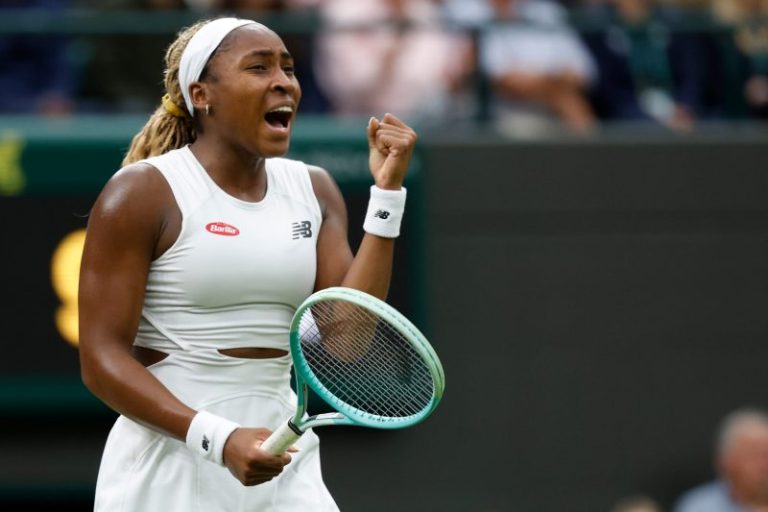
PARIS — Three years ago, Coco Gauff was kept out of the Olympics after testing positive for COVID-19 days before her scheduled departure.

This time, she’ll be carrying the U.S. flag at the opening ceremony.

Gauff will join NBA superstar LeBron James as the opening ceremony flag bearers for Team USA at the 2024 Paris Olympics, the U.S. Olympic and Paralympic Committee announced Wednesday. She is the first tennis player to serve in the role.

The pair were selected to lead the U.S. delegation into the Games in a vote of fellow athletes, conducted by Team USA’s athletes’ commission. At recent Olympics, the U.S. has selected one male athlete and one female athlete to serve as flag bearers.

‘I never thought in a million years I would have the honor of carrying the American flag for Team USA in the Opening Ceremony,’ Gauff said in a statement. ‘I could not be more proud to lead my teammates with LeBron as we showcase our dedication and passion on the biggest stage there is − at a moment where we can bring athletes and fans together from around the world.’

Meet Team USA: See which athletes made the U.S. Olympic team and where they are from

Gauff, 20, is making her Olympic debut in Paris after blossoming into one of tennis’ brightest stars. She has won two Grand Slam titles − including the U.S. Open championship last summer − and is currently No. 2 in the world in the Women’s Tennis Association’s world rankings.

The opening ceremony for the Paris Games begins Friday at 1:30 p.m. ET, or 7:30 p.m. in Paris. It is slated to be the first in Olympic history to take place outside of a stadium, with athletes floating down the Seine River on barges rather than parading into a stadium.

The U.S. is expected to fill at least one full boat of the nearly 100 in the parade; Countries with smaller delegations will share boats.

While James and Gauff will lead the athlete delegation at the Games, the U.S. political delegation will be led by First Lady Jill Biden. According to a statement released by the White House on Monday, she will be joined by a handful of politicians − including U.S. Senators Chris Coons, D-Delaware, and Alex Padilla, D-California −as well as South Carolina women’s basketball coach Dawn Staley and figure skating gold medalist Brian Boitano.

The U.S. delegation will also include Casey Wasserman, the chairperson of the organizing committee for the 2028 Los Angeles Olympics, and Los Angeles mayor Karen Bass. Team USA will be second-to-last in the traditional parade of nations Friday as the host of the next Summer Olympics.

Contact Tom Schad at tschad@usatoday.com or on social media @Tom_Schad.

This post appeared first on USA TODAY

As the world’s attention turns to France for the 2024 Paris Olympics, performers for the opening ceremony called off their strike notice Wednesday, just two days before the Games’ flagship event. 

After negotiations between the SFA-CGT union representing performers, Paris 2024 organizers and Panam 24 (the producers of the opening ceremony) ended in a stalemate and a continued strike notice Tuesday, the union said Wednesday it accepted an offer involving increased pay for performers’ broadcasting rights. 

‘This period has closed with a victory, which if not total, at least responds to the emergencies raised,’ the union said in a statement in French.

Although the union said it was suspending its strike notice, its statement noted a failure to resolve its concern involving the lack of accommodations for performers who reside outside of the Paris metropolitan area. 

“This remains a strong point of tension,” the statement read. 

Meet Team USA: See which athletes made the U.S. Olympic team and where they are from

The Paris 2024 Organizing Committee told USA TODAY Sports the agreement was reached after ‘constructive dialogue.’

‘The Opening Ceremony of the Paris 2024 Olympic Games will be a unique moment of celebration and togetherness, and we are pleased that it will be held under satisfactory conditions for all those involved,’ the organizing committee said.

The SFA-CGT union did not immediately respond to requests from USA TODAY for comment.

The union had announced its strike notice for the Olympic and Paralympic Opening Ceremonies in a statement last week citing pay, benefit and treatment disparities between performers and disputes over intellectual property and image rights as the main causes of its grievances.

‘While the slogan ‘Doing better together’ is displayed everywhere in the streets of Paris today, we note that our employment conditions have not been discussed together, nor for the better!” SFA-CGT said in French in last week’s statement. 

One video posted to X showed approximately 200 performers standing on the bank of the Seine with their fists raised in protest Monday during rehearsals. The Olympic opening ceremony will be held Friday on the Seine, marking the first time the ceremony will be held outside a stadium in modern Olympic history.

The union initially raised its concerns in a June 7 statement, saying dancers had alerted it to contract conditions that they alleged broke the social charter signed by Paris 2024 organizers. A second statement released last week by the union said it was referred to the Olympic Social Charter Committee and it had held prior negotiations with Paris 2024 and Paname 24 on July 3 and 9. 

Before Wednesday’s agreement, tensions peaked Tuesday when the entertainment union federation to which SFA-CGT is affiliated announced it planned to maintain its strike notice after negotiations on Tuesday failed to reach a strike-ending agreement. 

The entertainment union federation created an online fund Tuesday to financially support any performers who chose to strike. 

‘While the Olympic Games are heralded a great celebration, it has a bitter taste for all those artists who feel scorned and little considered,” the statement attached to the fundraiser read in French.  

Although this dispute reached an agreement, ongoing strike notices from other sectors, including Paris airport workers and taxi drivers, continue to raise concerns for a country known for its labor strikes as the opening ceremony draws closer.

This post appeared first on USA TODAY
Kamala Harris wants America to know she is speaking, and we all might be seeing that message on T-shirts, buttons and signs sooner rather than later.

I drove from West Virginia to Wisconsin and back last week, coursing through 9 states, some blue, some red, some swing. In my 24 hours of driving, I saw Trump signs all over the place, but not a single Biden-Harris sign or bumper sticker. Not one.

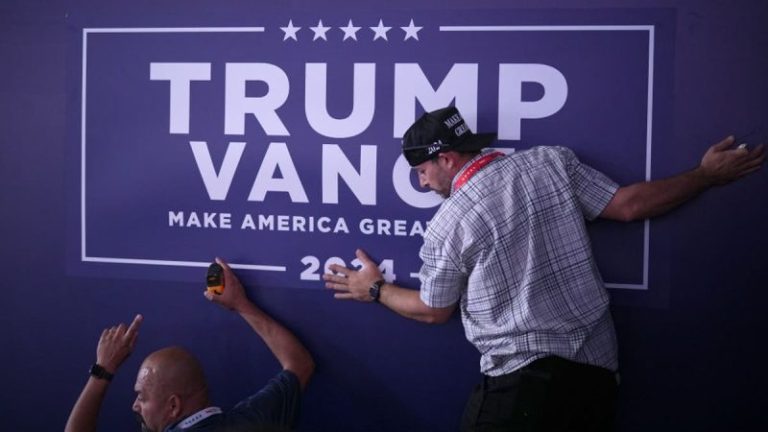
In many cases, what I saw weren’t just yard signs, but giant ‘Trump 2024’ or ‘MAGA,’ flags, even huge, Clark Griswold-style front lawn displays to leave no doubt about the intensity of the residents’ support for Donald Trump.

This is an old and treasured way of reading political tea leaves. It is also deeply unscientific, but in this case the gap in visible support is so overwhelming that it stands out and now suddenly leads us to wonder if Kamala Harris can begin to close it.

Now, to be fair, there has never been a politician who moves merchandise like Donald Trump. In towns across America, there are Trump pop-up stores on the side of the road. I’ve talked to a lot of the people who run them, including one recently in Harpers Ferry, West Virginia.

Many of these entrepreneurs originally followed Trump rallies in 2016 and 2020 much the way merch peddlers used to follow the Grateful Dead.

‘Now I can do it just about anywhere,’ the seller in West Virginia told me.

It speaks to the very personal connection that many Trump supporters feel towards the man himself, something that even Americans who think Biden has been a good president just don’t display towards Joe. Could it be different with Kamala?

To get a sense, I did some snooping around Amazon. In just the last three days since her announcement, there are several Harris 2024 shirts that have sold over 1,000 units in the past month. The most popular Biden-Harris shirt maxed out at 300 for the whole month.

There are dozens of Trump shirts for any occasion on Amazon that run circles around these sales, but even a modest uptick in people who want to rep the Democratic nominee in their fit seems like a good thing for Harris and something her camp will want to grow.

The last Democrat to have an impressive merchandise footprint was Barack Obama. Trust me, I lived in Brooklyn during his presidency and the Shepard Fairey ‘Hope’ poster almost seemed mandatory, or like it just came pre-hung in every apartment.

And a slogan is emerging for Harris, as well. Many of the top-selling signs, posters and wearables feature the phrase, ‘I’m Speaking,’ a reference to Kamala clapping back at old, White man Mike Pence in the 2020 vice presidential debate.

This is starting to look like the beating heart of Kamala’s campaign, the strong Black woman speaking truth to the power of Donald Trump and alleged white supremacy. It’s blatant nonsense, but it looks a lot better on a T-shirt than ‘Not a joke,’ or ‘I mean it, Jack!’

And ultimately, this is exactly why Democrats wanted this change. They needed a new story to tell, and now they have their favorite story full of racism and sexism and white privilege. Oh my.

For many conservatives, this message seems to be, ‘Shut up, a Black woman is speaking!’ and comes off as insufferable. But they’d better get used to it, because Democrats will try to make it as ubiquitous as the red MAGA baseball cap. Or at least as close as they can.

We can only pray that things remain civil as now both sides prepare to wear their political passions quite literally on their sleeves.

And that brings me to the most powerful sign I saw on my journey to and fro halfway across the continent. Just outside Butler, Pa., I observed an electronic billboard on the highway with the image of Corey Comparatore, who was killed while attending a political rally.

It reads in part, ‘In loving memory, of a special man who gave everything for his family, beliefs and country!’

That is a sign I wish every American could drive past, one without snark or cynicism, a simple reminder that the nation remains in the people’s hands, and that no matter who wins, what really matters is that we live together with respect and in peace. 

This post appeared first on FOX NEWS

: As hundreds of protesters flood Washington D.C. objecting to the presence of Israeli Prime Minister Benjamin Netanyahu, one Republican lawmaker is pushing back with a bill that would bar student loan forgiveness for those convicted of hate crimes during anti-Israel student protests.

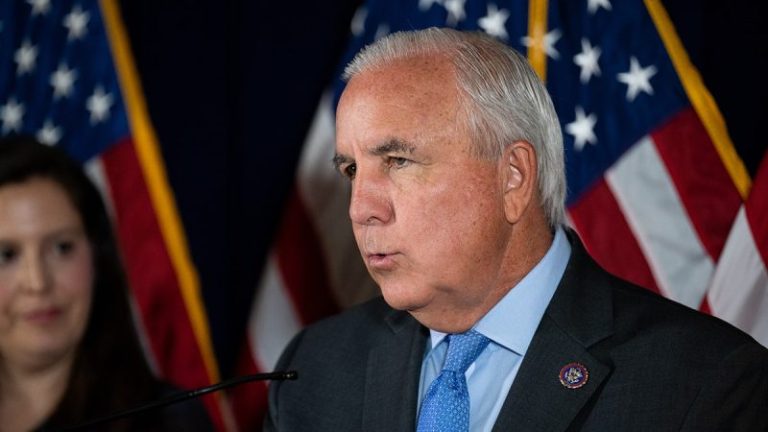
Rep. Carlos Gimenez, R-Fla., is introducing the ‘Prohibiting Student Loan Forgiveness for Antisemites Act.’ That bill would block students who are convicted of hate crimes under state or federal law from being eligible for loan forgiveness. 

While the bill is not solely restricted to antisemitism, there has been a wave of protests in the last year targeting Israel since the Oct. 2023 terror attack on Israel by Hamas. President Biden has repeatedly attempted to cancel student loans for tens of millions of students, but this bill would make sure that doesn’t apply to those convicted of antisemitism. 

Dozens of anti-Israel protests broke out at colleges across America, with a variety of elite institutions being overwhelmed with antisemitic behavior. Protesters at Columbia University and other schools have chanted, ‘From the river to the sea, Palestine will be free,’ a slogan condemned by critics as antisemitic that’s also used by Hamas. The phrase is widely interpreted as calling for the destruction of the state of Israel and removal of the Jewish people, although its proponents often deny that meaning.

‘We must not allow antisemites to benefit from their hate,’ Gimenez said in a statement. ‘With this bill, we ensure that those that are convicted of a state or federal hate crime will not receive loan forgiveness benefits. Hate has no place in our nation, therefore we must and will continue to stand with the U.S. and international Jewish community.’

The bill comes ahead of Netanyahu’s speech before a joint session of Congress on Wednesday, which has led to a number of protests. The Capitol Police said about 200 people were arrested Tuesday on charges stemming from a sit-in protest at the Cannon House Office Building. 

Others protested outside Netanyahu’s hotel, focusing much of their anger on U.S. support of Israel in its fight against Hamas. The U.S. has supported Israel in its fight against Hamas despite some splintering support for the effort, particularly among Democrats. As part of a $95 billion foreign aid package in April, the U.S. passed about $15 billion in military aid for Israel. 

Prior to his departure for the U.S. Monday, Netanyahu said, ‘I’m leaving this morning on a very important trip to the United States at a time when Israel is fighting on seven fronts and when there’s great political uncertainty in Washington.

‘I will address, for the fourth time, both houses of Congress as prime minister of Israel. I will seek to anchor the bipartisan support that is so important to Israel and will tell my friends on both sides of the aisle that regardless who the American people choose as their next president, Israel remains America’s indispensable and strong ally in the Middle East.’

Gimenez’s bill isn’t the only legislation pushing back against the protests. Sen. Tom Cotton, R-Ark., introduced legislation on Wednesday that would strip noncitizens of their immigration visas if they participated in demonstrations and were convicted of crimes.

Fox News’ Julia Johnson and The Associated Press contributed to this report.

This post appeared first on FOX NEWS

In this edition of StockCharts TV‘s The Final Bar, Dave previews earnings releases from TSLA and GOOGL, breaks down key levels to watch for SPOT, GE, and more, and analyzes the discrepancy between S&P 500 and Nasdaq breadth indicators.

This video originally premiered on July 23, 2024. Watch on our dedicated Final Bar page on StockCharts TV!

New episodes of The Final Bar premiere every weekday afternoon. You can view all previously recorded episodes at this link.

Many of America’s largest labor unions have now announced their endorsements of Kamala Harris’ presidential bid, as the vice president intensifies her campaign for the Democratic nomination.

Yet some notable union holdouts remain, suggesting Harris will still have some work to do to win over other working-class voters.

On Monday, the American Federation of Labor and Congress of Industrial Organizations (AFL-CIO), the biggest federation of unions in the U.S. and a longtime supporter of President Joe Biden, announced its endorsement of Harris.

“From day one, Vice President Kamala Harris has been a true partner in leading the most pro-labor administration in history,” said AFL-CIO President Liz Shuler. “At every step in her distinguished career in public office, she’s proven herself a principled and tenacious fighter for working people and a visionary leader we can count on. From taking on Wall Street and corporate greed to leading efforts to expand affordable child care and support vulnerable workers, she’s shown time and again that she’s on our side.”

Shuler added: “With Kamala Harris in the White House, together we’ll continue to build on the powerful legacy of the Biden-Harris administration to create good union jobs, grow the labor movement and make our economy work for all of us.’

Several other unions also have announced their support, including the Service Employees International Union (SEIU), the United Food & Commercial Workers International Union (UFCW), the American Federation of State, County and Municipal Employees (AFSCME) in addition to the American Federation of Teachers (AFT), the International Brotherhood of Electrical Workers and the United Steelworkers (USW).

The Biden-Harris administration has enjoyed the steady backing of union and labor groups over the past few years and it has sought to reciprocate. In his most high-profile show of support, Biden became the first sitting president to walk a picket line during the United Auto Workers’ strike against the Big Three automakers last fall.

But the UAW is one of the groups that has yet to announce its formal support for Harris’ White House bid. On Sunday, it issued a statement praising Biden’s leadership during his administration but stopped short of endorsing Harris.

‘The path forward is clear: we will defeat Donald Trump and his billionaire agenda and elect a champion for the working class to the highest office in this country,’ the statement read.

A UAW representative did not immediately respond to a request for comment Tuesday morning.

Republican nominee Donald Trump has sought to undermine UAW leadership, explicitly calling for the ouster of its head, Shawn Fain.

During his nomination acceptance speech in Milwaukee last week, Trump claimed, without evidence, that China was planning to build auto manufacturing sites in Mexico at the expense of assembly lines in the U.S.

“The United Auto Workers ought to be ashamed for allowing this to happen and the leader of the United Auto Workers should be fired immediately,’ Trump said, adding: ‘Every single autoworker, union and nonunion, should be voting for Donald Trump because we’re going to bring back car manufacturing and we’re going to bring it back fast.’

There remain dozens of automotive manufacturing plants in the U.S., many of which are in Southern states and the Midwest.

Trump has also sought to exploit the UAW’s concerns about the national transition to electric vehicles — something that caused the union to decline to explicitly support Biden’s 2024 candidacy.

“The federal government is pouring billions into the electric vehicle transition, with no strings attached and no commitment to workers,” Fain said last spring, according to CNBC. “The EV transition is at serious risk of becoming a race to the bottom. We want to see national leadership have our back on this before we make any commitments.”

The UAW has historically seen a steady 60-40 split between Democrat- and Republican-supporting members, according to Brian Rothenberg, a former UAW communications director and now a partner at Triumph Communications firm.

He said that while UAW members remain uneasy about the EV transition, there are other concerns about workplace safety, and especially the impact of Project 2025, a conservative blueprint that lays out actions to weaken public-sector unions.

‘That’s a much more robust issue for them than perhaps for the rest of the country,’ Rothenberg said.

UAW members have attended and participated in Trump events in Michigan, CNBC reported last year.

This past weekend, Trump and running mate JD Vance appeared at a rally in Grand Rapids, Michigan, to bolster support in the crucial swing state.

While UAW leadership has at least formally rejected Trump, another major union player has explicitly signaled its presidential endorsement is up for grabs.

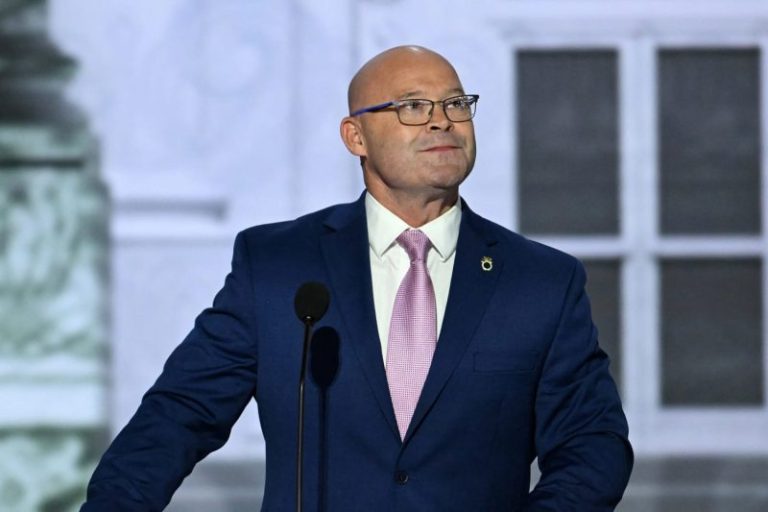
Sean O’Brien, the head of the Teamsters Union, gave an impassioned speech against corporate interests at the Republican National Convention in Milwaukee last week that caused some commentators to question whether labor is now as fully united behind Democrats as they have traditionally been. 

‘I refuse to keep doing the same things my predecessors did,’ O’Brien said. ‘Today, the Teamsters are here to say we aren’t beholden to anyone or any party. We will create an agenda and work with a bipartisan coalition ready to accomplish something real for the American worker. I don’t care about getting criticized. It’s an honor to be the first Teamster in our 121-year history to address the Republican National Convention.’

A since-deleted post on X from the official Teamsters account in the wake of the speech appeared to signal internal rancor about O’Brien’s appearance.

“Unions gain nothing from endorsing the racist, misogynistic, and anti-trans politics of the far right, no matter how much people like Sen. Hawley attempt to tether such bigotry to a cynical pro-labor message,” the Teamsters account wrote on X, referring to the Republican senator from Missouri, Josh Hawley, then adding: “You don’t unite a diverse working class by scoffing at its diversity.”

In a statement, a Teamsters representative said the group has invited Harris to a roundtable discussion, and noted that its presidential endorsement are traditionally announced after the political parties’ conventions.

‘We are on our timeline and continuing to engage our members in this process,’ the spokesperson said.

The Democrats will host their convention in Chicago next month.

While Biden has been generally pro-labor, seeking to increase manufacturing jobs and improve workers’ bargaining power by banning noncompete agreements, active union membership has stayed on its historical downtrend during his term.

Yet even as Republicans have begun to pursue working-class and factory workers more aggressively, there is currently an effort underway to dismantle the National Labor Relations Board, the government body in charge of settling labor disputes.

The biggest backer of that initiative is Elon Musk, the head of Tesla, who has pledged his full support to Trump.

Musk, who earned praise from Trump at the Michigan rally, was sanctioned by the NLRB for tweeting in 2018: “Nothing stopping Tesla team at our car plant from voting union … But why pay union dues & give up stock options for nothing?”

More recently, Tesla became the subject of an NLRB complaint in May that accused the company of discouraging its employees ‘from forming, joining, or assisting the Union or engaging in other concerted activities.’ An initial hearing in that dispute is scheduled for this month.

A Tesla representative could not be reached for comment.

This post appeared first on NBC NEWS

PARIS — The Winter Olympics are officially returning to the United States.

More specifically, the Games are coming back to Utah.

International Olympic Committee members voted Wednesday to formally award the 2034 Winter Games to Salt Lake City, making Utah’s capital a repeat Olympic host more than three decades after it served as the site of the 2002 Olympics. It will be the fifth time the U.S. has hosted the Winter Games.

‘We are ready. Everything is in place,’ Fraser Bullock, the leader of Salt Lake City’s bid committee, said in a presentation at the IOC session Wednesday. ‘But beyond our physical assets, you can count on our people. As great as our venues are, our people are even better.’

Get Olympics updates in your texts! Join USA TODAY Sports’ WhatsApp Channel

Meet Team USA: See which athletes made the U.S. Olympic team and where they are from

Wednesday’s vote was essentially a rubber stamp, with Salt Lake City having already been handpicked by the IOC as the best option for 2034. Though it did come with a bit of unexpected controversy − a strange scene in which IOC members used the moment to rip the United States for its recent political actions around the World Anti-Doping Agency (WADA) and the controversial doping case involving 23 Chinese swimmers.

‘I’m sorry for you, and for us, that this issue arose now,’ IOC president Thomas Bach told Salt Lake’s bid committee.

Ultimately, though, the last-minute concerns were never going to be enough to derail Wednesday’s vote, which passed by a margin of 83-6. The news prompted celebration in the early morning hours back in Utah, where the IOC’s vote coincided with a state holiday, Pioneer Day.

IOC members also signed off on the French Alps as host of the 2030 Winter Games earlier in the day.

IOC airs concerns over U.S. stance on anti-doping

In the hour before IOC members voted to award the Winter Games to Salt Lake City, they took an uncommon detour to express concerns about how a doping scandal involving Chinese swimmers has been handled in the U.S.

The U.S. Anti-Doping Agency and its chief executive officer, Travis Tygart, have been extremely critical of WADA’s handling of the Chinese swimmers case, in which 23 athletes tested positive for a banned heart medication ahead of the 2021 Tokyo Games. WADA accepted the results of a Chinese government investigation that attributed the positive tests to contamination at a hotel and neither publicly disclosed the tests at the time.

USADA’s criticism has been followed by a Congressional hearing on the issue and a reported investigation by U.S. law enforcement, apparently under the auspices of the Rodchenkov Act − which allows U.S. authorities to pursue criminal charges in doping cases that impact U.S. athletes.

It is the Rodchenkov Act, in particular, that seemed to prompt the ire of IOC members ahead of Wednesday’s vote. And John Coates, one of Bach’s top lieutenants, said the IOC went so far as to amend Salt Lake’s host city contract to address the matter. According to Coates, the IOC can terminate the host contract if ‘the supreme authority of (WADA) in the fight against doping is not fully respected.’

Gene Sykes, who chairs the U.S. Olympic and Paralympic Committee, responded to the members’ concerns by praising WADA and renewing the United States’ commitment to clean sport.

‘We certainly accept the obligations and responsibility inherent in the amendment to the Olympic host contract,’ Sykes said. ‘So from our perspective, we take very seriously to heart all of your comments, and we pledge to you that we will be good partners and we will support, with you, this very, very important institution.’

Salt Lake’s road to becoming 2034 Olympic host

The U.S. Olympic and Paralympic Committee has supported Salt Lake City as a host candidate since 2018, and it’s been clear for several years now that the IOC would award Utah another version of the Games at some point.

For a time, the only realistic question was whether Salt Lake would host the Winter Games in 2030 or 2034.

Bid leaders said they would be open to either but prefer 2034, to allow for more of a cushion following the United States’ hosting of the 2028 Summer Games in Los Angeles.

The city is uniquely positioned as a host in part because it has meticulously maintained the venues that were used in 2002 through the Utah Olympic Legacy Foundation, a non-profit created following the conclusion of those Games. Olympic officials also value Salt Lake City’s reliable winter climate. Due to the ongoing effects of climate change, there are fewer cities that can be counted upon to have the ideal weather for hosting the Winter Games during their usual scheduling slot in early to mid February.

What are the proposed venues for Salt Lake 2034?

The Salt Lake Games will utilize 12 existing venues, only four of which will require additional and permanent upgrades before 2034, according a report released in June by the IOC’s future host commission. The only temporary venue that will need to be built is for snowboard big air.

As for the big-ticket items, the University of Utah’s campus is expected to double as the Olympic village during the Games, while the Delta Center − home to the NBA’s Utah Jazz − will host one of the Winter Olympics’ marquee sports, figure skating. Skiing events will be held at Snowbasin Resort, about 35 minutes northeast of downtown Salt Lake City, while snowboarding events will be in Park City, Utah.

The USA TODAY app gets you to the heart of the news — fast. Download for award-winning coverage, crosswords, audio storytelling, the eNewspaper and more.

How much will Salt Lake City Olympics cost?

Karl Stoss, the chair of the future host commission for the Winter Games, has praised Salt Lake’s plan for the Games as ‘very compact’ and said it would require no capital investment.

The Salt Lake Games have an official budget of about $4 billion, and organizers claim they will be 100% privately funded − pulling money from ticket revenues, domestic sponsorships and an IOC contribution. The Olympics, however, have a habit of stretching beyond initial estimates. And they tend to put additional strain on public works and utilities in the host city, which is sometimes underestimated in budgets.

Which other bids did the U.S. beat out?

For decades, the IOC welcomed bids from multiple countries for one edition of the Games and essentially let them duke it out for votes. But that’s not how it works anymore. The IOC’s host selection process is far more amorphous, with potential hosts progressing through several loose stages of ‘dialogue’ so that by the time they are put up for a vote, like Salt Lake City was Wednesday, the decision has essentially already been made.

That’s all to say that it’s not super clear which bids, if any, Salt Lake City beat out. It was in the mix with the French Alps, Sweden and Switzerland for potential hosting duties, while Canada and Japan also expressed some level of interest. Ultimately, the IOC appears to have picked the French Alps and Salt Lake City from the bunch and then just figured out the timing of who would host when.

Where are the next Olympic Games?

Here’s a quick rundown of future Olympic hosts.

2026: Winter Olympics in Milan and Cortina d’Ampezzo, Italy
2028: Summer Olympics in Los Angeles
2030: Winter Olympics in the French Alps
2032: Summer Olympics in Brisbane, Australia
2034: Winter Olympics in Salt Lake City

Contact Tom Schad at tschad@usatoday.com or on social media @Tom_Schad.

This post appeared first on USA TODAY

Five Australian water polo players have tested positive for COVID-19 and are in isolation at the Paris Olympics. But the 2024 Games are not as restrictive as the pandemic-delayed 2020 Tokyo Olympics, and there are no stringent protocols in place for athletes who test positive.

When the first player on the team tested positive Tuesday, Australia’s Olympic team chief Anna Mears told Reuters, ‘I need to emphasize that we are treating COVID no differently to other bugs like the flu. This is not Tokyo. The athlete is not particularly unwell and they are still training but sleeping in a single room.’

The players are cleared to train if they feel well enough, and the virus is contained to the water polo team at this time, Mears said, according to Le Monde. They are wearing masks and isolating from other team members when not training, and the whole team has been tested.

‘We have our respiratory illnesses protocol in place and we have reinforced with all of the teams as they arrive into our village,’ Mears said. ‘Two basic rules around that really simple hygiene practices are effective. And if you are feeling unwell or have any symptoms, get tested.’

The Paris Games may be a welcomed return to normalcy after the compulsory testing, quarantine and empty venues that marked Tokyo, but there are still precautions in place for those who test positive.

Meet Team USA: See which athletes made the U.S. Olympic team and where they are from

‘Of course COVID is here. We’ve seen a small peak’ in cases, French Health Minister Frederic Valletoux told a franceinfo broadcaster. ‘But we are far from what we saw in 2020, 2021, 2022.

‘Some precautions are being taken but, because the level at which COVID is spreading is very low, they depend on the organisers.’

Valletoux said there is no risk of a major COVID cluster in France. However, with a dense population of athletes in the Olympic Village, there is an inherent risk of any infectious disease spreading.

Here’s a closer look at how Team USA plans to mitigate this risk.

Are there specific COVID protocols at the Paris Olympic Games?  

In Paris, there will be no specific COVID restrictions and the virus will be handled in the same way as a common cold or the flu. That means there will be no asymptomatic testing of athletes, mask mandates or isolation periods. 

However, Jonathan Finnoff, the chief medical officer at the U.S. Olympic & Paralympic Committee, said the USOPC will follow CDC guidelines to prevent the spread of all respiratory viruses, including COVID-19, the flu and respiratory syncytial virus (RSV).  

These include five core prevention strategies: immunization, proper hygiene, clean air, treatment and staying home when sick. And three additional prevention strategies: masks, social distancing and regular testing. The CDC also recommends staying home and away from others until your symptoms are getting better and you are fever-free for 24 hours, and then use added precautions for the next five days.

“We won’t do anything beyond what the CDC is recommending, but we absolutely want to prevent the spread of infectious disease,” Finnoff said, adding that respiratory infection hinders athletes’ “ability to compete at the highest level.”  

What happens if a U.S. athlete tests positive for COVID at the Olympic Games?

If a Team USA athlete experiences symptoms of any kind, Finnoff reiterated the USOPC is “going to follow the CDC guidelines for all of infectious disease protocols.”

According to Finnoff, each of Team USA’s medical clinics will have a separate room dedicated to treating infectious diseases, where medical staff will first administer a PCR test capable of identifying several pathogens to pinpoint the exact problem. Once a specific pathogen is detected, medical staff will follow tailored treatment plans to minimize both symptoms and duration of an illness.

The USOPC will bring this comprehensive testing equipment to Paris, Finnoff said. 

Although there will be no official isolation or quarantine period imposed, athletes who have tested positive for a respiratory illness will be moved into their own rooms to prevent the spread of infectious diseases between roommates, according to Finnoff. 

“It doesn’t mean [infected athletes] can’t train or compete,” Finnoff said. “We’ll do that based on their symptoms and how they feel, but we do want to prevent [them] from infecting those around them, and we’ll also provide prophylaxis based on what is recommended by CDC guidelines.”

Are COVID vaccinations required at the Olympics?

The USOPC does not require athletes to vaccinate themselves against COVID, but it strongly recommends they stay up to date on vaccinations and boosters. 

Finnoff said the USOPC “absolutely promotes” vaccination and other standard public health practices like hand washing and mask-wearing to athletes. 

“It’s not mandated, but it’s explaining ‘this is how many people get sick if they don’t follow these protocols,’” Finnoff said. 

Can athletes still compete at the Paris Olympics if they test positive for COVID?

The short answer is yes. According to Finnoff, there are no set rules in place to stop Team USA members from choosing to compete if they have a positive COVID test result. However, athletes might be unable to — or choose not to — compete if their symptoms are severe enough. 

“It’s not a black and white,” Finnoff said.

For the Australian water polo who tested positive, Mears also did not offer a clear-cut answer, saying ‘in terms of competitions, we will wait until she gets the all clear and we get the information from our chief medical officer.’

This post appeared first on USA TODAY
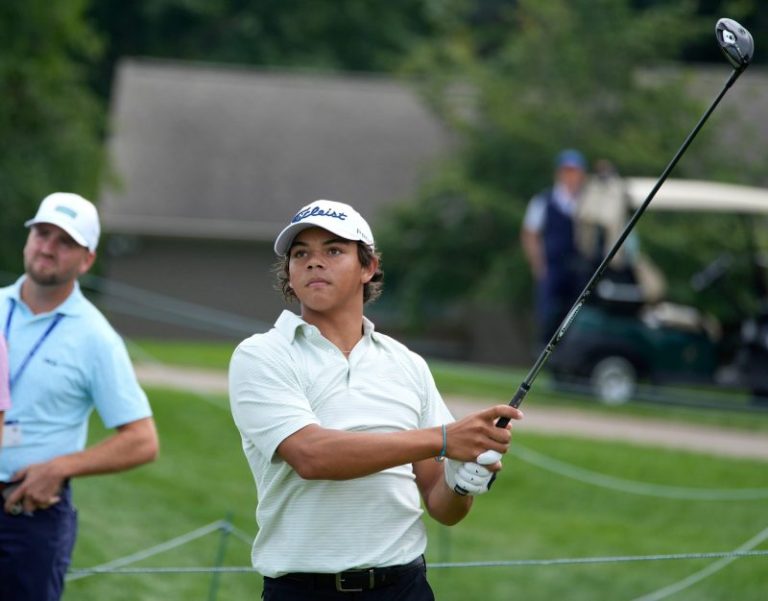
Charlie Woods, the 15-year-old son of Tiger Woods, missed the cut at the U.S. Junior Amateur by 18 strokes on Tuesday in Bloomfield Township, Michigan.

The younger Woods carded a 10-over-par 80 in the second round at Oakland Hills’ South Course after posting a 12-over 82 on Monday at Oakland Hills’ North Course.

His father was in attendance to watch the event that he won at age 15, 16 and 17, making him the tournament’s only three-time champion.

Charlie Woods made three pars and a birdie through his first four holes on Tuesday (on the back nine) before hitting a disastrous stretch.

He closed the back nine by going double bogey, bogey, par, double bogey, triple bogey, leaving him at 8 over par for the day.

Woods then settled down on the front nine, getting a birdie and five pars, but closed bogey-par-bogey. Only 17 players finished below Woods, including one who withdrew after the first round.

The son and his father will team up at the PNC Championship at Orlando in December.

Blades Brown was the stroke-play medalist at the U.S. Junior Amateur at 6-under 134 after shooting a 68 at the South Course on Tuesday. The top 64 in the 264-player field advance to match play, which begins Wednesday.

This post appeared first on USA TODAY
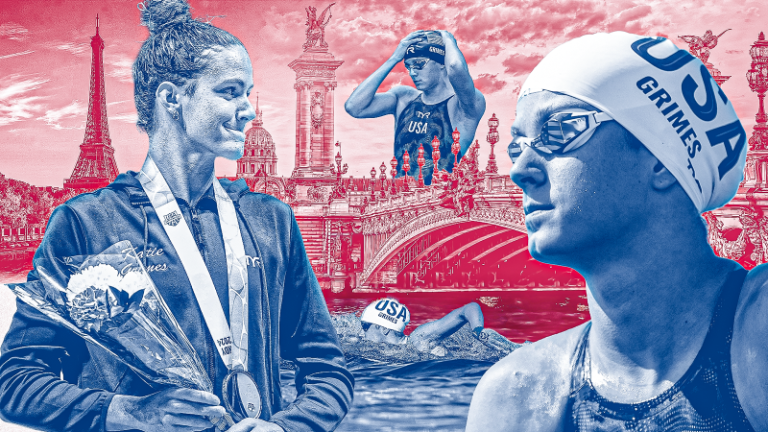
On a stacked Team USA Olympic swimming roster, no one is quite like Katie Grimes. 

No one is qualified for both the 1,500-meter freestyle, the longest event in the pool, and the 400-meter individual medley, a grueling parade of all four strokes. And the 10k marathon swim. No one except Grimes – now a two-time Olympian who will be the first American woman to compete in the pool and open water at the same Olympic Games.

She’s also just 18 years old.

‘I’ve done open water just about as long as I’ve done pool swimming, so I’ve just always wanted to be able to swim the open water (event) in the Olympics,’ says Grimes, whose shortest race at the Paris Games is about four-and-a-half minutes while her longest is two hours.

‘I never wanted to pick one over the other.’

Meet Team USA: See which athletes made the U.S. Olympic team and where they are from

Three years ago, Grimes was the youngest overall Team USA athlete at the Tokyo Olympics, swimming the 800-meter freestyle in her first international competition. She finished a disappointing fourth, barely missing the podium as Katie Ledecky completed a three-peat Olympic championship.

This time around, Grimes didn’t bother messing with what she called a ‘congested’ 800 international field. Though if you told her three years ago she’d drop what she once considered her best event, she never would have believed it.

Get Olympics updates in your texts! Join USA TODAY Sports’ WhatsApp Channel

Instead, Sandpipers of Nevada head coach Ron Aitken helped Grimes plot a path to the Olympic podium, prioritizing her strongest events. Plus, skipping the 800 gives her more time to prepare for the 10k in the Seine River eight days after her last potential final in the pool.

Grimes was the first Team USA athlete to qualify for Paris back in July 2023 when she won bronze in the open water 10k at world championships in Japan. 

At U.S. Olympic swimming trials in June, she won the 400 IM to officially qualify in the pool before making it in the 1,500, when she finished second to Ledecky. 

‘She always downplays her success, and sometimes I wish she wouldn’t because I just want her to be really, really proud of herself and really realize the full scope of what she’s accomplishing,’ says now-two-time Olympian Regan Smith. 

The USA TODAY app gets you to the heart of the news — fast. Download for award-winning coverage, crosswords, audio storytelling, the eNewspaper and more.

Katie Grimes’ insatiable hunger to win

It was about 5 a.m. when Katie Grimes strolled into one of her older brother’s swim practices. She was 11 or 12 years old, Aitken recalls, and aiming to break a record at an upcoming meet. So she wanted additional practice.

Aitken reminded her to have fun because extra hours in the pool would surely come as she aged. But he said, even then, he could see her insatiable hunger to race and win.

‘She puts a tremendous amount of pressure on herself to be a lot better than she is currently, and that kind of keeps her from being as good as she can be,’ Aitken says. ‘That just goes along with age. I think, right now, she’s still not at a place where she’s been able to master pressure yet.’

It’s one of the many ways he’s reminded she’s still a teenager. But hardly an average one. She’s ‘an old soul,’ her mom, Shari Grimes, said – and one who was even resistant to getting a phone ahead of the Tokyo Games until Team USA strongly emphasized it.

Inheriting a competitive streak as the youngest of seven in an athletic family, she lives at home with her parents in Las Vegas and just graduated from high school. She’s a straight-A student who has yet to announce her college choice – though she said she’s made a decision and will likely declare after Paris.

Soft-spoken and silly sometimes, she’s on social media but would rather spend her free time listening to Fleetwood Mac or leisurely driving around in her coveted orange 1969 Chevy Corvette Stingray. She indulges in retail therapy, like recently buying a Skims towel-esque sweatshirt, despite its impracticality in scorching Vegas temperatures.

When it’s time to train, she embraces her workhorse mentality, calling it ‘the most comforting thing.’

‘(Grimes) is incredibly impressive – her ability to train and compete for open water, 400 IM, 1,500 free, she’s able to do it all,’ Ledecky said. 

‘She just keeps going, and she has such a good attitude about training and about racing and just is fearless when it comes to signing up for those events and racing the very best.’

Training for events largely on opposite skill spectrums, Grimes heavily relies on Aitken for guidance. Even for the 10k, all of her swimming work is in the pool, racking up between 65,000 and 85,000 yards – or up to about 50 miles – a week.

She might do a distance freestyle workout in the morning, followed by IM and stroke work in the evenings. The weak link in her 400 IM is breaststroke, so she trains to build up a lead on the butterfly and backstroke legs, hoping she doesn’t get caught on in the second half. 

‘It’s really just in the competitions where you get that (open water) experience,’ Grimes says. ‘Building up that stamina, building up the endurance – it’s very easy to work that in the pool. …

‘In fact, it’s probably even easier to train that in the pool just because you can blog exactly how much you’re doing and how fast you’re doing it.’

That’s where Aitken and his Excel sheets come in, tracking workouts, stroke counts, heart rates and stress levels. 

She can handle the absurd yardage, stroke work and sprint drills. She’ll do whatever workout Aitken writes on the board, wanting to train for as many events for as long as she can. She loves strength training, welcoming speed work to improve her reaction times off the block. 

The real challenge, she says, is competition time when she has to delicately balance prep, racing and recovery in between monstrous events. It didn’t help that she recuperated from pneumonia about 10 days before Olympic trials, Shari said, and was extra nervous because she was expected to make a second Olympic team.

At trials, she had about a 25-hour arduous stretch where she raced 2,500 total meters, plus warming up and down. But she views it as another level of preparation with the trials schedule closely resembling the one in Paris. 

‘Even though she’s 18 and I’m 22, I look up to her in a sense as well because she is so versatile,’ Smith says. ‘She makes it look incredibly easy, and she’s kept a very, very humble demeanor through it all.’

Katie Grimes’ called her shot

Katie Grimes called her shot when she was 10 years old. After cheering for her brother at 2016 U.S. trials, she decorated a kickboard that still hangs on a wall in the Grimes’ house. On it is a powerful message: ‘2020, I’m going to be there. Keep strong, keep swimming.’

‘She was watching all these kids make the Olympic team, and she looked at us, and she goes, ‘I’m doing this next time,” Shari recalls. ‘She just was laser focused from that point on.’

The Paris Games will greatly differ for Grimes compared with Tokyo three years ago, her lineup aside. Though always learning from Ledecky and trying to embody her poise and class, Grimes doesn’t need to rely on the four-time Olympian to show her how the Games work.

With experience, Grimes said she’s much more comfortable competing on an international stage, and since Tokyo, she’s implemented a stronger emphasis on post-race recovery. In bed at a reasonable hour is not negotiable, and staying off her feet is a priority.

Trying to mitigate the pressure and nerves, she’s practiced tapping into a calm headspace before competing while blasting Dua Lipa until she goes to the ready room. Part of that mindset is remembering to have fun and the comfort of knowing her family is in the stands cheering, she says. And thinking about how happy she’ll be when she hits the wall. 

‘She’s learning how to try and absorb all that (pressure), but also take it all in and use it as energy,’ Aitken added. ‘So she’s trying to find her way through that.’

While a pool inside Paris La Défense Arena is new for everyone, Grimes got a preview of the Olympic marathon swimming course last summer. Kind of. 

The Open Water Swimming World Cup was one of multiple Olympic test events canceled in 2023 because of poor water quality – a lingering concern this summer with recent elevated bacteria levels, including E. Coli. Grimes is eager to swim in the iconic river but also understands it’s “dirty water.’ Despite concerns, she’s hoping for the best. 

Seeing the open water course last summer at least allows her to visualize her 10k Olympic race on Aug. 8. Organizers have alternative race dates and a backup venue in place, should water quality remain dangerous.

A podium spot in open water is ‘definitely’ a goal, she says, especially in a two-hour race where finishing place is more highly regarded compared with times, like in the pool.

‘The hard part about doing a few different events is that I want to be the best that I can in all of them,’ Grimes says. ‘But I feel like you give up a little bit of that when you try and spread yourself across multiple events. But I can see myself in the future, one day, just focusing on one event.’

One day, maybe. But that’s the only thing Grimes isn’t ready for yet.

This post appeared first on USA TODAY