Archive

2024

Browsing

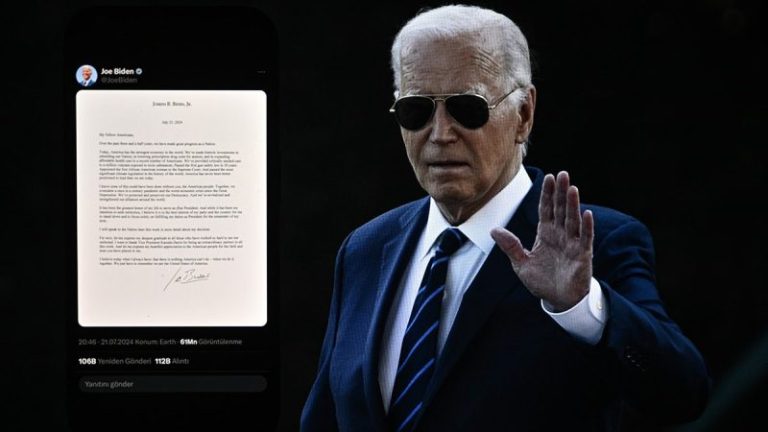
President Biden publicly addressed the nation on Wednesday night for the first time after announcing Sunday that he had withdrawn from his pending re-election.

He cited things he has done since being inaugurated — like battling COVID-19 and trying to help the country recover from what he called the ‘worst economic crisis since the Great Depression.’

Biden also said the election is up to the ‘American people,’ just a moment after he gave a slight endorsement to Vice President Kamala Harris as his successor.

‘In just a few months, the American people will choose the course of America’s future. I made my choice. I’ve made my views known,’ Biden said from the White House. ‘I would like to thank our great vice president, Kamala Harris. She is experienced, she is tough, she is capable. She’s been an incredible partner to me and a leader for our country.

‘Now the choice is up to you, the American people. When you make that choice, remember the words of Benjamin Franklin hanging on my wall here in the Oval Office, alongside the busts of Dr. King and Rosa Parks and Cesar Chavez.’

Biden, who is 81 and has faced criticism from both Republicans and Democrats over his physical appearances and mental acuity after the first presidential debate, did not mention any personal reasons for why he is stepping away.

‘In recent weeks, it has become clear to me that I need to unite my party in this critical endeavor. I believe my record as president, my leadership in the world, my vision for America’s future, all merited a second term. But nothing, nothing can come in the way of saving our democracy. That includes personal ambition,’ the president said.

‘So I’ve decided the best way forward is to pass the torch to a new generation. It’s the best way to unite our nation. I know there was a time and a place for long years of experience in public life. There’s also a time and a place for new voices, fresh voices, yes, younger voices. And that time and place is now.

‘Over the next six months, I will be focused on doing my job as president. That means I will continue to lower costs for hard-working families, grow our economy. I will keep defending our personal freedoms and civil rights, from the right to vote to the right to choose. I will keep calling out hate and extremism, making it clear there is no place, no place in America for political violence or any violence ever, period. I’m going to keep speaking out to protect our kids from gun violence, our planet from climate crisis as an existential threat.’

Biden won the needed votes to clinch delegates for re-election. Now, it seems like Harris will be the presumed Democratic candidate to run against former President Trump in the general election this fall.

This post appeared first on FOX NEWS

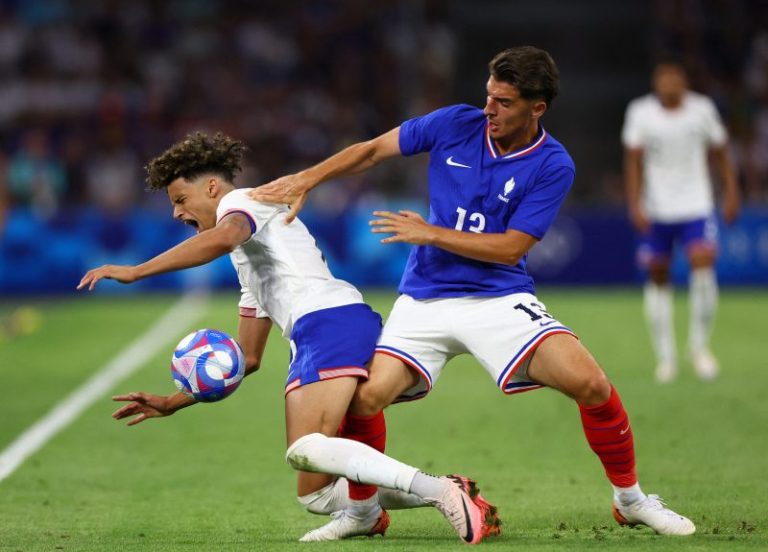
MARSEILLE, France – There were no regrets from the United States men’s Olympic soccer team following its 3-0 loss in the tournament opener against host country France. 

For a team that is all 23 years old or younger, with the exception of three players (in accordance with Olympic rules), the score was not a proper reflection of the outcome and margin. 

The Americans, along with French manager Thierry Henry, truly believed that after the match – which marked the first Olympics appearance for the USMNT since 2008. 

The goal now? 

“We get out of the group and we see (France) in the final,” forward Djordje Mihailovic said. 

Meet Team USA: See which athletes made the U.S. Olympic team and where they are from

Here are five takeaways from the match. 

Toughest test was first, whole competition still in front of USMNT

Two teams will advance from Group A, and the Americans obviously plan on being one of them. Victories against both New Zealand and Guinea would go a long way in achieving that. 

“France is definitely one of the favorites in this competition and the way we held our own today was, I think, really tough from us,” forward Kevin Paredes said. 

Defender Walker Zimmerman, the only American with World Cup experience as an overager, said turning the page is necessary in a tournament that has teams in action every three days. 

“You have no other choice,” he said. 

Henry, who patted American players on the back in the mixed zone after the match, said the U.S. surprised him with their tactics of playing up-tempo. 

“It was a chase game,” he said. 

Griffin Yow, who came on as a substitute, had a goal called back in stoppage time when the offside flag went up. 

“I have full confidence in this group to win these next two games and advance … I have no worries or doubts,” Paredes said. 

The U.S. plays New Zealand on Saturday. 

USMNT outclassed by France’s big names 

For 60 minutes, the match remained scoreless, with both teams seeing chances but nothing materializing – until Alexandre Lacazette found the back of the net. 

The former Arsenal forward, the oldest player on the pitch, took an extra touch to the right that U.S. goalkeeper Patrick Schulte saw. The problem was that he then lost Lacazette behind a defender and by the time he located the ball, he’d been beaten to the far post. 

The U.S. nearly took the lead prior to that sequence when a blast from Mihailovic ricocheted off the crossbar. Less than two minutes later, Lacazette and his teammates were celebrating. 

“That’s football,” Schulte said. “You have a chance on one end, a goal that looks good all the way, rattles off the crossbar, and they come down the other end and score. I think that’s just kind of life and the game.”

The Americans nearly equalized on two header chances but instead saw France secure an insurance goal when Michael Olise also beat Schulte to the far post from distance with a curling shot. 

“(We) created, but (were) not clinical,” USMNT head coach Marko Mitrović said. 

USMNT’s transition defense needs to be improved

The biggest reason for the first two France goals can be chalked up to the team’s transition defense.

Going forward, Zimmerman said, defenders will have to get more pressure if they’re attacking that close to the box. 

“That’s the frustrating part, is feeling like we were in it, had moments of control, had moments of opportunity,” Zimmerman said. “And we didn’t capitalize on it. And they did.” 

Zimmerman added that the U.S. must tighten up its set-piece defense, which led to France’s third goal, a header from Loic Bade. 

“Definitely something we’re going to look at and definitely going to want back,” Schulte said. 

‘La Marseillaise’ in Marseille

The Americans experienced firsthand “La Marseillaise” in the city where it first took hold as the national anthem in the late 1700s. 

A mass of red, white and blue – not the American kind, although the U.S. wasn’t without representation in the near-sellout crowd of 67,000 – belted out the notes and set the tone for an emotional 90 minutes.

Playing the host team during an international competition is not a common opportunity, especially in a soccer-crazed country such as France, Zimmerman said. 

“It was an amazing atmosphere, amazing crowd,” he said.  

He added: “This is going to be hard to replicate, especially in the next few games.” 

USMNT was ready for France’s physicality 

Referee Yael Falcon was busy during the match, whistling France for penalties 16 times and the U.S. for 10. 

France supplied lots of pressure in the first half as the Americans worked to advance the ball out of the defending third. A lot of the time, U.S. players wound up on the ground. 

Mihailovic said that type of match was expected. 

“You need to be physical in this type of environment,” Mihailovic said.  

Mitrović called France “very physical” and “great athletes.”  

“It’s not easy to play against them,” he said.  

As always, there’s a silver lining. 

“I think we caused them a lot of problems,” Mitrović said.  

This post appeared first on USA TODAY

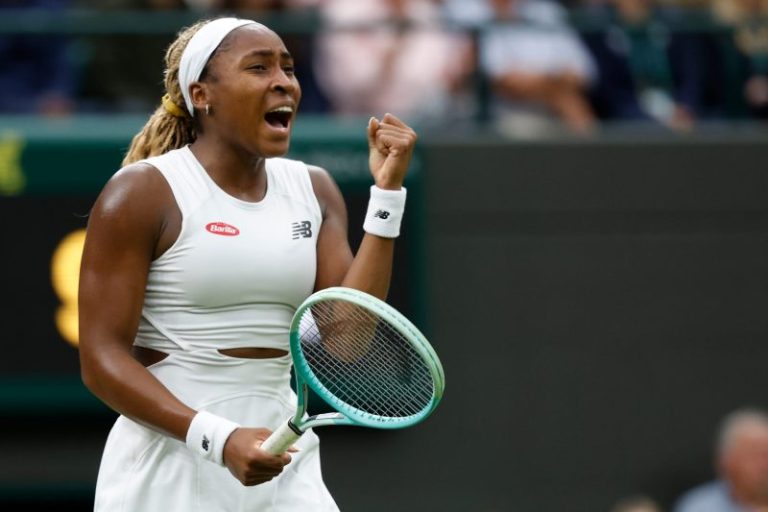
PARIS — When Coco Gauff caught COVID days before she was supposed to leave to compete in the Tokyo Olympics, she was understandably upset. For maybe 24 hours. 

Then the 20-year-old, a bright young star whose age belies her maturity, saw the big picture. 

“(Competing) in the Olympics has always been up there with winning a Grand Slam, like top goals,” Gauff told USA TODAY Sports this summer. “But there were bigger issues going on than me missing (the Olympics). It’s a great event, but there were people dying.” 

Delaying her Olympic dream didn’t mean it would be denied all together, Gauff thought. Paris would still be there in three years. 

It is. And now, so is she. 

Meet Team USA: See which athletes made the U.S. Olympic team and where they are from

She’ll arrive in a big way, too, as a flag bearer for the U.S. in Friday’s opening ceremony.

Get Olympics updates in your texts! Join USA TODAY Sports’ WhatsApp Channel

Gauff, who won the 2023 U.S. Open and advanced to the fourth round of Wimbledon, where she was upset by fellow American Olympian Emma Navarro, represents one of the Americans with a chance to medal in both singles and doubles tennis. Gauff will be joined in Paris by fellow Americans Jessica Pegula (her doubles partner), Danielle Collins and Navarro, among others.

Tennis Olympic spots are determined by rankings, not a do-or-die competition, like swimming or track trials. So when Gauff qualified for the 2024 Paris Games, she wasn’t surprised. Still, she got “super excited” when she received her official nomination letter, calling it ‘an honor’ to represent her country during a competition that seemingly everyone tunes into. 

There are other benefits to the fact that Gauff had to wait three years before making her Olympic debut. She has two Grand Slam titles under her belt now — besides the 2023 U.S. Open, Gauff and doubles partner Katerina Siniakova won the 2024 French Open in May — and tons of big-match experience. That has helped her better understand how to juggle so many expectations. She’s not afraid now to speak up and tell coaches she needs a lighter workout, or a day off, if she’s mentally or physically drained. 

“I learned in the past that they always tell you to go on the day you want to, and that’s true,” she said days before Wimbledon started. “But also, it’s important to listen to yourself because it does catch up to you. These tournaments are so intense.” 

Coco Gauff and her place in the women’s sports boom

Gauff is especially excited to play on the Olympics stage at a time when investment and engagement in women’s sports is booming, a trend she attributes at least partially to the exponential growth of women’s basketball, which she said is “beneficial for all of us.” She thinks fans have valued women’s sports as a whole for awhile, but big businesses getting on board the last few years has made a difference. 

“I think a lot of it just comes from people, not fans per se but companies and networks investing in (us) more because they realize finally — there are storylines, heroes, villains,” she said. “That’s just sports, men and women. There’s always going to be a team that people love and a team that people hate.” 

Gauff is one of the highest-paid athletes in the world and hopes that soon, more female athletes join her on that list. She emphasized that women athletes have been deserving of increased coverage and investment for years, arguing that there are “more sides to woman than maybe some of the men,” a nod to her and other female athletes’ interests outside of their sport, which gives them cross-cultural appeal.

Gauff, for example, has deals with Ray Ban and UPS. A special anime-themed delivery box was made specifically for her partnership with the Atlanta-based brand, as Gauff is an anime addict (and an Atlanta native). She watches anime before and after matches, saying it “reminds me of childhood … it’s like a comfort show.”

She’s also been outspoken about political issues, waving away concerns that doing so could turn off some fans. 

The next step for women’s sports to take, she said, involves increased visibility. This matters to her not just as an athlete but a viewer. 

Over the last few years, Gauff has become something of a women’s basketball junkie, falling hard for the game during March Madness and following those stars into the WNBA. (She and LA Sparks forward Cameron Brink, the No. 2 overall pick in the 2024 WNBA Draft, share a sponsor in New Balance and have exchanged pleasantries via social media. Brink has even dressed in tennis whites for her pregame tunnel walks in a nod to Gauff, saying, “I wanna be like Coco.”)

Gauff’s been frustrated that despite purchasing WNBA League Pass, streaming games online has been a challenge, especially if she’s in Europe during the WTA tour. 

“I think the next big thing will be getting as many games as possible on TV, on prime networks, during prime time,” Gauff said, adding that this surge in women’s sports popularity could help sports like women’s soccer and hoops get the same type of visibility as women’s tennis, which benefits from playing at the same time and place as men’s tennis. 

“I don’t think the product needs to change: They’re all entertaining, they’re all talented. I just think accessible viewership can help.” 

In Paris, she hopes to catch a few other sports between tennis matches, including gymnastics and four-time gold medalist Simone Biles. If she didn’t have to leave Paris early to prep for the hardcourt season, she’d absolutely be in the stands during track and field. (Tennis medal matches wrap up on Aug. 4, and track runs until Aug. 11.) In another life, Gauff might have been an 800- or 400-meter runner, a sport she enjoyed and excelled at in her youth, though she drew the line at the prospect of running the 400-meter hurdles. 

‘I’m scared of the hurdles,’ she said, laughing. ‘I would totally disappoint people.’

She’ll settle instead for a medal or two from tennis, her other love — the one that made her wait for the Olympics, though she’s determined to prove it was well worth it.

The USA TODAY app gets you to the heart of the news — fast. Download for award-winning coverage, crosswords, audio storytelling, the eNewspaper and more.

This post appeared first on USA TODAY

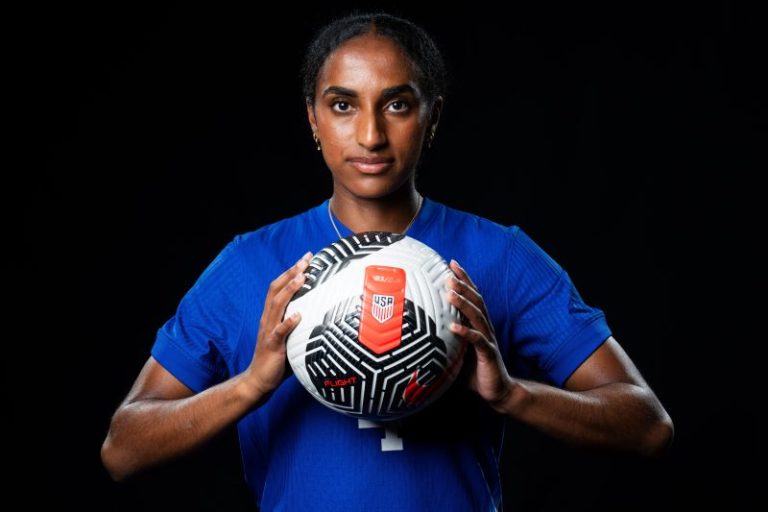
In the literal sense, she is U.S. Soccer’s reigning Female Player of the Year and, at just 24, the anchor of the back line for the U.S. women’s national team. She’ll make her Olympic debut with the USWNT on Thursday, a year after playing every minute of every game at the World Cup.

But it’s the figurative sense that’s even more important. Girma is a first-generation American, the daughter of two Ethiopian immigrants. When she dons the jersey with the U.S. crest on the chest, it’s a reminder of the promise this country holds and proof of how much better we are when we welcome, and celebrate, the melting pot of races and cultures that is uniquely American.

“Diversity and embracing other cultures is what makes us so special, and I think that’s what has put us ahead for so many years,” Girma said. “I think that’s something that we should continue to do.”

Get Olympics updates in your texts! Join USA TODAY Sports’ WhatsApp Channel

Her father, Girma Aweke, (in Ethiopia, children take their father’s first name as their last name) was a teenager when he fled Ethiopia during the “Red Terror,” a violent civil war that left more than 1 million dead. Aweke eventually made it to the United States as a refugee and put himself through school by working as a busboy and a dishwasher, becoming an electrical engineer.

Education brought her mother, Seble Demissie, to the United States, and she stayed after she graduated. She worked in banking and met Aweke through the Bay Area’s Ethiopian community.

The two settled in San Jose, where they raised Naomi and her older brother, Nathaniel. Maintaining their heritage was important, however, and Aweke and some friends in the Ethiopian community began a Saturday morning tradition of gathering at a local park. The adults would have coffee and socialize while their kids played in what became known as the Maleda soccer club.

“It became a means to bond. Not everybody plays soccer, but it became, socially, a big thing,” said Wossenseged Goshu, a co-founder of Maleda and a longtime friend of Girma’s family.

“Our kids growing up here, they don’t go to the same schools, they don’t live in the same neighborhoods,” he added. “So this was a way of getting them together and getting them to know each other.”

As in most other countries around the world, soccer has a passionate following in Ethiopia, the equivalent of the NFL here. Still, none of the Maleda parents dreamed these weekend games in local parks would take their kids anywhere. Education was their priority, their own experiences reinforcing the idea that school was the key to the American dream. MIT, Columbia, Penn and Stanford are just a few of the schools where Maleda kids have gone.

But Girma gravitated to the game.

“I was really just playing for fun, and I think that took the pressure off of me a lot,” she said. “I didn’t really feel it from my parents, I didn’t really feel it from the outside. I was just playing because I loved it.”

Girma and her family didn’t know anything about the pay-to-play system that dominates youth soccer in the United States, powerhouse clubs that have become the main pipeline to college scholarships and the national team.

Even if they had, they wouldn’t have been interested.

“It’s just so stressful. It’s very expensive and we could not do the time commitment,” Demissie said. “I don’t know how many people can do that. Especially if the parents want the kids to still focus on the school.”

When Girma was in second or third grade, however, one of her best friends joined a local club, Central Valley Crossfire, and she asked her parents if she could, too. Demissie said they hesitated at first; both she and her husband worked, and they didn’t know how they’d get Girma to practices.

But other families in the club said they could carpool, and they and Girma’s parents took turns shuttling their girls to practices and games.

Girma was a teenager when she took part in the Olympic Development Program, which IDs players for U.S. Soccer’s youth system. She was selected for the U.S. Under-14 team, and steadily rose through the ranks despite continuing to play primarily for either Crossfire or her high school team.

She did occasionally play with De Anza, one of those high-profile clubs, as a “visiting player.” But unlike most of the top players in the United States now, Girma’s most formative years were spent playing simply for the fun of it.

“Once I got introduced to (the higher levels), I had that background of just playing with joy and freedom and I think that really helped me do that in the bigger moments,” Girma said. “Even playing with the national team, just feeling that freedom and feeling like I’m that kid playing for fun really helps me now.”

Her atypical path certainly didn’t impede Girma’s development.

Though she grew up playing midfield, the U.S. youth team coaches shifted her to center back, a spot often reserved for the brainiest on the roster. Indeed, Girma is a cerebral player, with the ability to anticipate how a play will develop and make the appropriate adjustments. She’s also fast and fearless, and her poise calms everyone else on the field with her.

“She’s, I think, one of the best defenders in the world,” said USWNT forward Sophia Smith, who also was teammates with Girma on the Stanford team that won the NCAA title in 2019.

“She’s just so composed. She’s just an amazing player and someone you want on your team.”

After being a three-year starter at Stanford (she redshirted as a junior after tearing her ACL) and a two-time Pac-12 Defender of the Year, Girma was the overall No. 1 pick in the 2022 NWSL draft by the San Diego Wave.

Three weeks before she made her debut for the Wave, she got her first USWNT cap. By the end of the year, she was a regular in the starting lineup. At last year’s World Cup, where the USWNT made its earliest exit ever at a major tournament, Girma was one of the few positives. Whatever other problems the team had to solve, director of defense was not going to be one of them.

“Naomi plays well beyond her years,” said Crystal Dunn, who partnered with Girma on the back line her first two years on the USWNT. “I’ve been so impressed with how she’s carried herself, how she looks like she’s been on the team for a hundred caps.

“She’s a leader by the way she carries herself. How she demands excellence not only from herself, but from her teammates. And she’s been quite a bright spot on the team.”

A bright spot to so many others, too.

Girma hopes her unique path to first a Stanford scholarship, then the No. 1 pick in the NWSL draft and now a cornerstone of the USWNT will show kids, and their parents, that they don’t have to play for one of those big-name clubs to be successful.

If that’s what a kid wants to do, great! If they don’t, or if it’s asking too much of the family, Girma is proof there are other ways to get noticed. Her talent, and the support of everyone around her in those formative years, mattered far more than the name on the front of her jersey.

“Naomi’s journey — I’m just so glad. It was perfect,” Demissie said. “The support she got from the club, the parents, the school … Naomi’s success would not have happened without so many people involved. It takes a village.”

By reaching the heights she has, Girma is also an example for all those kids who look like her or are also children of immigrants.

Soccer has, traditionally, been a white sport. Dunn, Smith and Girma all have talked of wondering if they belonged because there weren’t other kids who looked like them when they were growing up. Now the three, along with Mallory Swanson and Trinity Rodman, are some of the USWNT’s biggest stars.

“To be on this team, and to have multiple of us, is so amazing and hopefully is inspiring to a lot of little girls and boys. To be like, ‘Oh, I see them there. I can also get there,’ ‘ Girma said. “That’s what’s most important about representation is that until you see it, it’s hard to dream it or believe that you can actually be there.”

Now that she is, others know they can follow.

Each year, the Ethiopian Sports Federation in North America holds a festival to bring the Ethiopian diaspora together and celebrate their culture and heritage. It’s centered around – what else? – soccer. Significant figures in the Ethiopian community are honored, and this year Girma was one of them.

She was chosen because she’s a role model for all Ethiopians but particularly those here in the United States, said Yared Negash, a spokesman for the federation.

“It’s monumental. I don’t think words describe it, the pride we all take seeing her on the field, seeing her wearing the jersey,” Negash said.

“(She) opens up doors for the next so many generations, for those who have the passion to do sports,” he added. “Our parents and our people, they’re very strict about you have to be successful through education. … It’s the perfect opportunity for the rest of our people that they can have someone to refer to. ‘She did it, I can do it, I’m going to be motivated to do it.’ ‘

For Girma and her family, they’re just happy they can, in a small way, give back to the country that gave them so much.

“Endless opportunity is what (my parents) saw and found here,” Girma said. “Me being in this position is one of those opportunities that they didn’t really think of but kind of happened and we’re grateful for. It just shows the beauty of this country.”

The very best of it.

Follow USA TODAY Sports columnist Nancy Armour on social media @nrarmour.

This post appeared first on USA TODAY

PARIS — Carissa Moore, the American surfer and reigning Olympic gold medalist, wants to do more than entertain while trying to defend her title.

Another hope: Impact viewers as she and the other surfers compete during the 2024 Paris Games on one of the most dangerous waves in the world.

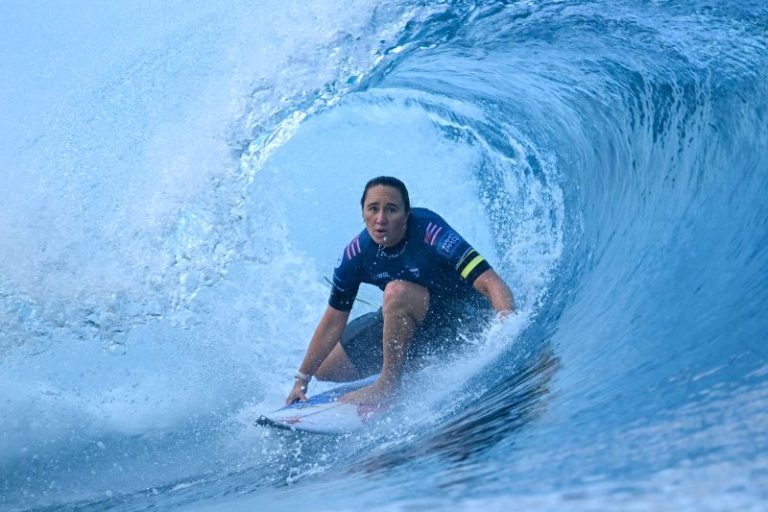
In Teahupo’o, a village on the French Polynesian island of Tahiti, they will ride through the barrel of powerful, hollowed out waves that are as tall as 25 feet and can drive surfers into a sharp, shallow reef.

“For anyone watching, yeah, it’s a scary wave and hopefully it inspires other people out there to face their fears,’’ said Moore, 31. “Facing your fears isn’t necessarily about overcoming them. It’s finding a way to show up even though you’re shaky and even through you maybe don’t think you can but you try anyway.’

Get Olympics updates in your texts! Join USA TODAY Sports’ WhatsApp Channel

Meet Team USA: See which athletes made the U.S. Olympic team and where they are from

Moore, who won gold at the Tokyo Games during surfing’s Olympic debut, is confronting her own fears in and out of the water. First, she is preparing to ride the waves of Teahupo’o that have killed at least one surfer and last year hospitalized big-wave rider Tom Lowe and Australian pro surfer Ethan Ewing. Second, Moore stopped competing full-time on the World Surf League tour this season as she prepares to enter a new phase of her life. Eventually she wants to start a family with her husband, Luke.

“There’ve been good days, really good days, where I feel like I’m on the right path,’ she said. “And then there are days where, oof, this is harder than I thought it would be.’

Why Carissa Moore passed up WSL events to train in Tahiti

In 2021, two months after winning the Olympic gold, Moore won the Rip Curl WSL Finals for her fifth world championship.

“That’s kind of when I was like, ‘OK, what more do I want from this sport?’” Moore said. “Or from the competitive side. And what’s going to be meaningful for me?”

As the grind of the World Surf League tour began to wear her down, she yearned for something that would leave her fulfilled before embarking on a new chapter in her life. The answer became clearer with the Paris Games about a year away. She wanted to focus on defending her Olympic title. That, she decided, would require spending a significant amount of time training at Teahupo’o.

As a result, Moore has competed in only two events this season on the World Surf League (WSL) tour, rather than the approximately 10 she has averaged over the past five seasons. It’s allowed her to spend about two months surfing at Teahupoʻo. It’s cost her the validation she got on tour, where in 13 years she won 28 events and had 50 other top-three finishes.

“It’s super scary,’ Moore said. “It’s crazy to take such a leap of faith on a year like this. But it felt right, it feels right.

“I have to trust in that for me, that’s probably even one of the biggest lessons this year is how do I find that belief in yourself when you maybe don’t have the outside validation you’ve always had? I don’t have the results to tell me, ‘Hey, you’re on the right path right now.’ But I got to find it somehow.’

How Carissa Moore’s relationship with the Teahupo’o wave has evolved

Moore wants to make something clear for those expecting her to win another gold medal.

“I’m not the one on top of the mountain saying, ‘Hey, I’m the favorite for this thing,” she said.

One of her two WSL events came in May at Teahupo’o. She and the other top surfers could not outduel France’s Vahiné Fierro, a 23-year-old Polynesian who is relatively unknown on the pro circuilt but lives and trains in Teahupo’o.

“She has an intimate relationship with that wave and it’s sort of like, ‘Wow, lucky for her,” said Chris Moore, Carissa’s father who has coached her through much of her career.

Carissa Moore indicated her relationship with the Teahupo’o wave still is a work in progress.

“With the Olympics being this year, Teahupo’o’s a wave that really deserves the time, effort and attention to really get to know it,’ she said. “And so making a departure from competing full time on the championship tour has given me a chance and opportunity to spend some more time down in Tahiti, which has been such a fun process and something I’ve really enjoyed.

“I don’t think I’ll ever get comfortable there, but I’m getting more comfortable with being uncomfortable. I think I’ve definitely gotten to know the lineup a little bit better and what different types of waves look like on the reef.’

What’s next for Carissa Moore?

Leaving the WSL tour did more than afford Moore time to focus on preparing for the Olympics. It also gave her freedom.

“I think for me, it’s that time in my life where I’m like, ‘Yeah, I want to follow the joy. What’s going to bring me more joy in my life and what’s meaningful?’

“Everything’s definitely different and unknown, and I think that in itself is exciting. It’s challenging. But I think it’s really been pushing some personal growth, which I think is good for myself as a person to evolve and see what I’m made of and what I can be.’

Moore said her new direction stems in part from her wanting to start a family.

“At some point, if you want to have a child, as a woman you have to take a leave of absence from what you’re doing, especially from an professional athletic career. And I think just allowing myself to have that space and grace to do that, that’s super meaningful to me. I would love to have a family of my own.’

But the plan is for surfing to remain an integral part Moore’s life.

“I still want to push my performance surfing,’ she said. “I still see surfing being a part of my life on a daily basis. I still want to be a professional surfer and work with my sponsors to create inspiring, motivating, positive content for others to hopefully inspire them to live their dreams.’

This post appeared first on USA TODAY
UPPER MARLBORO, Md. — Kim Harvey said she got used to all the phone calls informing her that her son, Jahmal, had gotten into another fight. She remembers driving back and forth, back and forth, back and forth to Flora L. Hendley Elementary School in southeast Washington − never actually witnessing the fights, but always seeing the aftermath.

On one occasion, she recalled, a classmate decided to dry his hands off in the bathroom by shaking water on Jahmal, who was usually one of the smaller kids in his grade.

‘I got to the school and there was blood all over,’ Kim Harvey said. ‘But then I saw (Jahmal) walk in. Ain’t nothing wrong with him.’

Get Olympics updates in your texts! Join USA TODAY Sports’ WhatsApp Channel

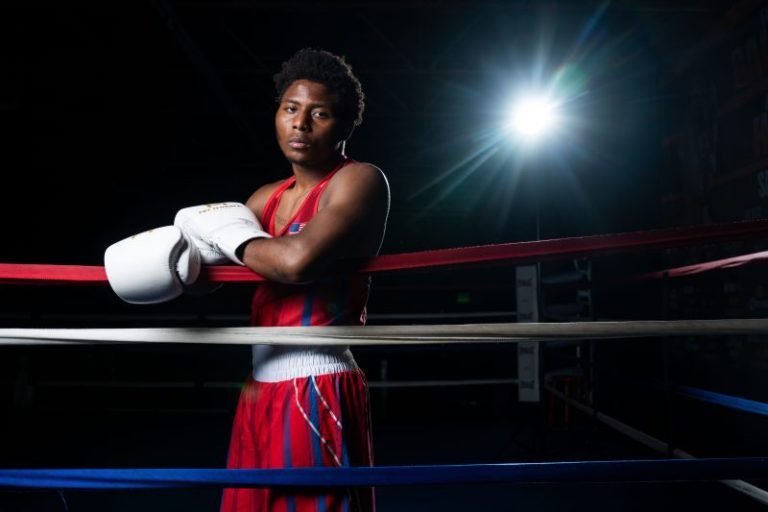
Perhaps it’s no surprise that same kid, whose mother described his elementary school behavior as ‘a little rough around the edges,’ found a home in the violent world of Olympic boxing.

Meet Team USA: See which athletes made the U.S. Olympic team and where they are from

But it’s not his anger and aggression that have made Jahmal Harvey, now 21, one of most promising young featherweights in the world.

‘It was just keeping my cool,’ Harvey said in an interview earlier this summer at his training gym, a no-frills garage space next to an auto body shop in an industrial part of Prince George’s County, Maryland.

‘Once people would get me out of my character and I would fight with aggression, I was just more liable. … I was putting myself in a bad position to lose. And I don’t like losing.’

Less than a decade after giving up football to give boxing a try, Harvey arrives at the 2024 Paris Olympics as perhaps the best shot Team USA has to end its unusual Olympic gold medal drought on the men’s side of the sport. While the U.S. has historically been the epicenter of boxing, certainly at the professional level, it has not produced a male Olympic gold medalist since Andre Ward in 2004.

Harvey’s recent results and style, however, give USA Boxing reason to hope. The 5-foot-6, 126-pound fighter doesn’t win many fights by knockout but is technically and tactically sound, capable of switching his stance from orthodox (right-hand dominant) to southpaw (left-hand dominant) midway through a fight as needed. He won gold at two of the most competitive tournaments over the past three years: The 2021 world championships and the 2023 Pan American Games. (U.S. athletes did not compete at the 2023 world championships due to ongoing issues with the sport’s international federation and its ties to Russia.)

‘My dream has always been the Olympics,’ Harvey said. ‘To get to the pros, you can weave your way, pick and choose who you want to fight to get your world title. There’s no picking in the Olympic game. You fight the best.’

How Jahmal Harvey went from football to boxing

It’s an overused cliche, particularly in the world of combat sports, but Harvey’s mother said it’s true and important to know about her son: ‘He’s been a fighter his whole life,’ she said.

Harvey, who has three siblings, was born about six weeks prematurely and weighed about 4 pounds at birth, his mother said. His lungs weren’t fully developed when he was born, she explained, and he went on to struggle with asthma and allergies as a kid.

He was also on the smaller side, which Kim Harvey thinks might have led other kids to believe they could pick on him − and probably led to some of those elementary school fights.

Growing up, Harvey said his favorite sport was always football, where he primarily played cornerback and running back. His coach, Darrell Davis, likened him to Tyreek Hill − a dynamic, explosive athlete who could get the ball three times in a game and score three touchdowns. But when Harvey was leaving middle school for high school, he saw all his teammates start to pack on weight while he hovered around 80 or 90 pounds.

Davis recommended that his one-time football player go all-in on a different sport − one in which his size wouldn’t hinder him. And he committed to continue coaching Harvey.

‘I knew his potential and I knew his heart,’ Davis said. ‘We didn’t know we were going to get this far. We just kept moving.’

‘I wasn’t scared’

Kim Harvey laughs now when she thinks back on her son’s start in boxing. She said she didn’t know whether or how much Harvey, who was about 12 years old at the time, was training. She just knew that he was being looked after by Davis, a longtime family friend who said he has known Harvey since he was 3 years old. ‘I’m like, ‘he’s with Darrell, he’s good,’ ‘ she said.

Then she got a call from Davis telling her that he had scheduled Harvey’s first fight, at a boxing gym in Palmer Park, Maryland, named after legendary local boxer Sugar Ray Leonard.

After receiving all those calls about Harvey fighting in school, she said, that 2015 bout was the first time she actually saw him fight for herself. And she could tell he was serious.

‘I was competitive. I always compete. I wasn’t scared,’ Harvey said. ‘And I liked boxing. I liked the fact that it was something new, to where I wanted to get better at it and perfect the craft of it − not just fight off of pure aggression and anger.’

By the following summer, Harvey was competing in − and winning − the 80-pound weight class at a national boxing tournament in Dallas. Two years later, at 16, he won a youth national title at a USA Boxing event in Salt Lake City.

Harvey said he couldn’t pinpoint a specific moment when his ability in boxing surpassed his talent on the football field, just that it happened over time with boring, repetitive hard work. He would wake up at 5:30 a.m. to run around the neighborhood before going to school. He’d train with Davis at odd hours or on weekends, sparring at times when he could’ve been on vacation or hanging out with friends.

Davis said he also regularly signed his star pupil up for fights against taller kids who were 20 pounds heavier, or otherwise book him bouts that Harvey was expected to lose. And many times, Davis said, he would in fact lose − though it would ultimately shine a light on a potential weakness and benefit Harvey in the long run.

‘It’s not mathematical stuff to this boxing stuff, like people think it is,’ Davis explained. ‘You train hard. You train beyond your level so when you fight your level, it’s always easy.’

Outlasting a losing streak

Harvey described his fighting style as aggressive but straightforward, revolving around his desire to throw the first punch of every fight and the last one, without letting his emotions derail him along the way. He’s grown accustomed to winning big bouts, like the final at the 2020 national championships, by narrow decisions based largely on grit.

The biggest hiccup in Harvey’s career to date came after he won the 2021 world title, which made him the first U.S. men’s world champion in 14 years. From April 2022 to February 2023, he lost three fights in a row − a significant skid in a sport where athletes often go several months between competitions.

That rough stretch prompted him to be more diligent at managing and preventing injuries and re-evaluate his nutrition plan. He had been struggling to make weight, he said, and found that his vegetarian diet had left his body deficient in a few key vitamins and minerals. ‘I was eating healthy, but I wasn’t getting that nutrition that I needed,’ he said.

In the months leading up to Paris, one of Kim Harvey’s biggest concerns has been how her son will deal with the pressure. ‘It’s almost like everyone is expecting him to bring home the gold, right?’ she said. But he told her, as he’s told everyone else, that he isn’t going to be phased.

He said he’s enjoying the international travel that elite boxing has provided him − Harvey has already competed on four different continents − and has recently gotten more invested in reading, specifically thriller and mystery books. In late May, he said he was reading ‘Good Half Gone’ by Tarryn Fisher, a thriller about a woman who sees her twin sister get kidnapped.

‘It’s actually kind of, like, therapeutic,’ he said. ‘Take your mind off everything.’

Out to get the gold

Regardless of what happens in Paris, Harvey said his current (but not finalized) plan is to turn pro after the Games − just as Olympic silver medalists Duke Ragan, Keyshawn Davis and Richard Torrez Jr. all did following the previous Olympics. He could theoretically return for the 2028 Summer Games in Los Angeles, but it doesn’t help that the future of Olympic boxing is currently up in the air.

The International Boxing Association, which previously governed the sport, is no longer recognized by the International Olympic Committee because of its close ties and financial reliance upon Russia. The decision has fractured the international landscape in amateur boxing and left the IOC to run the competition at the Paris Games.

‘I’m going to get my chance,’ Harvey said. ‘But if these other kids don’t get their chance to go achieve their dream, it’s really going to be detrimental and heartbreaking. So I just hope that they can get everything together and get things straight.’

The fleeting, once-every-four-years aspect of the Olympics is part of what’s made Harvey chase this goal so diligently. He said one of his coaches on the youth national team, Augie Sanchez, once told him there are lots of pros out there in the boxing world − and even a lot of very successful ones. But there aren’t many Olympians. And there are even fewer gold medalists.

‘That stuck with me because like I said, I’m competitive and I wanted to go for the hardest goal there is,’ Harvey said. ‘I accomplished (qualifying for) the Olympics. Now all that’s left is to just go get the gold medal.’

Contact Tom Schad at tschad@usatoday.com or on social media @Tom_Schad.

This post appeared first on USA TODAY
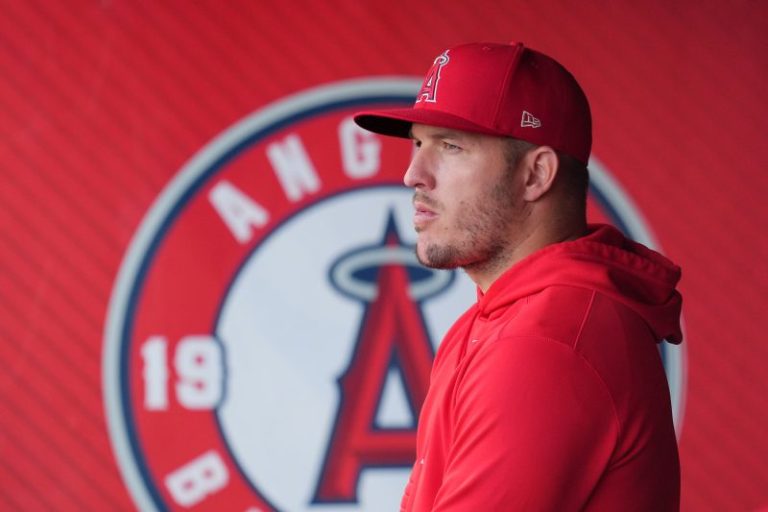
Trout, the Los Angeles Angels’ star center fielder, felt a twinge in the surgically repaired knee while striking out during a first-inning at-bat on Tuesday night. It was his first rehab game for the Bees and he played just two innings before exiting.

‘After the at-bat, he came back in and felt the need to say something,’ Salt Lake manager Mike Johnson told reporters before Wednesday’s game. ‘We took him out as a precaution.’

After the Angels notched a 2-1 win over the Seattle Mariners on Wednesday afternoon, manager Ron Washington said he had few details to share about Trout, the three-time American League MVP.

‘Nothing other than he’s coming back to L.A. to be reevaluated, so we’ll see what goes on with that,’ Washington said.

All things Angels: Latest Los Angeles Angels news, schedule, roster, stats, injury updates and more.

Trout last played for the Angels on April 29, when he injured the knee. He underwent surgery to repair meniscus damage four days later.

The initial plan in Salt Lake was for Trout to play five innings in center field on Tuesday, serve as the designated hitter on Wednesday and play seven innings in the field on Thursday.

Trout, an 11-time All-Star, was batting .220 with 10 homers and 14 RBI in 29 games this season. He was unable to figure out how he hurt the knee.

This post appeared first on USA TODAY
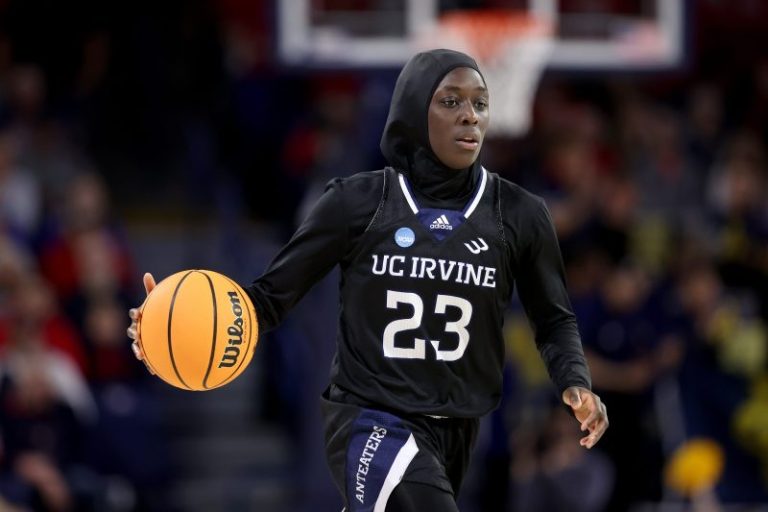
PARIS − Diaba Konaté was named the NCAA college basketball Big West conference’s best defensive player of the year in 2023-2024. In her senior year playing for the University of California, Irvine, she averaged 7.5 points, 2.4 rebounds and 3.7 assists per game.

Konaté, who was born and raised in Paris, has a high free-throw percentage. She gets a lot of steals. Some basketball fans considered her to be a breakout star in this year’s NCAA Women’s March Madness tournament.

What Konaté can’t do is play basketball in her own country, including for the French national team during the Paris Olympics. And that’s because she wears a hijab.

The International Basketball Federation (FIBA), the Geneva, Switzerland-based organization that governs the sport worldwide, in 2017 overturned a global ban on the headscarves worn by some Muslim women.France’s domestic version of that body, the French Federation of Basketball (FFBB), has not followed suit, opting instead to apply the country’s laws on secularism that ban the wearing of symbols or clothing that express a religious affiliation in public schools and other institutions linked to the state.

Athletes like Konaté say it’s had a deleterious effect on their basketball careers.

Meet Team USA: See which athletes made the U.S. Olympic team and where they are from

‘The context in France makes me nervous,’ Konaté, 23, said last month in a Zoom call with reporters, coaches and representatives from human rights groups who have been trying to get hijab bans in France in soccer, basketball and volleyball, at both professional and amateur levels, overturned.

‘It’s very frustrating to be excluded from representing my country or just being able to play basketball simply because of my religious identity as a Muslim woman who chooses to wear hijab,’ Konaté said.

‘I can’t fully express my faith and pursue my athletic aspiration.’

Activists say France’s hijabs ban are not simply discriminatory. They are also effectively preventing Muslim women and girls from fully participating in sports, for recreation or as a career, and this exclusion can negatively impact their lives, including their mental and physical health.

‘Who are we trying to erase when we say that you can’t represent France while being visibly Muslim?’ said Hélène Bâ, a French basketball player and human rights lawyer, who participated in the call with Konaté by pre-recording a video message that was played over Zoom.

Bâ is the co-founder of Basket Pour Toutes − Basketball For All − a collective that has been pushing the International Olympic Committee and International Basketball Federation help overturn France’s hijab ban. It was one of 11 rights groups who wrote to the IOC President Thomas Bach in June asking him to intervene on the issue.

‘It is a clear violation of the Olympic Charter values and provisions,’ Bâ said of the ban.

‘It is also an infringement on our fundamental rights and freedoms. It violates our freedom of conscience and religion and our rights to participate in sport. It reinforces gender and racial stereotypes, and it feeds the anti-Muslim hate that already pervades parts of French society.’

Konaté acknowledged that her selection for France’s Olympic basketball team wasn’t a shoe-in. However, she pointed out that before the hijab ban came into effect she played for the French under-18 national team, with whom she won two silver medals and one gold. ‘I don’t know if I’m good enough, to be honest. I will never be able to answer that. I’ve never had the opportunity actually to be part of the team.’

Activists meanwhile say that members of sports clubs in France aren’t technically subject to the country’s laws on neutrality. They also allege that it is prone to being enforced selectively.

Timothée Gauthiérot, a French basketball coach and Basket Pour Toutes co-founder, said that he often sees Sikh basketball players in France wearing turbans who haven’t faced the hijab bans Muslim players do.

Gauthiérot said the bans have resulted in fewer girls on the court and that if the situation doesn’t change he expects teams to have difficulties in recruiting new players with the result that some clubs will have to shut down.

‘Maybe we won’t be able to measure the full impact of this ban for two, three, five, ten years,’ Gauthiérot said. ‘But we can still already feel it. Some girls have stopped playing sports.’

In response to the letter sent to the IOC’s Bach by Basket Pour Toutes and other rights groups the IOC said that in general athletes were free to wear a hijab, veil and headscarf in the Olympic Village and in Olympic venues but that during competitions the ‘technical rules’ set by national sports federations applied.

The IOC said that ‘elite athletes competing for French national teams are considered civil servants. This means they must respect the principles of secularism and neutrality.’ The IOC’s letter further added that it knew of only one case of a hijab-wearing athlete competing in Paris for France who was impacted by the ban. It said that case had been ‘resolved to the satisfaction of everyone,’ without offering further details.

A representative for the French Federation of Basketball did not immediately respond to an emailed request for comment on the ban’s impact on French female basketball players or the sport’s popularity.

France’s ministry of sports also did not immediately return a comment request on those points or a request for information about the Olympic athlete referred to by the IOC in its letter.

After the publication of this story, it said in a statement that ‘France protects the freedom of expression, conscience and religion of every individual, including the athletes of its national teams.’ It said there is no general ban on wearing the hijab on sports fields in France but that athletes selected to its national teams are considered ‘participating in the exercise of a public service,’ and thus subject to its laws on secularism.

Bilqis Abdul-Qaadir, an American former NCAA basketball player who led the overturn of the FIBA hijab ban in 2017 and also participated in the Zoom call with Konaté, urged her fellow athletes not to give up in the face of the ban.

‘Diablo, I’m sorry,’ said Abdul-Qaadir on the call, addressing Konaté. ‘To all the other sisters over in France, I’m sorry. The only thing that I can really say − that I feel like I should say − is they can bar us from their organizations and their governing bodies. They can have a say in what they want. They can’t stop us from playing.’

This post appeared first on USA TODAY
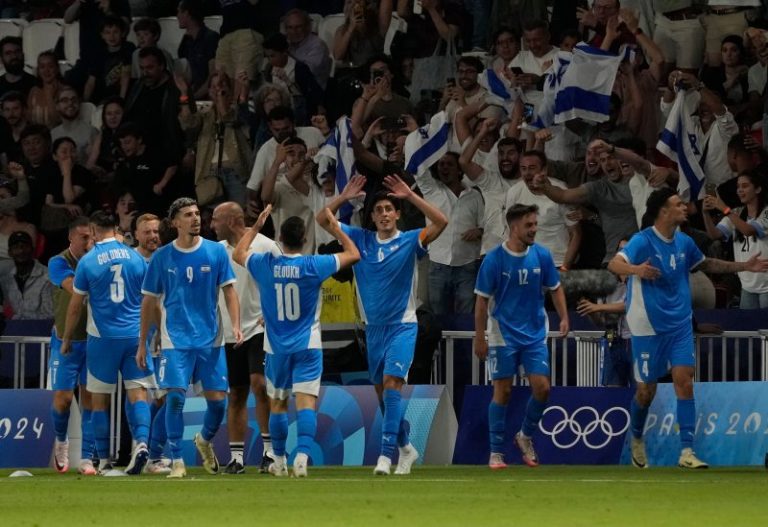
PARIS – What could very well be the most antisemitic Olympics since 1936, when Adolf Hitler successfully tricked the United States into bringing its delegation to Berlin, got off to a disheartening start Wednesday when tens of thousands of fans at Parc des Princes Stadium booed and hissed and whistled their way through the Israeli national anthem.

Make no mistake: France in 2024 is not Nazi Germany – far from it. By the end of the song, the voices of Israel’s fans – clearly in the minority during this men’s soccer match against Mali – had grown loud enough to drown out the dissent. But on the opening day of competition at these Paris Games, the message was clear: At a sporting event that is meant to transcend global politics and even war, there is only one country for which the norms do not seem to apply.

“It’s not nice to hear that,” Liel Abada, who plays for Charlotte FC in MLS, said after the 1-1 tie. “But we’re just focused about ourself. We just want to make our fans in Israel, our fans who came here tonight proud and this is the most important for us.”

Despite an alarming antisemitism problem in this country and calls from some far-left French politicians to protest Israel’s participation due to the war in Gaza, significant security resources are being devoted to keep the athletes safe from potential attacks and bring down the temperature around any events where Israelis participate.

That was obvious outside the stadium Wednesday as clusters of uniformed and visibly armed police officers were apparent in all directions and a secure perimeter was established at least 75 yards from the entrance. Only fans with tickets were allowed to get near the stadium, and their belongings were inspected upon entry.

As the Israeli team’s bus approached the stadium, it was escorted by a cadre of vans and motorcycles and even policemen on foot with shields.

It sent a clear message amidst a tense time for Israeli athletes: Any hint of disorder around a venue with Israelis will not be tolerated.

“In the Olympic Village and also here we feel safe and we feel focused on football,” team captain Omri Gandelman said. “This is our target to focus on the field and we block out the noise.”

Should that feeling of security hold throughout the Games, it will be a credit to French president Emanuel Macron, his country’s security apparatus and the IOC.

But it can’t account for how people in the stands treat the Israeli delegation or how ugly it might get. Whistling during a country’s national anthem may not be the world’s biggest sin – and there are certainly legitimate criticisms over how the Israeli government has conducted itself in response to Hamas’ deadly terrorist attack last Oct. 7 – but it’s a level of disrespect that would not be accepted regarding any other country.

Especially at the Olympics.

“I find it crazy the double-standard that Israel is held to when it’s defending itself and people are just looking for an excuse to hate on us,” Jared Firestone, a Miami native who hopes to represent Israel in skeleton at the 2026 Winter Games, said by phone. “Athletes are out there as an easy target to spew hate at, even though they have little to nothing to do with anything going on politically.  

“For me, personally, it makes me more resolute. It motivates me in my training to make sure when I’m representing Israel that I’m doing the best I can in putting its best foot forward both on and off the field. It would be nice if everybody was cheering us everywhere we went, but that’s not what I expect.”

It is, of course, impossible to totally separate world events from these or any Olympic Games. International conflicts are always part of the narrative, and often the reality. Even in times of relative peace and calm, Israeli athletes have in past Olympics been at the center of the debate. Three years ago in Japan, for example, a Sudanese judoka didn’t show up for a match against an Israeli competitor and dropped out of the Games.

Even now, the participation of Russian and Belarusian athletes in Paris under a neutral banner was contingent on a screening process that disqualified them if they showed support for the war in Ukraine. When pressed at a news conference Tuesday why Russian athletes were in effect being punished for their country’s war while Israel’s were not, IOC president Thomas Bach leaned on the idea that Russia’s Olympic committee claiming dominion over athletes in the contested Donbas region of Ukraine was a differentiating factor.

“The situation between Russia and Ukraine and Israel and Palestine is not comparable,” he said. “Such a violation by an NOC does not exist between the two NOCs of Palestine and Israel, and this has also been confirmed by the Court of Arbitration for Sport when the CAS rejected the appeal of the Russian Olympic committee against its suspension.”

Some may find that rationale flimsy, but the point is that these issues are not new. What’s different this time is the intensity of the international backlash to the bloody and gruesome civilian toll in Gaza. But when it comes to Israel, it is sometimes hard to tell where concerns over human rights end and antisemitism begins.

Is it with 13 fans in the front row Wednesday wearing masks and white T-shirts spelling out “Free Palestine” while the anthems played? Or is it with Thomas Portes, a member of the French Parliament, saying that the Israeli delegation isn’t welcome here?

Hard to say. But none of this is a surprise, especially to the Israelis.

“Our staff, before we came to this game and also this tournament, talked to us and we said we don’t have to fall for this provocation,” defender Ilay Feingold said. “Because we knew there would be Palestinian flags and we were ready for this.”

We will see, as the Games here play out and Israeli athletes are part of events all across the city, whether it fades into the background or remains central to how Paris 2024 is remembered – just as Berlin 1936 was remembered for the antisemitism Jewish athletes faced at every turn.

“The common denominator is these are very young people and they want to compete and they don’t really see politics,” said Rick Kaufman, who co-authored the recently released book ‘Played: The Games of the 1936 Berlin Olympics.’

“Hitler and (chief propagandist Joseph Goebbels) cleaned up everything and made sure it looked sparkling, but the newspapers were full of antisemitic rhetoric and half the people were antisemites. They booed these youngsters, Yugoslavian Jews and some of these other Jews that were winning.

‘They’re going to face that for sure. There’s antisemitism going on all over Europe, and I think Paris is going to be a hotbed for it. I pity them and worry about them.”

This post appeared first on USA TODAY
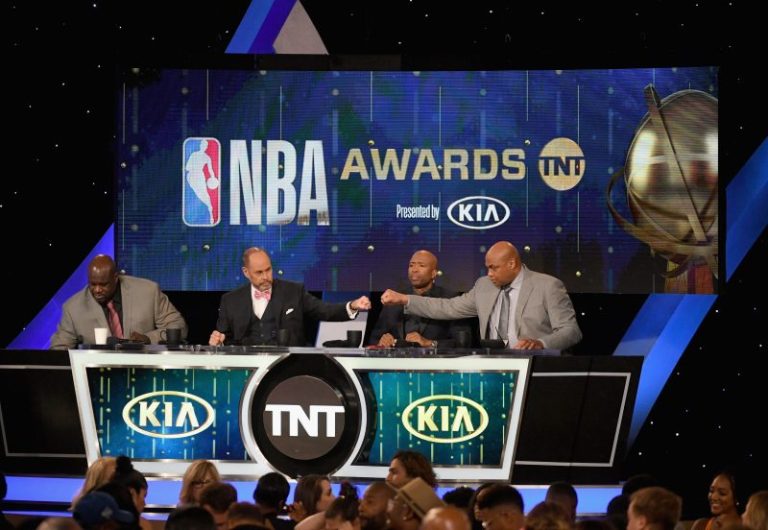
It’s official  — TNT Sports will lose the media rights to the NBA after next season.

On Wednesday, the NBA announced it has entered ‘a long-term arrangement with Amazon’ after Warner Bros. Discovery, the parent company of TNT Sports, failed to match the terms of Amazon Prime Video’s offer.

‘We are grateful to Turner Sports for its award-winning coverage of the NBA,’ the league said in a statement praising TNT, home to ‘Inside the NBA,’ an Emmy award-winning studio show that features Ernie Johnson Jr., Charles Barkley, Kenny Smith and Shaquille O’Neal. ‘(We) look forward to another season of the NBA on TNT.’

Earlier this month, USA TODAY Sports reported that the NBA finalized a combined 11-year media rights deal with Disney (ABC/ESPN), NBC and Amazon worth approximately $76 billion – $6.9 billion per season – that will begin with the 2025-26 season and run through the 2035-36 season.

On Monday, TNT Sports invoked a matching clause in its current contract with the NBA, which ends after the 2024-25 season, in a last-ditch effort to ‘allow fans to keep enjoying our unparalleled coverage, including the best live game productions in the industry and our iconic studio shows and talent.’ However, the NBA rejected TNT Sports’ offer on Wednesday, saying, ‘Warner Bros. Discovery’s most recent proposal did not match the terms of Amazon Prime Video’s offer.’

TNT Sports took issue with the NBA’s action.

‘We have matched the Amazon offer, as we have a contractual right to do, and do not believe the NBA can reject it,’ TNT Sports said in a statement. ‘In doing so, they are rejecting the many fans who continue to show their unwavering support for our best-in-class coverage, delivered through the full combined reach of WBD’s video-first distribution platforms — including TNT, home to our four-decade partnership with the league, and Max, our leading streaming service.

‘We think they have grossly misinterpreted our contractual rights with respect to the 2025-26 season and beyond, and we will take appropriate action. We look forward, however, to another great season of the NBA on TNT and Max including our iconic ‘Inside the NBA.’ ”

TNT was reportedly aiming to take over Amazon’s ‘C’ package estimated at $1.8 billion, which includes a conference final every other year, weekly broadcast rights, WNBA rights and early round playoff game broadcasts, according to reports in Front Office Sports confirmed by USA TODAY. 

“Throughout these negotiations, our primary objective has been to maximize the reach and accessibility of our games for our fans,’ the NBA said. ‘Our new arrangement with Amazon supports this goal by complementing the broadcast, cable and streaming packages that are already part of our new Disney and NBCUniversal arrangements. All three partners have also committed substantial resources to promote the league and enhance the fan experience.’

Earlier this month, Barkley, who has served as an analyst on ‘Inside the NBA’ since 2000, doubled down on his decision to retire from TV after TNT’s contract ends following the 2024-25 season. He said he ‘really feels bad for everybody at TNT.’

‘The main reason I was talking about next year being my last year – I wouldn’t feel comfortable going to work for another network,’ said Barkley, 61. ‘It’ll be 25 years that I’ve been working with Turner, and I love everybody at Turner, but at this age to go and start over, I don’t know if I want to do that.’

The USA TODAY app gets you to the heart of the news — fast.Download for award-winning coverage, crosswords, audio storytelling, the eNewspaper and more.

This post appeared first on USA TODAY