Archive

2024

Browsing

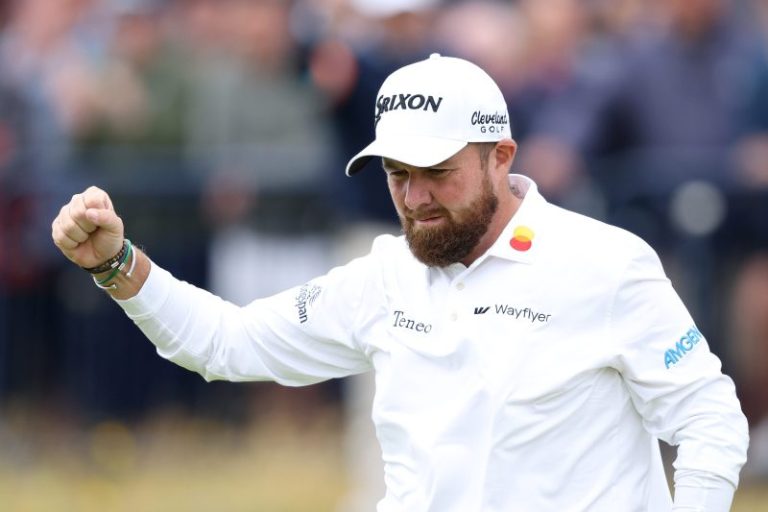
Team Ireland had a PGA Tour golfer carrying its flag at the opening ceremony for the 2024 Paris Olympics, but it probably wasn’t the Irish golfer you’d have expected.

Shane Lowry, not teammate Rory McIlroy, received the honor.

Lowry and McIlroy, friends who teamed up to win the Zurich Classic in New Orleans earlier this year, are Ryder Cup teammates who are set to be Olympic teammates for Team Ireland in the golf competition, which begins Aug. 1 at Le Golf National near Paris.

For McIlroy, a leading member of the European Ryder Cup team for years, Olympic representation has been a complicated topic in the past. He is from Northern Ireland, which does not compete separately. Forced to choose, McIlroy opted to represent Ireland (instead of Great Britain) in the Tokyo Games, and he will again in Paris.

Get Olympics updates in your texts! Join USA TODAY Sports’ WhatsApp Channel

2024 Olympic medals: Who is leading the medal count? Follow along as we track the medals for every sport.

‘Once I left trying not to upset anyone aside, then it was actually a pretty easy decision,’ he explained in 2021. ‘The decision was I’m going to play golf for the country or the nation that I’ve always played for through my junior and amateur days and now into the professional game. And that’s Ireland.’

While McIlroy gets most of the attention for golfers from his corner of Europe, teammate Lowry, too, is a strong player enjoying a strong 2024 on the PGA Tour.

The USA TODAY app gets you to the heart of the news — fast. Download for award-winning coverage, crosswords, audio storytelling, the eNewspaper and more.

Lowry is 10th in the FedEx Cup standings. He has six top-10s in 16 events, including top-six finishes in the PGA Championship and the British Open in Scotland.

‘It’s a huge honor for me and my family,’ Lowry said in a video shared by the Irish Olympic Federation. ‘Anybody that knows me knows how patriotic I am and how much I love Ireland and how much I love playing for my country. It’s something that I’m not sure you’d even dream about as a kid, because it’s so far out there.’

Lowry and McIlroy each played for Ireland in the Tokyo Games, with Lowry finishing 22nd and McIlroy losing a playoff to miss out on the bronze medal behind winner Xander Schauffele.

This post appeared first on USA TODAY

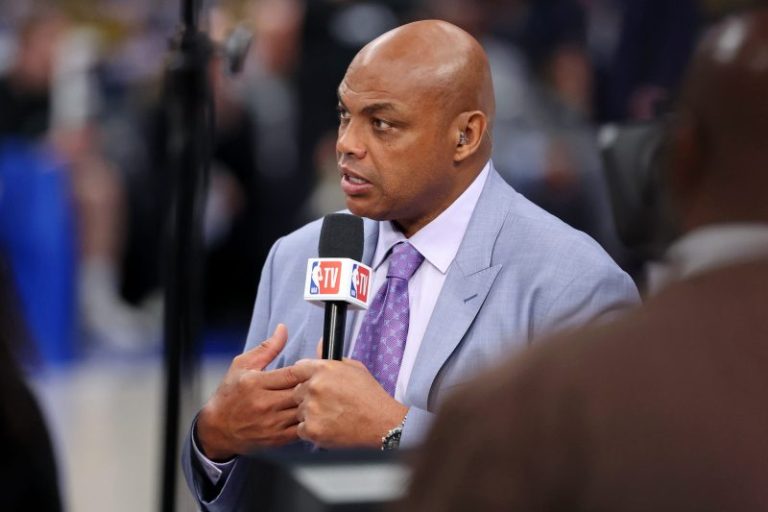
Charles Barkley isn’t too happy about Turner Sports losing the television rights to broadcast the NBA.

The league announced this week that it was rejecting Warner Bros. Discovery’s $1.8 billion per year matching bid and would enter into a deal with Amazon Prime Video beginning with the 2025-26 season, thus ending a 40-plus-year broadcast relationship. Warner Bros. is the parent company of TNT Sports.

It also effectively ends ‘Inside the NBA,’ which many consider the best studio show in sports.

The Hall of Famer and TNT analyst released a statement on Turner losing the rights, saying that the league cowered to large tech companies like Amazon because they knew they would shell out billions to broadcast games.

‘Clearly, the NBA has wanted to break up with us from the beginning,’ Barkley wrote on social media. ‘I’m not sure TNT ever had a chance. TNT matched the money. The league knows Amazon and these tech companies are the only ones willing to pay for the rights when they double in the future. The NBA didn’t want to piss them off.

‘It’s a sad day when owners and commissioners choose money over the fans. It just sucks,’ he added.

Barkley, host Ernie Johnson, Kenny Smith, and Shaquille O’Neal have made ‘Inside the NBA’ appointment television, and the show has won 19 Sports Emmys, including three in 2024 for Outstanding Studio Show − Limited Run, Outstanding Studio Analyst for Barkley, and Johnson winning the Outstanding Studio Host award.

‘I just want to thank everyone who has been at Turner for the last 24 years. They are the best people and the most talented, and they deserve better. I also want to thank the NBA and its fans − the best fans in sports. We’re going to give you everything we have next season,’ Barkley said.

Earlier Friday, Barkley appeared on the Dan Patrick Show and said he still plans to retire and under no circumstances will he take a pay cut. He added that Warner Bros. Discovery is partly to blame for the loss of broadcasting rights at Turner Sports.

‘Wait, if ya’ll lose the NBA, why should I get screwed? They said let’s come to some kind of agreement,’ Barkley said. ‘The agreement is we get to make you an offer. I said, that’s fine, I’m going to turn it down, because I’m not taking no pay cut because y’all screwed up. But I don’t see them guaranteeing it, to be honest, because they don’t really have anything. So I’m going to be a free agent next summer and I’m going to have to sit back and – right now my intention is to retire.

The USA TODAY app gets you to the heart of the news — fast.Download for award-winning coverage, crosswords, audio storytelling, the eNewspaper and more.

This post appeared first on USA TODAY

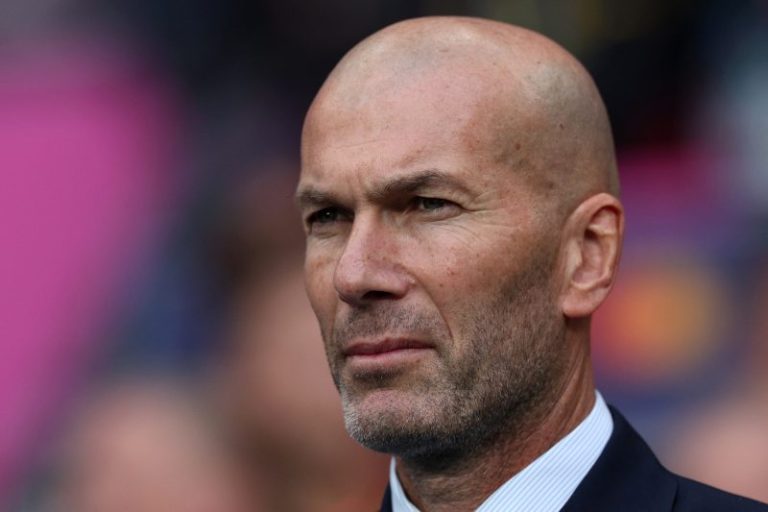
Zinedine Zidane to the rescue.

Widely regarded as one of the best soccer players in the sport’s history, Zidane is responsible for 31 goals in 108 international appearance for the French national soccer team. He wasn’t a keeper, but Zidane made a heck of a ‘save’ on Friday.

‘Zizou’ made an appearance in the Olympic opening ceremony prologue video, rescuing the Olympic flame from the Stade de France, instead running it to other torch bearers on way to its proper place on the Seine.

Get Olympics updates in your texts! Join USA TODAY Sports’ WhatsApp Channel

The Olympic opening ceremony was certainly one for the ages. While the Parade of Nations took place, it actually occurred in boats on the River Seine on a number of boats and barges.

2024 Olympic medals: Who is leading the medal count? Follow along as we track the medals for every sport.

Zidane wrapped up his playing career in 2006 and would later coach Real Madrid between 2019 and 2021.

Despite leading the French national team to a World Cup win in 1998 and Euro success in 2002, Zidane never touched the pitch in the Olympics. At least he made the most of his opportunity during the ceremony.

This post appeared first on USA TODAY

Warner Bros. Discovery filed a lawsuit against the National Basketball Association to keep its relationship with the league in broadcasting games.

The NBA rejected WBD’s bid to continue broadcasting games, instead reaching agreements with Disney, Comcast’s NBCUniversal and Amazon on a media rights package worth about $77 billion. The rejection ended a four-decade relationship between the league and Turner Sports.

“Given the NBA’s unjustified rejection of our matching of a third-party offer, we have taken legal action to enforce our rights,” TNT Sports said in a statement. “We strongly believe this is not just our contractual right, but also in the best interest of fans who want to keep watching our industry-leading NBA content with the choice and flexibility we offer them through our widely distributed WBD video-first distribution platforms – including TNT and Max.”

Warner Bros. Discovery said their bid worth $1.8 billion per year was the same as Amazon’s, but the league instead approved the streaming services bid.

“Warner Bros. Discovery’s claims are without merit and our lawyers will address them,’ NBA spokesman Mike Bass said.

In rejecting the claim, the league pointed to this clause in a matching rights agreement from a decade ago.

“In the event that an incumbent matches a third party offer that provides for the exercise of game rights via any specific form of combined audio and video distribution, such incumbent shall have the right and obligation to exercise such game rights only via the specified form of combined audio and video distribution (e.g. if the specific form of combined audio and video distribution is internet distribution, a matching incumbent may not exercise such games rights via television distribution).’

This post appeared first on USA TODAY

Flying Financials

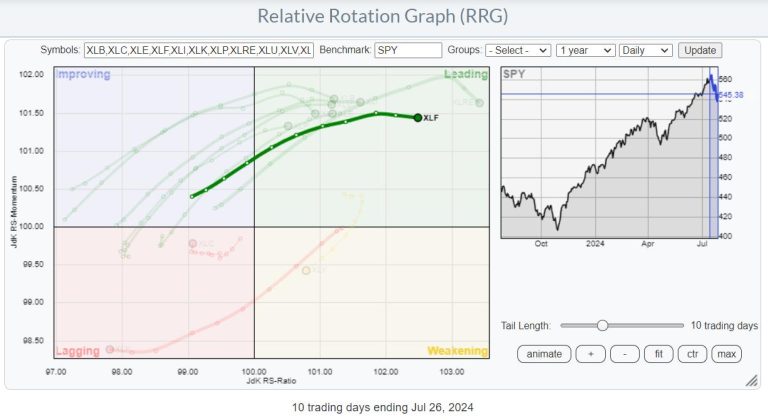
In the recent sector rotation, basically OUT of technology and INTO anything else, Financials and Real-Estate led the relative move.

On the RRG above, I have highlighted the (daily) tail for XLF to show how it stands out from the other sectors.

On the weekly RRG, XLF is still positioned inside the lagging quadrant but has started to curl back up on the back of the recent strength.

The start of the rotation out of Technology translates into a tail for XLK, which has started to roll over inside the leading quadrant. With increased weakness for Technology, Communication Services, and Consumer Discretionary showing on the daily RRG, it now becomes a balancing act to match this rotation with the one seen on the weekly RRG.

Technology Still Carries a Lot of Weight

Let’s start at the top, the weekly time frame. Technology is still inside the leading quadrant and has just started to roll over. There is nothing unusual or alarming from this rotation on its own. What is unusual, and at least a bit worrisome, is the high concentration of tails on the opposite side inside the lagging quadrant. This image tells the story of narrow breadth, which I have mentioned in articles and blogs.

Information Technology, on this weekly RRG, still carries the weight of the entire market.

On the daily RRG, the situation is the exact opposite. XLK has rapidly rotated into the lagging quadrant. XLY is inside weakening and heading for lagging, while XLC is on a very short tail inside, lagging with this week’s node picking up relative momentum. ALL other sectors have rotated into the leading quadrant at long tails led by Financials and Real Estate.

This raises the question: Is the strong rotation on the daily RRG the start of a bigger rotation, which will drag XLK out of the leading quadrant on the weekly RRG, and will this benefit the other sectors? Or is this rotation on the daily RRG just an intermezzo, and will the rotations that have started on the weekly RRG be completed on their respective sides of the chart and maintain their long-term relative trends?

Rotation To Other Sectors or Out of the Market?

From the RRGs alone, I feel that Technology has become top-heavy and needs a break. Money has started to rotate out of the sector, which is likely not over yet. With the market capitalization remaining so split between tech and anything else, it is very well possible that the other sectors will now take over and help $SPX stay afloat. In that case, we will see broader participation, with all sectors minus tech, but still a market under pressure.

But this only works when the money remains in the stock market, i.e., true sector rotation. It’s a different story when money starts to move out of the market ($SPX).

Stocks v Bonds Tell a Story

When I compare stocks and bonds, we see a clear rotation out of stocks (SPY) into bonds (GOVT) in the daily time frame.

Here, the weekly picture is also not as pronounced, but the first cracks are visible.

On the straight 1-1 comparison between SPY and IEF, we get a bit more clarity.

This week (one more hour of trading to go), the SPY:IEF ratio is breaking down from its rising channel, which has been in place since October 2023. It is breaking the rising support line and the previous low (double support), while the negative divergence between price and RSI is now executing/triggering with a break below the previous low in the RSI.

So, all in all, it leads me to believe that we are facing, at least, a few weeks of sideways to lower movement for the S&P 500.

To maintain the long-term uptrend, the market must catch the outflow from large-cap growth / Technology stocks and regroup during this period. Preferably, it should build a stronger base in terms of the number of sectors and stocks that contribute to a renewed or continued rally in the S&P 500.

For now, caution and careful money management are key.

#StayAlert and have a great weekend. –Julius

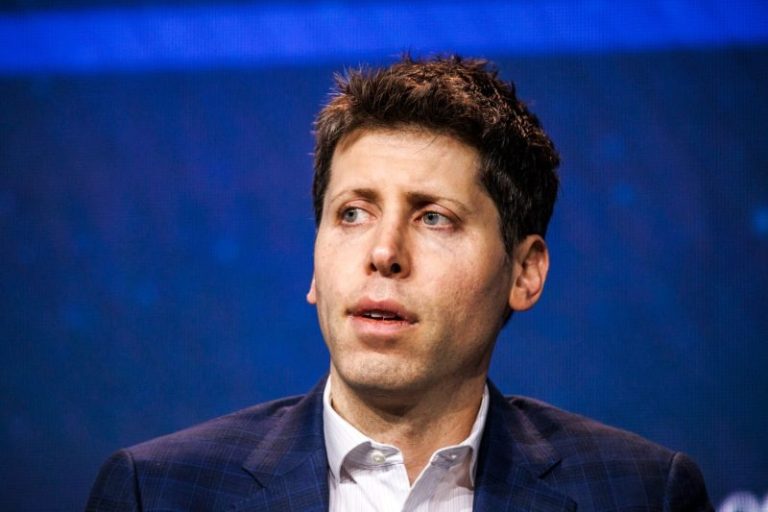
OpenAI on Thursday announced a prototype of its own search engine, called SearchGPT, which aims to give users “fast and timely answers with clear and relevant sources.”

The company said it eventually plans to integrate the tool, which is currently being alpha-tested with a small group of users, into its viral chatbot, ChatGPT.

Since the launch of ChatGPT in November 2022, Alphabet investors have been concerned that OpenAI could take market share from Google in search by giving consumers new ways to seek information online. With this prototype, OpenAI is testing the waters for doing just that, promising users the chance to “search in a more natural, intuitive way” and ask follow-up questions “just like you would in a conversation.”

“We think there is room to make search much better than it is today,” OpenAI CEO Sam Altman wrote Thursday in a post on X.

Alphabet shares were trading about 2.5% lower on Thursday, while the Nasdaq was up slightly.

In May, Google launched AI Overview, which CEO Sundar Pichai called the biggest change in search in 25 years, to a limited audience, allowing users to see a summary of answers to queries at the very top of Google Search.

Though Google had been working on AI Overview for more than a year, public criticism mounted after users quickly noticed that queries returned nonsensical or inaccurate results within the AI feature — without any way to opt out.

The SearchGPT announcement follows OpenAI’s launch last Thursday of a new AI model, “GPT-4o mini.” The new model is an offshoot of GPT-4o, the startup’s fastest and most powerful model to date, which it launched in May during a livestreamed event with executives. 

OpenAI, backed by Microsoft, has been valued at more than $80 billion by investors. The company, founded in 2015, is under pressure to stay on top of the generative AI market while finding ways to make money as it spends massive sums on processors and infrastructure to build and train its models.

Last Month, OpenAI announced the hiring of two top executives as well as a partnership with Apple that includes a ChatGPT-Siri integration. Sarah Friar, previously CEO of Nextdoor and finance chief at Square, joined as chief financial officer, and Kevin Weil, an ex-president at Planet Labs and former senior vice president at Twitter and a vice president at Facebook and Instagram, joined as chief product officer.

OpenAI is bolstering its C-suite as its large language models gain importance across the tech sector and as competition rapidly emerges in the burgeoning generative artificial intelligence market. 

Both OpenAI’s new mini AI model and the prototype of SearchGPT are also part of the company’s push to be at the forefront of “multimodality,” or the ability to offer a wide range of types of AI-generated media, like text, images, audio, video and search, inside one tool: ChatGPT.

For SearchGPT, OpenAI’s blog post said the tool’s visual results will lead to “richer understanding” for users.

Last year, OpenAI Chief Operating Officer Brad Lightcap told CNBC: “The world is multimodal. If you think about the way we as humans process the world and engage with the world, we see things, we hear things, we say things — the world is much bigger than text. So to us, it always felt incomplete for text and code to be the single modalities, the single interfaces that we could have to how powerful these models are and what they can do.”

This post appeared first on NBC NEWS

With interest rate cuts from the Federal Reserve on the horizon, it could be a good time to shift cash, experts say.  

Traders expect a rate cut in September, according to the CME FedWatch Tool, which could lower the target range for the federal funds rate by a quarter percentage point or more.

Meanwhile, many investors are sitting on hefty cash allocations, including trillions in money market funds, which are generally still paying above 5%.

After a series of rate hikes, investors piled into money market funds, which typically invest in shorter-term, lower-credit-risk debt, such as Treasury bills.

Total U.S. money market funds hovered near a record of $6.15 trillion as of July 17, with $2.48 trillion in funds for retail investors, according to Investment Company Institute data.

However, money market fund yields will likely fall if the Fed starts cutting rates in September, explained Ken Tumin, founder and editor of DepositAccounts.

“Most [money market funds] seem to closely follow the federal funds rate,” he said.

Next week’s Fed meeting could signal whether a September rate cut will happen. But banks typically start slashing rates for high-yield savings accounts and certificates of deposits ahead of Fed rate cuts, Tumin said.

“CD rates will likely fall pretty quickly once it becomes clear that the Fed is on the verge of cutting,” he said.

As of July 25, the top 1% average rate for high-yield savings accounts was hovering below 5%, while the top 1% for one-year CDs was around 5.5%, according to DepositAccounts.

CD rates will likely fall pretty quickly once it becomes clear that the Fed is on the verge of cutting.

It is a great time to “lock in rates” for a 9-month or one-year CD, said certified financial planner Ted Jenkin, CEO and founder of oXYGen Financial in Atlanta. Jenkin is a member of CNBC’s Financial Advisor Council.

When building a bond portfolio, advisors consider duration, which measures a bond’s sensitivity to interest rate changes. Expressed in years, the duration formula includes the coupon, time to maturity and yield paid through the term.

Some experts suggest shifts from money market funds to longer-duration bonds for longer-term investments, which could pay off once interest rates fall.

Bond prices typically rise as interest rates fall, whereas money market fund investors can expect lower yields without price appreciation.

While it is difficult to predict Fed policy, bonds could see “a healthy lift” if the Fed cuts interest rates by a full percentage point over the next year, Jenkin said.

Like any investment, the best place for cash ultimately depends on your goals, risk tolerance and timeline.

This post appeared first on NBC NEWS

The first rule of Major League Baseball’s trade deadline is that it’s never quite as close as it seems. Sure, we’re just four days away from the July 30 6 p.m. ET buzzer, but a slow and uninspiring market means we are once again urging you to touch grass for most of that time.

Or you could engage in well-reasoned hypotheticals that run the risk of sowing false hope. We’re glad we can help.

Matching tradeable player and contending team at the trade deadline is like playing full-contact Jenga in a tornado, especially with inventory this tight. That said, let’s break down six marriages waiting to happen among trade candidates and contenders as the market perks up:

Red Sox: Right-handed hitter

The surprise AL wild card possessors really need bullpen help, but so does almost everyone else, and first-year GM Craig Breslow has indicated on multiple occasions a righty bat is a priority. Foolish as it is this time of year, we’ll take him at his word.

Follow every MLB game: Latest MLB scores, stats, schedules and standings.

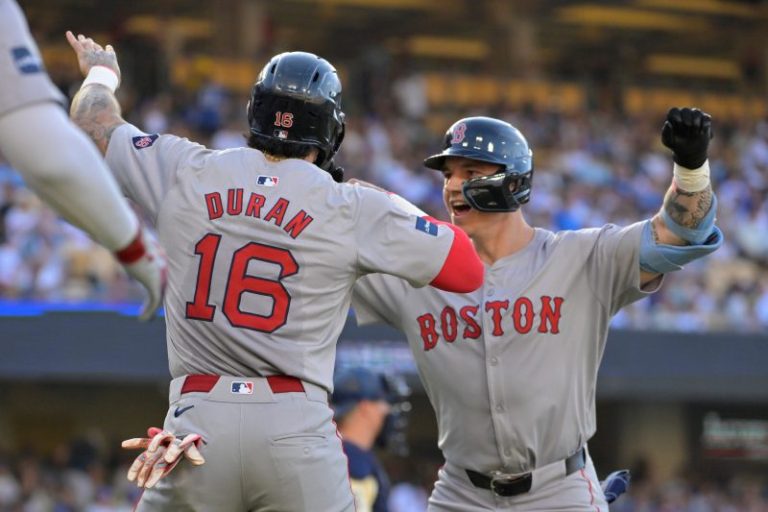
You can see the logic: Tyler O’Neill is once again going off – with 20 home runs, and on a 10-for-23, four-homer binge in five games since the All-Star break – but could use another righty stick to balance the lineup. Import another bat and Boston could be an impossible late-inning matchup with a three-batter minimum rule: Jarren Duran (L), New Guy (R), Rafael Devers (L), O’Neill (R), Masataka Yoshida (L).

The Red Sox farm system is middle-of-the-pack and lacks the pitching prospects selling teams covet. But that makes them not unlike virtually every contender, and years of non-contention means the pantry is full enough to win the bidding for a power bat just entering his arbitration years.

The match: Brent Rooker, Athletics.

Orioles: Starting pitcher

Right now, the Orioles embody the “life comes at you fast” narrative. Not only did their rebuild get done faster than a post-World War II prefab home, but the peak of their window might be right this second.

Oh, GM Mike Elias’s idea is to pry it open for a decade, and his conveyor belt of elite hitters is making that look like reality. But with rental ace Corbin Burnes pitching to expectations and Grayson Rodriguez healthy and more than worthy the No. 2 slot, Baltimore might not align like this for a while.

So, who starts a Game 3 in the ALDS, the ALCS, the World Series?

With three starters lost to season-ending injury, they’d rather it not be back-end types like Dean Kremer and Albert Suarez, and here comes the answer to a question we’ve all wondered: How deep does Elias go into his prospect trough to reel in an ace?

There’s so many routes to go. A reunion with Jack Flaherty – not at his best a year ago but throwing the ball well for Detroit – isn’t out of the realm. The club could afford to take on Jameson Taillon’s salary – the Cubs would probably help a bit – with Burnes’ and closer Craig Kimbrel’s contracts expiring.

But Elias can live for both today and tomorrow, not just adding a shutdown arm – albeit with innings limit concerns – but also an elite lefty with two years of control remaining to pair with his fleet of bats.

The match: LHP Garrett Crochet, White Sox.

Yankees: Reliever

The never-ending funk – 23 losses in 34 games – rumbles on, and with it a nauseous feeling that the Yankees, still not out of the AL East race, need upgrades just about everywhere.

Old pal Luis Severino might have been right that the lineup has just two hitters to worry about. Nestor Cortes has hit the wall. Carlos Rodon is inconsistent. Clarke Schmidt is still out. Marcus Stroman has struggled in recent Septembers.

So, let’s shore up the bullpen.

Sure, GM Brian Cashman could be moved to dig deeper into his prospect bag and move a Spencer Jones or similar prize for a frontline starting pitcher. An infield bat is paramount. But even though the Yankees’ quietly potent farm system – a consensus top 10 to 15 group – can win some trades, they may lack the highest-end quality for marquee additions.

With that in mind, we’ll let the Yankees surprise us with a power move while projecting something less volcanic. Another All-Star closer with putaway stuff who can alleviate the burden on Clay Holmes, who has had an uneven five weeks, as necessary.

The match: RHP Kyle Finnegan, Nationals

Guardians: Starting pitcher

It’s been a minute since the Guardians were so obviously buyers, and it would behoove them to inspect their not-so-distant past when approaching this deadline. On July 31, 2016, they sent four prospects – Clint Frazier, J.P. Feyereisen, Justus Sheffield and Ben Heller – to the Yankees.

In return: Andrew Miller, who put on one of the greatest postseason relief performances in baseball history, taking Cleveland to Game 7 of the World Series. And none of the four relatively vaunted prospects they gave up for Miller didn’t exactly come back to haunt them.

This time, Cleveland is in relatively dire need of a starting pitcher. Gavin Williams has not been crisp in his return from injury, and Carlos Carrasco has been asked to do far too much .

Know thyself, above all, especially at the trade deadline. The Guardians don’t have a deep farm system but it got replenished by the largest bonus pool available in this month’s draft. It would be uncharacteristic for Cleveland to unload the prospect pool on a guy like Crochet, and unlikely that they’d take on the $36 million due Taillon the following two seasons.

Instead, they can pay the lighter premium for a bounceback guy from a division foe that’s years away from worrying about helping out a rival.

The match: Erick Fedde, Chicago White Sox

Dodgers: Infielder or outfielder

Andrew Friedman’s glory days of peak “optionality” are over. The ability to move players all around the field and platoon like mad have been limited by age and performance, as Chris Taylor (33, .167 average, .542 OPS) and Kiké Hernández (33 next month, .193, .567) aren’t what they used to be. Third baseman Max Muncy is still on his way back from an oblique injury suffered more than two months ago.

Mookie Betts isn’t quite back from a broken hand. Miguel Rojas is on the IL. Andy Pages and James Outman are uncertain options in center. Why not bring in a guy with the kind of speed, versatility and contact ability that plays well in the postseason?

The match: Nico Hoerner, Cubs

Padres: Starting pitcher

Yep, things are really starting to gel in San Diego. Offseason acquisitions Michael King and Dylan Cease give the club a solid 1-2 punch, even before Cease went and no-hit the Nationals. The lineup is punishing one through six.

And while they could use another reliever, closer Robert Suarez has locked it down, saving 23 of 25 games, a percentage better than even franchise stalwart Trevor Hoffman.

Yet with Yu Darvish on the restricted list and Joe Musgrove’s return iffy given the specter of elbow inflammation, the Padres could stand to get another guy who can go deep into games, who can alleviate the pressure on the bullpen. The Padres absorbed Yu Darvish from Chicago, and it’s time to go to that well again. Heck, the Cubs could even take on some of that salary if they want, and pick from a higher tier of prospects from a Padres system that just doesn’t quit.

The match: Jameson Taillon, Cubs

This post appeared first on USA TODAY

Editor’s note:FollowOlympics opening ceremony live updates.

It was Stephen Curry, perhaps the most famous first-time American Olympian this year, who nominated LeBron James and so it was Curry who broke the news to him during a meeting in front of the Team USA men’s basketball team. 

“You get to wave the flag in Paris, my man,” Curry said in footage shared on social media by USA Basketball on Monday. 

Thus James became the latest American given the honor of being the flag bearer for the United States Olympic team during the 2024 Paris Olympics opening ceremony on Friday. James, the Los Angeles Lakers superstar, will lead the 592 American athletes in these Games as they ride on a boat along the Seine River through Paris as part of the first opening ceremony held outside a stadium.

2024 Olympic medals: Who is leading the medal count? Follow along as we track the medals for every sport.

James is the third basketball player — and first men’s basketball player — to be a flag bearer for the United States. He will be joined by American women’s tennis star Coco Gauff, who was announced as a flag bearer on Wednesday. Gauff, 20, making her Olympic debut in Paris, is the first tennis player to serve as the United States flag bearer at the opening ceremony.

James, 39, was a member of Team USA during the 2004 Athens Olympics when the United States failed to win a gold medal, but subsequently won gold with the “Redeem Team” in 2008 and again at the 2012 London Olympics. The 2024 Paris Olympics will be his first since then, and potentially, the final of his storied career.

“It’s an absolute honor and to be able to share that moment with you guys is going to make it even more memorable. So I just appreciate it, man,” James told his Team USA teammates after Curry’s announcement. “Team USA has given so much to all of us, to me over the last 20 years, and I understand right now in a country that’s so divided, I hope this moment and that moment will unite us or bring us together even for those split seconds, those hours that we travel across that water in Paris. So I will hold that responsibility with a lot of honor.”

James might be the most recognizable person to be the United States flag bearer at the Olympics, but the tradition of featuring a flag bearer during the opening ceremony at the Olympics is more than 100 years old at this point. Here’s a look back at its history, including its controversial start, and other fun facts to know about a distinction that signals the start of another Olympic Games:

Who are this year’s Opening Ceremony flag bearers for the United States?

NBA superstar LeBron James and women’s tennis star Coco Gauff are the United States’ flag bearers for the 2024 Paris Olympic.

Who was the first flag bearer for the United States?

The parade of nations that’s the central facet of the opening ceremony began at the 1908 London Olympics. Ralph Rose, who won Olympic gold in the shot put and also participated in the tug of war competition (yes, that used to be an Olympic event), was the first flag bearer from the United States.

Rose caused a stir when he refused to dip the flag as the Americans passed by King Edward VII.

“Olympic lore has it that Rose’s teammate Martin Sheridan said, ‘This flag dips to no earthly king,’ drawing the fury of an outraged crowd that had watched every other nation dip its flag in tribute to the British royals,” according to NBC Sports.

This subsequently became tradition — no matter the host country — and Congress later passed a law prohibiting the American flag being dipped for any person or thing. It’s now also part of the Olympic charter.

How is the United States flag bearer decided?

Team USA flag bearers are nominated and voted on by their fellow Olympic athletes. Beginning in 1992, the United States also named a flag bearer for the closing ceremony. Starting with the 2020 Tokyo Olympics, the United States began naming a male and female flag bearer for the opening ceremony.

Who are the most famous American flag bearers?

In addition to James and Gauff, current South Carolina women’s basketball coach Dawn Staley was the American flag bearer at the 2004 Athens Olympics Opening Ceremony. WNBA great Sue Bird, meanwhile, was the United States Olympic team flag bearer at the 2020 Tokyo Olympics. Michael Phelps was given the honor at the Opening Ceremony of the 2016 Rio de Janeiro Olympics. 

Other notable United States flag bearers at the Olympics include Al Jochim, a gymnast and German immigrant born in Berlin. He was the first non-track and field athlete to be named flag bearer for the United States during the 1936 Berlin Olympics held ahead of World War II. 

Ralph Craig is the oldest United States flag bearer, earning the honor at 59 years old during the 1948 London Olympics. Craig won track and field gold medals as a sprinter at the 1920 Antwerp, Belgium Olympics and then returned in 1948 as an alternate on the United States yachting team. 

Track and field athlete Rafer Johnson became the first Black flag bearer for the United States Olympic team at the 1960 Rome Olympics. Janice Romary, who competed in fencing, was the first female flag bearer for the United States at the 1968 Mexico City Olympics.

What states have produced the most Opening Ceremony flag bearers?

New York, with eight flag bearers during either the Summer or Winter Olympics, is the leading producer of flag bearers, followed by California, with six. Only 24 states overall have produced flag bearers since the tradition began in 1908.

Are there American flag bearers from outside the United States? 

Yes. There have also been five opening ceremony American flag bearers born outside the United States: Pat McDonald, one of three people to serve as flag bearer in two different Olympics (1920 and 1924) was originally from Ireland; Rolf Monsen, a skier born in Norway, was the United States flag bearer at the 1936 Winter Olympics in Germany; and Jochim, born in Germany, received the honor at the 1936 Berlin Olympics.

In 1972, track and field athlete Olga Fikotova served as the United States flag bearer at the opening ceremony. She initially represented Czechoslovakia in handball and basketball before switching to the discus throw and winning a gold medal at the 1954 Melbourne Olympics. She then married American Olympian Harold Connolly and represented the United States starting in the 1960 Rome Olympics, as Czechoslovakia wouldn’t allow her to compete for her home country anymore.

Most recently, track and field athlete Lopez Lorenz — originally from South Sudan — was the American flag bearer at the 2008 Beijing Olympics. Lorenz is one of the Lost Boys of Sudan, in reference to the group of more than 20,000 Sudanese boys who were displaced or orphaned during the country’s civil war.    

Does being a flag bearer translate to Olympic medals?

Sometimes.

Of the 47 people to be the United States flag bearers at the opening ceremony of either the Summer or Winter Olympics, just 18 wound up earning a medal during the Olympic year in which they were a flag bearer. The honor of flag bearer has often been used as a nod to achievements and medals from previous Olympic Games at the end of a career. 

The good news for James and Team USA, however, is that there have only been two Olympic basketball players to be named American flag bearers for the Opening Ceremony (Staley and Bird). Each won gold medals that year. 

Complete list of United States flag bearers at the Olympics

1908: Ralph Rose, track and field/tug of war
1912: George Bonhag, track and field
1920: Pat McDonald, track and field
1924 (Winter): Taffy Abel, ice hockey 
1924 (Summer): Pat McDonald, track and field
1928 (Winter): Godfrey Dewey, president of Lake Placid Organizing Committee
1928 (Summer): Bud Houser, track and field
1932 (winter): Billy Fiske, bobsled
1932 (Summer): Morgan Taylor, track and field
1936 (Winter): Rolf Monsen, cross country skiing
1936 (Summer): Al Jochim, gymnastics
1948 (Winter): Jack Heatan, skeleton
1948 (Summer): Ralph Craig, track and field/yachting
1952 (Winter): James Bickford, bobsled
1952 (Summer): Norman Armitage, fencing
1956 (Winter): James Bickford, bobsled
1956 (Summer): Norman Armitage, fencing
1960 (Winter): Don McDermott, speed skating
1960 (Summer): Rafer Johnson, track and field
1964 (Winter): Bill Disney, speed skating
1964 (Summer): Parry O’Brien, shot put
1968 (Winter): Terry McDermott, speed skating
1968 (Summer): Janice Romary, fencing
1972 (Winter): Diane Holum, speed skating
1972 (Summer): Olga Fikotova, track and field
1976 (Winter): Cindy Nelson, skiing
1976 (Summer): Gary Hall, swimming
1980 (Winter): Scott Hamilton, figure skating
1984 (Winter): Frank masley, luge
1984 (Summer): Ed Burke, track and field
1988 (Winter): Lyle Nelson, biathlon
1988 (Summer): Evelyn Ashford, track and field
1992 (Winter): Bill Koch, cross-country skiing
1992 (Summer): Francie Larreau Smith
1994 (Winter): Cammy Myler, luge
1996 (Summer): Bruce Baumgartner, wrestling
1998 (Winter): Eric Flaim, speed skating
2000 (Summer): Cliff Meidl, canoeing
2002 (Winter): Amy Peterson, speed skating
2004 (Summer): Dawn Staley, women’s basketball
2006 (Winter): Chris Witty, speed skating
2008 (Summer): Lopez Lomong, track and field
2010 (Winter): Mark Grimmette, luge
2012 (Summer): Mariel Zagunis, fencing
2014 (Winter): Tod Lodwick, skiing
2016 (Summer): Michael Phelps, swimming
2018 (Winter): Erin Hamlin, luge
2020 (Summer): Sue Bird, basketball; Eddy Alvarez, baseball
2022 (Winter): John Shuster, curling; Brittany Bow, speed skating
2024 (Summer): LeBron James, basketball; Coco Gauff, tennis

This post appeared first on USA TODAY

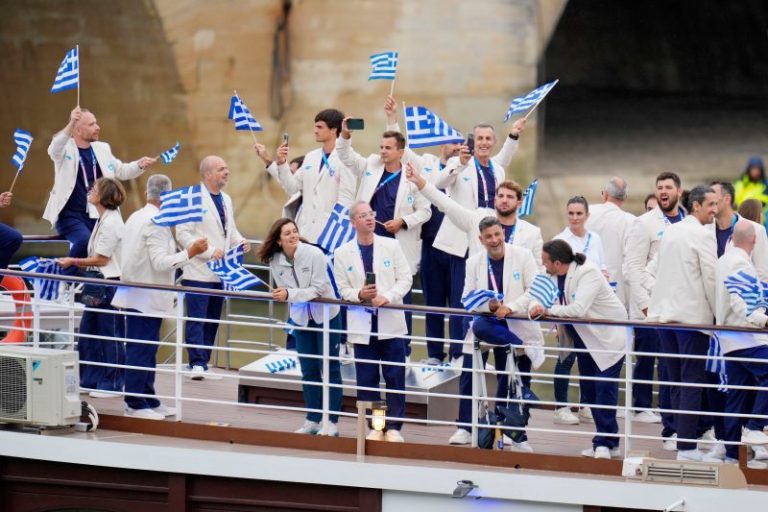
Anyone watching the opening ceremony of the 2024 Paris Olympics saw Greece’s athletes sail out onto the Seine River ahead of the rest of the countries competing.

Why did Greece go first? Because it is the birthplace of the Olympic Games and holds this honor at every Olympics.

‘It was at Amsterdam 1928 that the tradition of the Greek delegation marching first was introduced – owing to the status of the founding country of the ancient Olympic Games,’ the official Olympics website reads.

Greece also kicked off the tradition of the host nation coming out last, something that first happened during a special non-official 1906 edition of the Games held in Greece. On April 22 that year, the German delegation led a march of athletes and flag bearers into the Panathenaic Stadium, according to the Olympics website. Greece entered last as the host nation, beginning the tradition that stands today.

2024 Olympic medals: Who is leading the medal count? Follow along as we track the medals for every sport.

Order of countries in Olympic opening ceremony

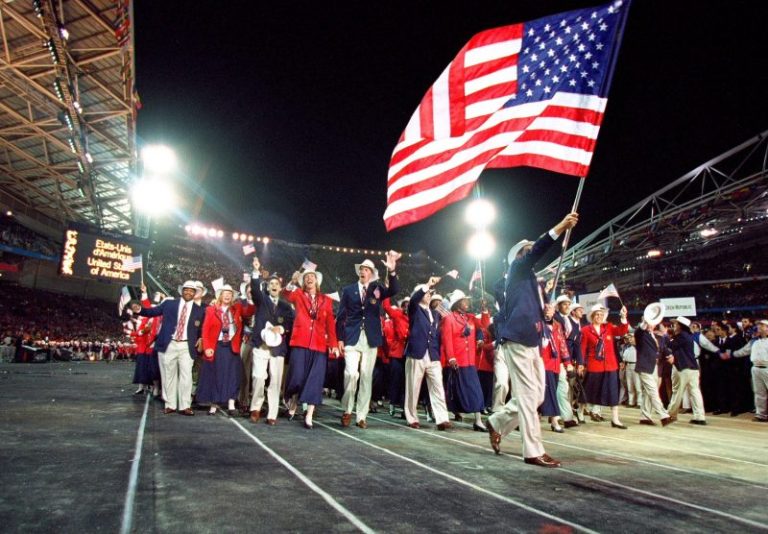
The order of the parade of nations after Greece is determined by the French spelling of their country names. Germany is Allemagne in French, for example, so it goes with the As, not the Gs. The only exceptions are the United States, which is Etats-Unis in French but goes second-to-last because it is hosting the next Summer Games, and France, because it’s the host country. 

Giannis Antetokounmpo makes history as flag bearer for Greece

Ahead of the opening ceremony, Antetokounmpo spoke to the Olympic News Service about what it means for him to be the first Black athlete to carry the Greek flag at the Olympics.

‘It’s a huge honour for me as an athlete to be a part of something this big, to be around the best athletes in the world. It’s huge,’ Antetokounmpo said, according to the Olympic News Service. ‘I know that my family is very proud of me and the things I’ve accomplished, and being the first black flagbearer (for Greece) is a huge honour.’

This post appeared first on USA TODAY