Archive

2024

Browsing

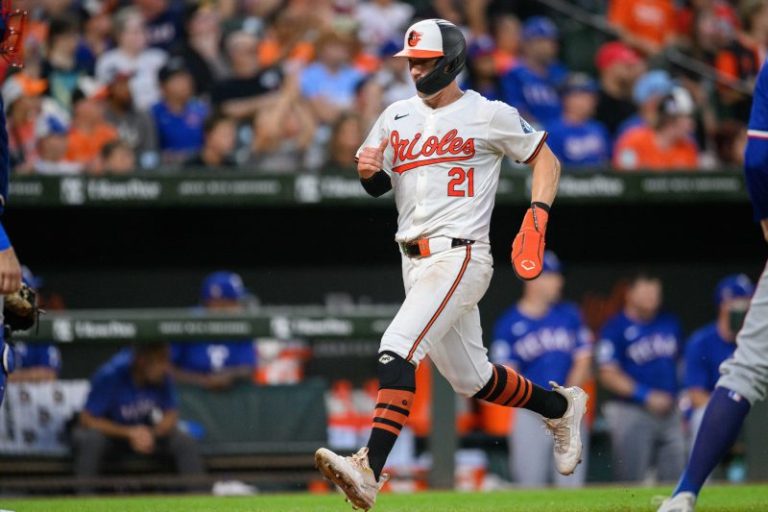
In a deal that spins off a pair of extra parts from two of baseball’s best teams, the Philadelphia Phillies acquired outfielder Austin Hays from the Baltimore Orioles in exchange for reliever Seranthony Domínguez and outfielder Cristian Pache. 

Hays, 29, was an All-Star in 2023 for the Orioles but saw his playing time diminish with the emergence of power-hitting rookie Colton Cowser. After hitting 16 homers with a .769 OPS in 2023, he’s hit just three homers with a .711 OPS this year, while spending time on the injured list. 

Phillies GM Dave Dombrowski had indicated a need for a right-handed hitting outfielder, as the club had tried minor leaguer Weston Wilson and Pache in that role. Hays will share at-bats with lefty-swinging Brandon Marsh, and the club could play Hays in left and Marsh in center, displacing Johan Rojas, for a more offense-centric look. 

Domínguez, 29, has a 4.75 ERA and 1.22 WHIP this season, trickling down the Phillies bullpen depth chart with the emergence of All-Stars Jeff Hoffman and Matt Strahm. The trade is a virtual financial wash, as Domínguez is making $7.1 million this season and is eligible for free agency, while Hays is making $6.3 million and is eligible for arbitration one more time. 

Baltimore has had success gleaning top performance out of relievers it has acquired, with current bullpen arms Cionel Perez, Jacob Webb and Yennier Cano flourishing after moving into the organization. Domínguez has an excellent slider and averaged 10.8 strikeouts per nine innings in 2022, his best season after missing 2020 due to Tommy John surgery.

Follow every MLB game: Latest MLB scores, stats, schedules and standings.

Pache joins his fourth organization in as many years and is out of options, but could give the Orioles a speed and defense dimension off the bench, a void at the moment with Jorge Mateo on the injured list with a wrist injury.

The Phillies have the major leagues’ best record at 64-38, while the AL East-leading Orioles share the AL’s best mark – 61-41- with the Cleveland Guardians. 

This post appeared first on USA TODAY

It’s Snoop Dogg’s world and we’re just living in it.

The Grammy-nominated rapper is serving as a special correspondent for NBC throughout the 2024 Paris Olympics. Although the Games are just kicking off with the opening ceremony, Snoop Dogg already has captivated viewers with his hilarious commentary, memorable catchphrases and positive attitude.

‘I’m chilling like a villain,’ said Snoop Dogg, who was wearing a red, white and blue Ralph Lauren opening ceremony uniform in the pouring rain, similar to the Team USA delegation. ‘Raindrops falling on my head, but we still playing to win baby.’

Get Olympics updates in your texts! Join USA TODAY Sports’ WhatsApp Channel

Here’s some of his most memorable moments from Friday:

2024 Olympic medals: Who is leading the medal count? Follow along as we track the medals for every sport.

The USA TODAY app gets you to the heart of the news — fast. Download for award-winning coverage, crosswords, audio storytelling, the eNewspaper and more.

Snoop Dogg, Olympic torch bearer

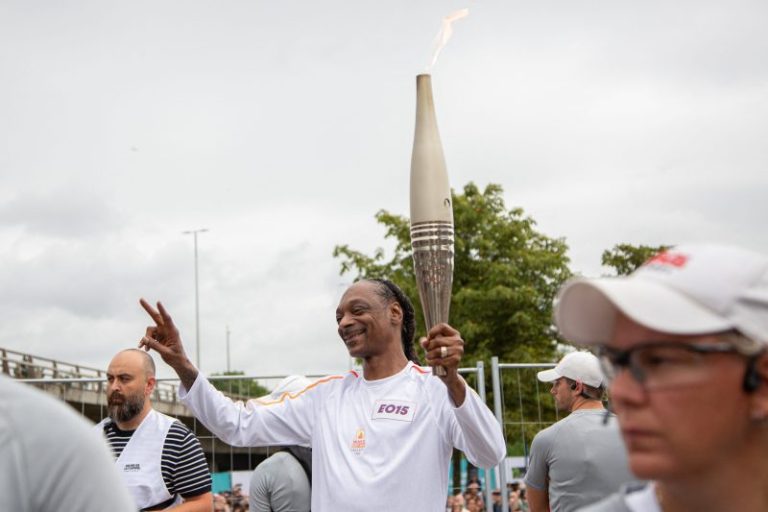
Snoop Dogg lit the streets of Paris up, literally. The rapper carried the Olympic torch through the streets of Saint-Denis on Friday as the final torchbearer, alongside French actress Laetitia Casta and French rapper MC Solaar.

“I look at this as a prestigious honor and something I truly respect. I would have never dreamed of nothing like this,” Snoop Dogg said earlier this week. “I’m going to be on my best behavior. I’m going to be on my best athleticism. I’ll be able to breathe slow to walk fast and hold the torch with a smile on my face, because I realize how prestigious this event is.”

Snoop Dogg, the fashionista

Snoop Dogg is not only providing commentary, he’s giving fashion advice.

‘I heard me and Snoop Dogg are going to the same nail tech,’ said Team USA sprinter Noah Lyles, who flashed his white nails emblazoned with ‘ICON’ in blue glitter. Snoop Dogg approved of Lyles’ fashion statement, although he could not confirm or deny if they share the same nail salon technician.

‘Noah (Lyles) stays spooned and groomed, dipped and whipped, suited and booted,’ Snoop Dogg said. ‘I know he was going to be fresh to death. Ya dig? That’s my guy.’

Snoop Dogg, the dancer

There were numerous performances at the opening ceremony, including one from Lady Gaga, who opened the festivities by singing ‘Mon Truc en Plumes’ by Zizi Jeanmaire on the steps of a metro. Although Lady Gaga sang in French, that didn’t stop Snoop Dogg from dropping it like it’s hot alongside his commentary partner Hoda Kotb.

Snoop Dogg, the athlete

Earlier Friday, Snoop lent his usual comic take, this time to the Olympic event of weightlifting. He was shown lifting a bar with no weights. His finishing stance, however, was a 10.

This post appeared first on USA TODAY

Editor’s note: Follow Olympics opening ceremony live updates.

PARIS – Dressage, a centuries-old equine art form evoking images of class, nobility and precision, arrived at the Paris Games in the midst of an existential crisis few outside the sport would have known about.

It began late last year when an undercover documentary filmmaker exposed prominent Danish dressage rider and billionaire horse dealer Andreas Helgstrand for abusive training practices, showing horses with spur wounds and whip marks.

That led to February, when videos began to surface online of a former American Olympian, Cesar Parra, whipping horses and engaging in a practice called “rollkur,” a now-banned technique that uses force to teach a horse how to bend its neck in an uncomfortable and unnatural way.

“Then the floodgates opened,” one high-level dressage competitor told USA TODAY Sports, speaking on the condition of anonymity in order to be candid about the state of the industry without risking retribution.

2024 Olympic medals: Who is leading the medal count? Follow along as we track the medals for every sport.

Soon, more disturbing videos started popping up on social media. Allegations of horse abuse and mistreatment were submitted to governing bodies. Prominent voices from within began urging the International Federation for Equestrian Sport (FEI) to take decisive action, warning that the perception of systemic cruelty could lead to dressage being thrown out of the Olympic Games.

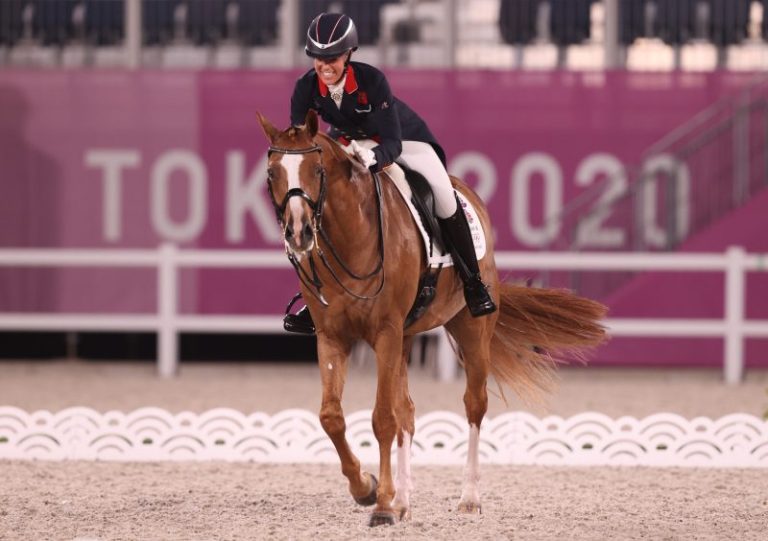
And then, just as athletes began arriving in Paris, another bombshell dropped: A former student of British three-time gold medalist Charlotte Dujardin blew the whistle, turning in a 2-year-old video that showed Dujardin repeatedly using a long instrument called a lunge whip while the horse recoiled and tried to avoid getting hit.

“What happened was completely out of character and does not reflect how I train my horses or coach my pupils,” Dujardin wrote in a statement after withdrawing from the Olympics on Tuesday. “However there is no excuse.”

For an industry already on edge, and for which the Olympics represents a rare opportunity to perform in front of a large national audience, the timing couldn’t have been worse and the shockwaves couldn’t have been bigger. When asked to compare Dujardin’s prominence to an athlete in another sport, the competitor who spoke on the condition of anonymity said it would be fair to call her the LeBron James of dressage.

To have someone of Dujardin’s stature caught up in an abuse scandal – especially at a time when animal rights activists have targeted all sports that involve humans on horseback – could either be the ultimate wake-up call or the tipping point that eventually leads to dressage being removed from the Olympic program.

It’s no secret now that the stakes are high.

A few days before the Dujardin allegations became public, the FEI announced its new “Be a Guardian” initiative, putting forth an action plan and a commitment of more than $1 million to not just codify more specific standards of equine care but transform the mindset of those in the sport.

“In the past we always spoke about partnership (between human and horse), but it’s not a partnership,” FEI president Ingmar De Vos said this week. “In a partnership, you are both equal. But you should be the guardian of the horse; you’re not the partner. You need to take care.”

The microscope turning toward dressage and other international equestrian sports, of course, is an outgrowth of trends we have seen around Thoroughbred racing in the U.S. At some point, the sport’s gatekeepers whose instinct may be to downplay or ignore problematic behavior or treatment of horses can no longer run from the deluge of public pressure brought about by a combination of activists, the widespread sharing of incidents on social media and general distaste in modern society for anything that looks like animal suffering.

In American horse racing, it has finally led to significant change in the form of HISA (Horseracing Integrity and Safety Authority), a federally authorized regulatory body with broad power over issues like drug testing and racetrack maintenance.

The question for dressage, much like Thoroughbred racing, is whether its sudden turn toward reform has come too late.

“The footage is alarming when you see it, and when you combine it with the other high-profile incidents that have been coming out, it definitely suggests there may be underlying issues in dressage training practices that warrant more scrutiny for sure,” said Chelsea Perez, who has spent much of her life competing in dressage and is the senior program manager of equine protection at The Humane Society of the United States.

“I know that in the beginning when some of these complaints were coming forward, there were concerns that they were not being taken seriously. The FEI and other governing bodies of the sport seem to be more willing now.”

What is dressage?

For those who aren’t familiar with dressage, the simplest comparison might be to figure skating. During a competition, a specifically bred horse is required to perform a series of tests and movements that increase in difficulty. In the freestyle portion, the horse performs choreographed patterns of movement synched to a medley of songs. Every element is judged from 0 to 10 by a panel of experts looking for specific things like technique, balance and artistry.

Getting a horse ready for a dressage competition, particularly at the top-end Grand Prix level, would typically take seven years of careful training and muscular development just to reach that stage, and then another three or four after that to reach their peak. The ideal age for a horse at the Olympics, for instance, would be around 12 to 15. These horses typically live to around 25 or 30 years old.

“People have said historically that it’s a little bit like watching cement set,” Perez said. “It’s a long, methodical process.”

But over time, demand grew for competitive levels below the Grand Prix where younger horses – which were continually being bred more scientifically and valued more highly by buyers – could start to pay off earlier.

“The prices have gone nuts,” the competitor who wished to remain anonymous said. “It’s not out of the realm of possibility to spend $100,000 on a horse that is barely under saddle. In racehorse terms that’s nothing, but in the sport world, that’s a lot. The people who have the money to buy these things also tend to be people who are very results-driven. They want to see the prizes and the return on investment.”

The tension between traditional dressage, which was undertaken purely as a hobby, and a competitive sport with incentives toward horses being bred with more athletic traits and a faster development track, has invariably led to changes in the way they are trained.

Some might call them shortcuts, and some of those shortcuts could indeed involve training tools like whips or spurs. When used in the manner Dujardin did on video, though – repeatedly and aggressively, ostensibly to motivate the horse to pick up its legs higher or to train it to be more expressive – the line into abuse has been crossed.

But it’s not always easy to see where that line is, particularly for the layman. People who work with horses would argue some of these tools – when applied with precision and care − are not only appropriate to use in training a horse, they’re necessary.

It’s worth remembering, after all, that these are 1,200-pound animals who are rough and aggressive and even dangerous when not taught certain behaviors. They need to be disciplined and made to be a bit submissive in a way, just so they can be safely in the company of human beings, much less perform in a sport like dressage. And what if one ugly incident caught on camera isn’t systemic but rather just one moment of frustration, like a parent losing patience with a disobedient toddler and yelling too loudly in the middle of a crowded mall? Where do you draw the line?  

That is often where people who live in the horse world and care about the animals deeply become defensive when those peering in from the outside are critical. More scrutiny from untrained eyes can breed misunderstanding of the line between what’s acceptable and what’s not. At the same time, one highly publicized incident of abuse usually leads to another coming to light. A look under the hood becomes a feeding frenzy and full-blown crisis, with no solution other than a head-on confrontation of the problem.

This leads to, as the competitor who wished to remain anonymous said, a sport like dressage becoming at risk of losing its social license to operate. It’s why a governing body like the FEI might truly be facing a make-or-break moment.

Everything’s on the table. From establishing clear lines on acceptable training methods with the help of behavioral scientists, to drug testing, to giving competition officials more latitude to raise red flags if a horse shows signs of distress in its warm-up, the sport is promising change. It has little choice but to deliver.

“One of the most important things is the understanding that we need to be the guardian of the sport and everybody has a responsibility,” said Sabrina Ibanez, the FEI’s secretary general. “Now we have a more holistic view of what needs to be further addressed.”

‘Such cruelty is unacceptable’

It’s unclear why the whistleblower waited two years to expose Dujardin, choosing to release the video for maximum impact a few days before the opening ceremony.

Perhaps it was merely a natural end point to the critical mass of recent abuse allegations, or maybe other motivations were in play. (Though there’s no evidence to support it, some conversation taking place within the sport this week centers on a perceived link between the whistleblower’s Dutch attorney and Dujardin’s withdrawal potentially improving the Netherlands’ chances of winning a medal.)

De Vos, the FEI president, said he was both alarmed by the video and disappointed it wasn’t turned in until two years later.

“It’s probably not a coincidence this is coming to us just at the eve of the Olympic Games, but it strengthens my belief we are doing the right thing,” he said. “It clearly illustrates that this plan that we have now created and philosophy of ‘Be a Guardian’ is really what we need.”

What’s mystifying, though, is that Dujardin is one of the last people in the sport who would have been suspected of such a violation.

When dressage experts look for signs of mistreatment, it’s not just obvious wounds or scarring but things that would be easily recognizable to experts, like tension in the mouth or a discolored tongue or sending stress signals with their tail. These were not the hallmarks of Dujardin’s horses.

“If five days ago you’d have asked me who are the best trainers in the world, I’d have said Charlotte not only because she’s good but because her horses are happy athletes,” the competitor who wished to remain anonymous said. “The horses she’s been successful on don’t show those problems.’

Still, everyone around the sport would agree that what Dujardin did on film was categorically unacceptable. Maybe she did just lose her head for a minute. But why didn’t she stop when such an experienced trainer would have known she was going over the line? Nobody has a good answer for that.

“Such cruelty is unacceptable under any circumstance and affirms the need for meaningful welfare standards to protect horses,” Perez said. “Whistleblowers are key in exposing these abuses, and we commend their courage.”

Whether the video of Dujardin repeatedly cracking a long whip at an obviously frightened horse was systemic or out of character, as she claimed in her statement, almost doesn’t matter at this point. Nor do the motivations of the whistleblower.

When the Olympic dressage competition gets underway Saturday in the shadow of idyllic Versailles Palace, the entire sport is now a target, lumped in – fairly or not – with controversies surrounding Thoroughbred breakdowns or the cruel “horse soring” method that has been associated with the exaggerated gait of Tennessee walking horses.  

That makes these Olympics an incredibly fraught moment for dressage, an event that typically appeals to a niche audience but will now have the eyes of the world upon it for all the wrong reasons, with any further revelation or transgression adding fuel to the fire.

As the competitor who wished to remain anonymous said: “We’re all going to have to be on our best behavior for awhile.”

This post appeared first on USA TODAY

Editor’s note: FollowOlympics opening ceremony live updates.

It was Stephen Curry, perhaps the most famous first-time American Olympian this year, who nominated LeBron James and so it was Curry who broke the news to him during a meeting in front of the Team USA men’s basketball team. 

“You get to wave the flag in Paris, my man,” Curry said in footage shared on social media by USA Basketball on Monday. 

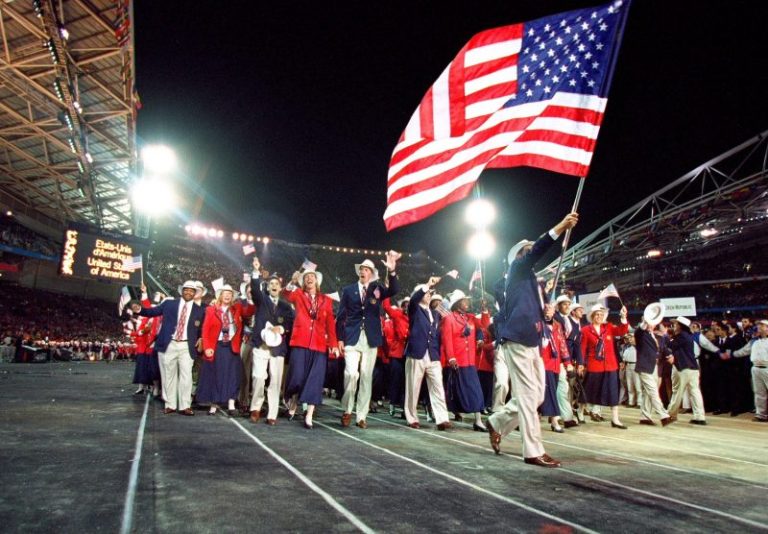
Thus James became the latest American given the honor of being the flag bearer for the United States Olympic team during the 2024 Paris Olympics opening ceremony on Friday. James, the Los Angeles Lakers superstar, will lead the 593 American athletes in these Games as they ride on a boat along the Seine River through Paris as part of the first opening ceremony held outside a stadium.

2024 Olympic medals: Who is leading the medal count? Follow along as we track the medals for every sport.

James is the third basketball player — and first men’s basketball player — to be a flag bearer for the United States. He will be joined by American women’s tennis star Coco Gauff, who was announced as a flag bearer on Wednesday. Gauff, 20, making her Olympic debut in Paris, is the first tennis player to serve as the United States flag bearer at the opening ceremony.

James, 39, was a member of Team USA during the 2004 Athens Olympics when the United States failed to win a gold medal, but subsequently won gold with the “Redeem Team” in 2008 and again at the 2012 London Olympics. The 2024 Paris Olympics will be his first since then, and potentially, the final of his storied career.

“It’s an absolute honor and to be able to share that moment with you guys is going to make it even more memorable. So I just appreciate it, man,” James told his Team USA teammates after Curry’s announcement. “Team USA has given so much to all of us, to me over the last 20 years, and I understand right now in a country that’s so divided, I hope this moment and that moment will unite us or bring us together even for those split seconds, those hours that we travel across that water in Paris. So I will hold that responsibility with a lot of honor.”

James might be the most recognizable person to be the United States flag bearer at the Olympics, but the tradition of featuring a flag bearer during the opening ceremony at the Olympics is more than 100 years old at this point. Here’s a look back at its history, including its controversial start, and other fun facts to know about a distinction that signals the start of another Olympic Games:

Who are this year’s Opening Ceremony flag bearers for the United States?

NBA superstar LeBron James and women’s tennis star Coco Gauff are the United States’ flag bearers for the 2024 Paris Olympic.

Who was the first flag bearer for the United States?

The parade of nations that’s the central facet of the opening ceremony began at the 1908 London Olympics. Ralph Rose, who won Olympic gold in the shot put and also participated in the tug of war competition (yes, that used to be an Olympic event), was the first flag bearer from the United States.

Rose caused a stir when he refused to dip the flag as the Americans passed by King Edward VII.

“Olympic lore has it that Rose’s teammate Martin Sheridan said, ‘This flag dips to no earthly king,’ drawing the fury of an outraged crowd that had watched every other nation dip its flag in tribute to the British royals,” according to NBC Sports.

This subsequently became tradition — no matter the host country — and Congress later passed a law prohibiting the American flag being dipped for any person or thing. It’s now also part of the Olympic charter.

How is the United States flag bearer decided?

Team USA flag bearers are nominated and voted on by their fellow Olympic athletes. Beginning in 1992, the United States also named a flag bearer for the closing ceremony. Starting with the 2020 Tokyo Olympics, the United States began naming a male and female flag bearer for the opening ceremony.

Who are the most famous American flag bearers?

In addition to James and Gauff, current South Carolina women’s basketball coach Dawn Staley was the American flag bearer at the 2004 Athens Olympics opening ceremony. WNBA great Sue Bird, meanwhile, was the United States Olympic team flag bearer at the 2020 Tokyo Olympics. Michael Phelps was given the honor at the opening ceremony of the 2016 Rio de Janeiro Olympics. 

Other notable United States flag bearers at the Olympics include Al Jochim, a gymnast and German immigrant born in Berlin. He was the first non-track and field athlete to be named flag bearer for the United States during the 1936 Berlin Olympics held ahead of World War II. 

Ralph Craig is the oldest United States flag bearer, earning the honor at 59 years old during the 1948 London Olympics. Craig won track and field gold medals as a sprinter at the 1920 Antwerp, Belgium Olympics and then returned in 1948 as an alternate on the United States yachting team. 

Track and field athlete Rafer Johnson became the first Black flag bearer for the United States Olympic team at the 1960 Rome Olympics. Janice Romary, who competed in fencing, was the first female flag bearer for the United States at the 1968 Mexico City Olympics.

What states have produced the most Opening Ceremony flag bearers?

New York, with eight flag bearers during either the Summer or Winter Olympics, is the leading producer of flag bearers, followed by California, with six. Only 24 states overall have produced flag bearers since the tradition began in 1908.

Are there American flag bearers from outside the United States? 

Yes. There have also been five opening ceremony American flag bearers born outside the United States: Pat McDonald, one of three people to serve as flag bearer in two different Olympics (1920 and 1924) was originally from Ireland; Rolf Monsen, a skier born in Norway, was the United States flag bearer at the 1936 Winter Olympics in Germany; and Jochim, born in Germany, received the honor at the 1936 Berlin Olympics.

In 1972, track and field athlete Olga Fikotova served as the United States flag bearer at the opening ceremony. She initially represented Czechoslovakia in handball and basketball before switching to the discus throw and winning a gold medal at the 1954 Melbourne Olympics. She then married American Olympian Harold Connolly and represented the United States starting in the 1960 Rome Olympics, as Czechoslovakia wouldn’t allow her to compete for her home country anymore.

Most recently, track and field athlete Lopez Lorenz — originally from South Sudan — was the American flag bearer at the 2008 Beijing Olympics. Lorenz is one of the Lost Boys of Sudan, in reference to the group of more than 20,000 Sudanese boys who were displaced or orphaned during the country’s civil war.    

Does being a flag bearer translate to Olympic medals?

Sometimes.

Of the 47 people to be the United States flag bearers at the opening ceremony of either the Summer or Winter Olympics, just 18 wound up earning a medal during the Olympic year in which they were a flag bearer. The honor of flag bearer has often been used as a nod to achievements and medals from previous Olympic Games at the end of a career. 

The good news for James and Team USA, however, is that there have only been two Olympic basketball players to be named American flag bearers for the Opening Ceremony (Staley and Bird). Each won gold medals that year. 

Complete list of United States flag bearers at the Olympics

1908: Ralph Rose, track and field/tug of war
1912: George Bonhag, track and field
1920: Pat McDonald, track and field
1924 (Winter): Taffy Abel, ice hockey 
1924 (Summer): Pat McDonald, track and field
1928 (Winter): Godfrey Dewey, president of Lake Placid Organizing Committee
1928 (Summer): Bud Houser, track and field
1932 (winter): Billy Fiske, bobsled
1932 (Summer): Morgan Taylor, track and field
1936 (Winter): Rolf Monsen, cross country skiing
1936 (Summer): Al Jochim, gymnastics
1948 (Winter): Jack Heatan, skeleton
1948 (Summer): Ralph Craig, track and field/yachting
1952 (Winter): James Bickford, bobsled
1952 (Summer): Norman Armitage, fencing
1956 (Winter): James Bickford, bobsled
1956 (Summer): Norman Armitage, fencing
1960 (Winter): Don McDermott, speed skating
1960 (Summer): Rafer Johnson, track and field
1964 (Winter): Bill Disney, speed skating
1964 (Summer): Parry O’Brien, shot put
1968 (Winter): Terry McDermott, speed skating
1968 (Summer): Janice Romary, fencing
1972 (Winter): Diane Holum, speed skating
1972 (Summer): Olga Fikotova, track and field
1976 (Winter): Cindy Nelson, skiing
1976 (Summer): Gary Hall, swimming
1980 (Winter): Scott Hamilton, figure skating
1984 (Winter): Frank masley, luge
1984 (Summer): Ed Burke, track and field
1988 (Winter): Lyle Nelson, biathlon
1988 (Summer): Evelyn Ashford, track and field
1992 (Winter): Bill Koch, cross-country skiing
1992 (Summer): Francie Larreau Smith
1994 (Winter): Cammy Myler, luge
1996 (Summer): Bruce Baumgartner, wrestling
1998 (Winter): Eric Flaim, speed skating
2000 (Summer): Cliff Meidl, canoeing
2002 (Winter): Amy Peterson, speed skating
2004 (Summer): Dawn Staley, women’s basketball
2006 (Winter): Chris Witty, speed skating
2008 (Summer): Lopez Lomong, track and field
2010 (Winter): Mark Grimmette, luge
2012 (Summer): Mariel Zagunis, fencing
2014 (Winter): Tod Lodwick, skiing
2016 (Summer): Michael Phelps, swimming
2018 (Winter): Erin Hamlin, luge
2020 (Summer): Sue Bird, basketball; Eddy Alvarez, baseball
2022 (Winter): John Shuster, curling; Brittany Bow, speed skating
2024 (Summer): LeBron James, basketball; Coco Gauff, tennis

This post appeared first on USA TODAY

The NCAA, the Power Five conferences and lawyers for the plaintiffs in three antitrust cases concerning the compensation of college athletes on Friday filed documents asking a federal judge in California to provide preliminary approval of a proposed settlement that would include a nearly $2.8 billion damages pool for current and former athletes and dramatically alter other fundamental aspects of how the association’s top level of competition is governed.

Division I schools would be able to start paying athletes directly for use of their name, image and likeness (NIL), subject to a per-school cap that would increase over time. NCAA leaders would seek to engineer rules changes eliminating longstanding, sport-by-sport scholarship limits and replacing them with a new set of roster-size limits. And while athletes would continue to have the ability to make NIL deals with entities other than their schools, the NCAA says it would aim to institute rules designed to give the association greater enforcement oversight of those arrangements.

The NCAA would fund the damages pool over a 10-year period, with more than half of the money coming from reductions in the NCAA’s distributions to all Division I schools and conferences. Nearly 400,000 athletes would be eligible for some type of payment for damages reaching as far back as 2016, with football and men’s basketball players set to receive the largest amounts. But the plaintiffs’ lawyers said there is an instance of an athlete in sport other than football, men’s basketball or women’s basketball who is estimated to be eligible for a claim of more than $1.85 million.

Multiple people have told USA TODAY Sports they expect that the proposed arrangement will have a future impact of at least $20 million a year on the budgets of athletics departments that will pay their athletes the maximum combined total that would be allowed under the cap.

Altogether, the plaintiffs’ lawyers say, the damages and the future payments from schools for NIL will provide athletes with a combined total of more than $20 billion over the 10 years that would be covered by the proposed agreement.

This makes the deal “one of the largest antitrust class-action settlements in history,” the plaintiffs’ lawyers said in their summary of the proposal.

In their filing with the court, they wrote that this is a ‘revolutionary settlement agreement … that will have a profoundly positive impact on the tens of thousands of college athletes at the hundreds of colleges and universities that play Division I sports each year. … This is nothing short of a seismic change to college sports following more than four years of hard-fought victories in’ the cases.

The proposed nearly $2.8 billion settlement pool would include money that would go to the plaintiffs’ lawyers for their fees and costs. According to documents filed Friday, they will ask the judge to approve up to $495.2 million in fees, just under 18% of the total, plus ‘out-of-pocket expenses.’ The plaintiffs’ legal team is led by Steve Berman of Seattle-based Hagens Berman Sobol Shapiro LLP, and Jeff Kessler of New York-based Winston & Strawn LLP. This amount, like others in the case, would ne paid out over 10 years, the documents said.

If U.S. District Judge Claudia Wilken accepts the arrangements as presented, this new model of college sports could take effect as early as the 2025-2026 school year, and current and former athletes could begin receiving checks from the damages pool in fall 2025.

But as part of the approval process, athletes — presumably represented by other attorneys — will have the opportunity to object. The process likely will take months to complete. And it could take much longer. If the settlement is approved, in the future, incoming college athletes will receive notice of the settlement terms and have the right to file written objections, Friday’s filings said.

Here is a look at the proposed settlement, according to summary information provided by the plaintiffs’ lawyers, the NCAA and the documents:

The NCAA damages payout, looking backward

This money seeks to compensate former and current athletes for varying impacts of NCAA rules that have limited athlete compensation. But the three lawsuits were filed at different times and cover different issues. That means money would be paid out from a variety of pools and amounts will depend on a variety of factors, including the sport an athlete played, the conference in which they played and the number of years they played that are covered by the proposed settlement.

For example, there would be a pool based on television broadcast money that allegedly would have gone to Power Five athletes if the NCAA’s limits on pay had not existed. That pool likely would cover athletes in football, men’s basketball and women’s basketball and would cover athletes from as far back as 2016, because the applicable lawsuit was filed in 2020. The date is four years prior to when the suit was initially filed because that is the reach-back period allowed under antitrust law.

According to the plaintiffs’ lawyers, these payments for football and men’s basketball players would average about $91,000 and range from $15,000 to $280,000. Because there are fewer men’s basketball players than there are football players, men’s basketball players on average will receive more money, according to the plaintiffs’ lawyers. For women’s basketball players, the average would be $23,000 and would range from $3,000 to $52,000.

Another pool would be based on the value of NIL opportunities that athletes now have, but that had been prohibited by the NCAA until July 1, 2021. That pool would cover all current and former athletes who competed on any Division I team prior to July 1, 2021 and received NIL pay after that date. That pool is the source of the single estimated claim of more than $1.85 million.

Damages amounts also would be available based on use of athletes’ NIL in videogames; pay for play opportunities the allegedly lost because of NCAA rules; and academic achievement awards that athletes now can get, but previously could not. The academic-achievement damages pool is likely to cover all current and former athletes who competed on a Division I team on, or after, April 1, 2019, because the applicable suit was filed in April 2023.

It’s likely that some athletes would be eligible for payments from multiple pools.

The damages payout, looking ahead (maybe)

The various sport-by-sport damages amounts connected to TV broadcast money are driven by plaintiffs’ expert reports and could be important as schools contemplate how to allocate the NIL money that the settlement would allow them to pay athletes – particularly in the context of Title IX, the federal gender-equity law.

The reports came from Ed Desser, a media consultant, and Dan Rascher, a University of San Francisco sport management professor who also has been an expert witness on the economics of major-college athletics for plaintiffs in other antitrust cases against the NCAA. And they were referenced in a filing by the NCAA in April 2023 that was part of its effort to oppose the case.

According to that filing:

►Desser concluded that value of the use of athletes’ NIL in college sports TV contracts is 10% of the total broadcast revenue for each conference.

►Desser also determined that of the dollar amount connected to that percentage in a multi-sport media deal, 75% can be attributed to football, 15% to men’s basketball and 5% to women’s basketball, 5% to Olympic sports.

This could inform how schools seek to budget their NIL pay to athletes. However, because the money would be coming the from schools, rather than outside entities, Title IX advocates will be watching these allocations closely.

Payments to college athletes, looking ahead

Schools would have latitude about how much to pay an individual athlete, but there would be a limit on the total amount they could initially pay to their athletes. Initially, that would be an amount equal to 22% of the average total of eight types of annual operating revenues that Power Five conference schools annually report to the NCAA. Among those revenue sources are ticket sales, appearance guarantees, media rights and sponsorship fees, revenue shares from conferences and the NCAA, and money from bowl games.

The amount of the cap would increase annually and an official for the NCAA said the percentage would be subject to review at least every three years.

Rascher estimates that the maximum amount per school would start at more than $20 million for the 2025-26 school year and grow to $32.9 million in 2034-35, Friday’s filings said.

Payments to athletes from other parties, looking ahead

There would be an attempt to bring this under some enforceable regulation, the official for the NCAA said. Athletes would have to report payments of more than $600 to a clearinghouse that would be established. And their deals would be subject to review, with the goal being the prevention of pay for play and deals that pay amounts above market value.

Athletes who have questions about the permissibility of their agreements would be able to seek advisory opinion from an enforcement group. If the enforcement group sought to sanction an athlete because a deal, the athlete would have the ability to bring the matter to an arbitrator.

What does all of this have to do with roster sizes and scholarship limits?

The plaintiffs’ lawyers said in their summary that the scholarship limits “restricted benefits that could be provided to athletes.” Using roster limits instead, “puts the NCAA in line with most professional sports leagues, which have roster limits.”

The official for the NCAA said that because the association has faced — and continues to face — many antitrust lawsuits, it wants this settlement to at least head off a future attempt to challenge its scholarship limits. In addition, the elimination of scholarship limits, at least theoretically, would provide schools the opportunity to give more athletic scholarship money to a greater number of athletes.

What happens now?

A preliminary-approval hearing has been tentatively set for Sept. 5, but it could be held sooner.

Over the past 15 years of antitust litigation involving the NCAA, there have been other damages settlements that Wilken has approved with only minor adjustments. However, in one of those cases, one former college football player and his attorney pursued an objection to the 9th U.S. Circuit Court of Appeals. A three-judge panel unanimously rejected their arguments, but the dispute resulted in it taking a little more than two years for that settlement to go from where the proposed deal in these cases now stands.

At present, there is already another ongoing antitrust suit against the NCAA and the power conferences regarding athlete compensation that has the potential to be a source of objections to the proposed settlement. That case is proceeding in a U.S. District Court in Colorado.

On Tuesday, lawyers for the plaintiffs in that case filed an amended version of their lawsuit that added three athlete plaintiffs, increasing the total to five, and made some new allegations that criticize the proposed settlement in California.  

The new version of the suit in Colorado alleges that “even if that settlement is approved, it would simply usher is a new, artificially low cap that is far below the revenue sharing that a competitive market would yield. While it is an admission that amateurism is not needed, it also simply substitutes one illegal price fix for another.”

Houston Christian University, a member of the Football Championship Subdivision, had attempted to intervene in the case and had asked Wilken to declare the proposed agreement to be ‘void and of no effect.’ On Wednesday, however, she denied that request and blocked Houston Christian (HCU) from objecting to the proposed settlement.

In its motion to intervene, HCU alleged: “The proposed settlement will adversely affect HCU. None of the parties, particularly the Defendants, has consulted with — much less taken any step to protect — HCU’s interests. Neither HCU nor its conference were parties to this litigation, had a seat at the negotiating table, or had any input into any resolution of this matter, including the proposed settlement.”

Following Wilken’s ruling on Wednesday, James Bryant, an attorney for HCU said: ‘I respect the judge’s decision. She has worked very hard on this case. But I disagree with (the ruling). And I suspect there will be an appeal or further litigation in another forum.’

The NCAA’s ongoing legal liability

While the proposed settlement would solve one set of problems for the NCAA, others remain beyond the case in Colorado. The proposed settlement does nothing for the association regarding the question of whether college athletes are employees of their schools.

A U.S. House committee has approved a bill that would prevent college athletes from being considered employees of a school, conference or governing organization like the NCAA. But it is awaiting a floor vote.

Meanwhile:

Two weeks ago, a federal appeals court refused to rule out the possibility of college athletes being considered employees of their schools under minimum-wage law, as the NCAA had requested, but a three-judge panel sent the case back to a lower court for further consideration of the issue.

In February, a National Labor Relations Board regional director ordered a union election for Dartmouth College men’s basketball players, although the school is pursuing an full NLRB review of the case and could pursue the matter in court.

The NLRB’s Los Angeles office issued a complaint against the NCAA, the Pac-12 Conference and the University of Southern California, alleging they have unlawfully misclassified college athletes as “student-athletes” rather than employees. That case is pending with an administrative law judge.

In addition to all of that. A tennis player has filed suit, seeking an end to the association’s limits on prize money that athletes can earn in outside competitions.  And groups of former college basketball players are now pursuing damages connected to the NCAA’s use of their NIL in highlight packages.

This post appeared first on USA TODAY

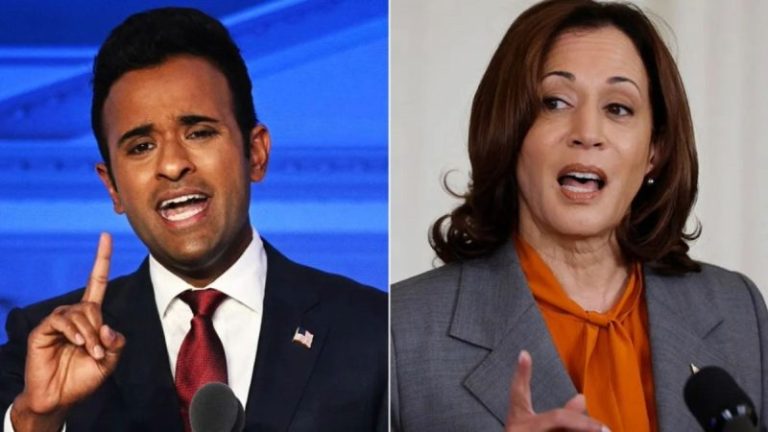
Former presidential candidate Vivek Ramaswamy issued a warning to Republicans this week that they need to be aware of some ‘hard realities’ around the way they message their criticisms of Vice President Kamala Harris now that she is the presumptive Democratic nominee for president.

The bottom line is, I think what’s happened is a lot of Republicans were caught by surprise after the convention,’ Ramaswamy told Fox News Digital on Friday. ‘That’s resulted in some reactive steps that I don’t think all make sense. And I think they’re actually hurting us.’

Ramaswamy spoke to Fox News Digital about a viral comment he posted Thursday on X that was seen by over 3 million people that addressed issues and concerns he has seen with the way Republicans are talking about the matchup between Harris and former President Trump.

Ramswamy’s first point and concern is that Republicans are calling for Biden to step down or be removed from office, using the argument that if he is not capable of running for president, he isn’t capable of serving as president.

‘I think this makes absolutely zero sense and here’s why,’ Ramaswamy explained. ‘Kamala Harris is unproven as a political leader, let alone as the U.S. president. Why put her in a position as the U.S. president with all the benefits of incumbency? Oval Office addresses, God forbid, to even change policy or foreign policy, to be able to create circumstances that make her look better. That’s one of the advantages that many incumbent presidents, the sad truth is, have used throughout American history.’

Ramaswamy said calling on Biden to step down is ‘another example’ of Republicans being ‘reactive,’ which ends up hurting our chances rather than helping us.’

It’s not going to be good for America and it’s not going to be good for Republican electoral prospects if Kamala Harris is the President of the United States of America for even a short period of time, for even a minute,’ Ramaswamy said. ‘I don’t think that’s something we should want, and it doesn’t make sense and that’s why I called it out.’

Many Republicans have focused on Harris’ record as a prosecutor, which Ramaswamy warned could backfire if they focus too much on attacks that she ‘locked up’ too many people for petty crimes.

So look, this is the other category of criticisms I see coming, even from some conservatives, saying that she locked up too many people while she was a prosecutor,’ he said. ‘This is the wrong line of attack. It doesn’t make sense.‘

Ramaswamy continued, ‘In fact, one of the images that Kamala Harris is trying to project is that she’s somehow going to be a law-and-order presidential candidate. I find that laughable. Look at under the Democratic regime, including policies that she has supported, clear the jails, defund the police. That’s resulted in a wave of rampant crime in this country. People in the United States of America, across the aisle and both camps, are dead set against this wave of crime. But if against that backdrop, Republicans are criticizing her for locking too many people up, it doesn’t make sense because it legitimizes the otherwise laughable claim that she’s a law-and-order candidate.‘

Republicans have also accused Harris of covering up Biden’s health issues while at the same time accusing the vice president of orchestrating a soft ‘coup’ to remove him from the ticket. Ramswamy told Fox News Digital those two messages don’t mesh.

The main point is what voters really care about is the future,’ he said. ‘What are we actually going to deliver? And the more we focus on bickering on that past political missteps or whatever from the Democratic side, the more small-minded we’re going to be seen as being.

‘On one hand, you have Republicans saying that Kamala Harris covered up for Joe Biden. She was covering for him and telling the public that he was actually a great president, when in fact he wasn’t cognitively capable. On the other hand, at the same time, we’re saying that Kamala staged this coup against Biden. It doesn’t make sense to many independent voters to say both of those things at the same time. They’re self-contradictory. And if we say things that don’t make sense, we’re more likely to lose votes, which is the thing that I care most about. So I come back to the basic point. That’s not how we’re going to win this election. We’re not going to win this election by picking at these nit-picking… ‘inside baseball’ political criticisms of Kamala. It doesn’t matter. The voters don’t care.’

Ramaswamy told Fox News Digital that Harris is not the ‘biggest risk’ the Republican side faces, but rather the ‘shenanigans on the Democratic side.’

‘The voters don’t love Kamala Harris on her own terms,’ Ramaswamy said. ‘We know that because even when she was running in the Democratic primary, she didn’t even make it to the Iowa caucus. I was an unknown 37-year-old businessman, ran for office for the first time as U.S. president last year. I have more delegates that have supported me for U.S. president than Kamala Harris ever has had. That’s because voters don’t find her compelling. So it’s not that Kamala Harris is our biggest risk.’

When asked if some Republicans are underestimating Harris’ ability to win, Ramswamy said that ‘complacency’ is always a concern.

You got to compete like you’re behind, or else you soon will be,’ he said. ‘We’re not up against a candidate. It’s not Kamala. It’s not Joe. It’s not any other individual candidate. We are up against a machine and the more we understand that, we have formidable opponents. Let’s take stock of some sobering realities. Republicans have lost devastating defeats relative to expectations in 2018, 2020, 2022.

‘I don’t want to see the same thing happen in 2024. So, you know what? ‘Fool me once. Shame on you. Fool me twice. Shame on me.’ The old adage means something for a reason. I think our movement needs to wake up and say that winning by a little bit shouldn’t even be our goal. We’ve got to win by a landslide, and a landslide minus some shenanigans in margin is still going to be a victory. That’s the attitude we need.’

Ramaswamy explained his belief that Democrats were waiting until after the Republican National Convention to have ‘full information,’ and that it is understandable Republicans were caught ‘flat-footed,’ but ultimately they will be victorious in November if they stay focused. 

‘It doesn’t matter because Kamala Harris—we can easily defeat Kamala Harris in the same landslide we were going to defeat Joe Biden on,’ he said. ‘But it’s not going to be by nit-picking on random political criticisms of her. I think those could backfire. I think the way we’re going to do it is by articulating our own vision of who we are and what we stand for. And if so, we win this thing not only in a landslide, but we unite this country and revive our country, which is something we’re hungry for.’

This post appeared first on FOX NEWS

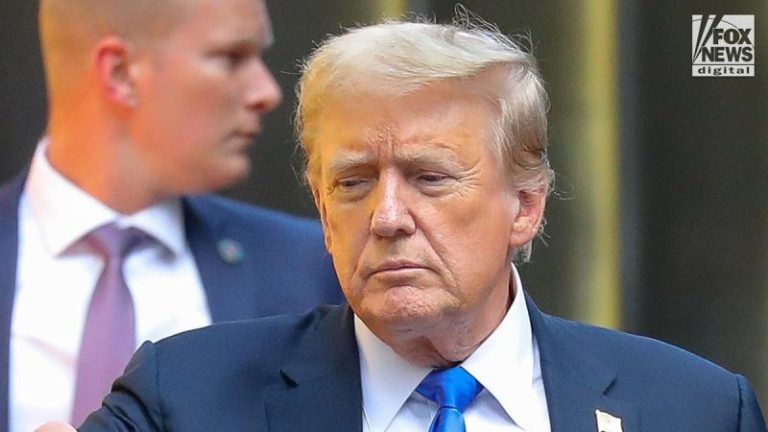
Biden Transportation Secretary Pete Buttigieg was ripped by conservatives on social media Friday after he mocked former President Trump for showing ‘weakness’ by not agreeing to debate VP Harris in September.

‘Has a presidential nominee ever agreed to a debate, then pulled out? Remarkable show of weakness here,’ Buttigieg posted on X before being mocked by conservatives who argued that former President Trump had an agreement with Biden, who dropped out of the race and effectively pulled out of the scheduled debate.

‘Yes. Biden. Literally this past weekend,’ CNN’s Scott Jennings posted on X.

‘Joe Biden agreed to 2 debates, then pulled out of his entire campaign after the first one,’ pollster Frank Luntz posted on X.

‘The only one I can think of is Joe Biden, right?’ The Federalist’s Mollie Hemingway posted on X.

‘I’m actually surprised Pete would dunk this hard on his boss, Joe Biden,’ Fox News contributor Guy Benson posted on X. ‘The man *just* pulled out of the race (and therefore the second debate), clearly against his will. Undeniable weakness aside, give him a moment of peace.’

‘This is the sort of extraordinarily brazen tack you take only when you know that the media is in full campaign mode in your favor,’ National Review’s Charles C. Cooke posted on X.

Fox News Digital reached out to Buttigieg’s office and the Harris campaign but did not receive a response.

Trump said earlier this week he’s open to debating Vice President Harris more than once as the two face off in the 2024 presidential election.

‘Absolutely. I’d want to. I think it’s important,’ Trump said Tuesday when asked by Fox News’ Bill Melugin on a conference call with reporters if he would commit to debating Harris at least once.

‘I would be willing to do more than one debate, actually,’ Trump said. Minutes later, Trump noted, ‘I haven’t agreed to anything. I agreed to a debate with Joe Biden.’

The Trump campaign said Thursday he will not participate in a debate until Democrats finalize their nominee because it ‘would be inappropriate to schedule things with Harris because Democrats very well could still change their minds.’

Harris criticized that position from the Trump campaign as ‘backpedaling.’ 

This post appeared first on FOX NEWS

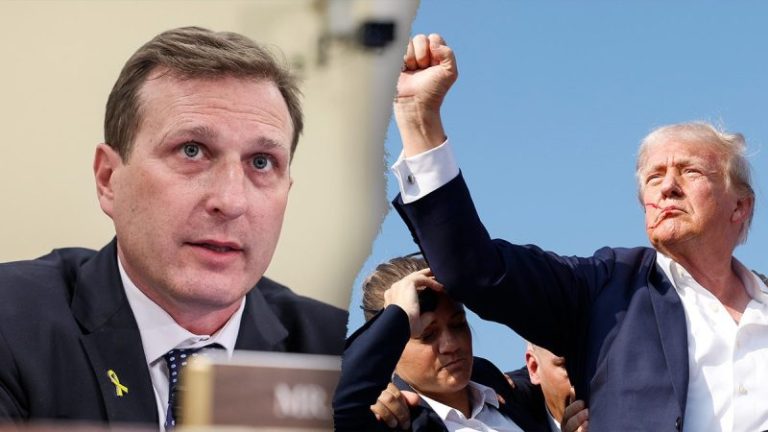
The office of a House Democrat who played a prominent role in former President Trump’s first impeachment is now pushing back against GOP-fueled criticism that he should not be on the task force investigating the attempted assassination of the former president.

Rep. Dan Goldman, D-N.Y., who came under fire last year for saying that Trump ‘has to be eliminated,’ is among the Democrats being considered for a place on the bipartisan commission to study the July 13 shooting at Trump’s Butler, Pennsylvania, rally, a source familiar with the matter told Fox News Digital. 

‘As someone with a lifelong commitment to democracy and the rule of law, Congressman Goldman immediately clarified a misstatement from last November to emphasize his strong condemnation of all political violence. The Congressman demonstrated with pointed questioning during congressional hearings last week that the Secret Service must be held accountable for its unacceptable security lapse, and he is determined to ensure such a failure never happens again,’ Goldman’s spokesperson Madison Andrus told Fox News Digital.

Goldman first came to national prominence as Democrats’ lead counsel during Trump’s first impeachment trial. He has remained a vocal Trump critic since coming to Congress in January 2023.

His potential placement on the commission has already invoked the ire of Trump allies since first being reported in Punchbowl News on Friday morning.

Among those leading the criticism is Donald Trump Jr., who recalled that Goldman had said that Trump needed to be ‘eliminated,’ in a November 2023 MSNBC interview, which Goldman has since apologized for.

‘Democrats are trying to put Dan Goldman on the committee to investigate the assassination attempt. Just weeks ago he called for DJT to be ‘eliminated.’ Probably not the best person to have on this task force,’ Trump Jr. wrote on X.

Goldman wrote on X in November 2023, ‘Yesterday on TV, I mistakenly used the wrong word to express the importance for America that Donald Trump doesn’t become President again. While he must be defeated, I certainly wish no harm to him and do not condone political violence. I apologize for the poor choice of words.’

Philip Letsou, deputy communications director for the Senate Republicans’ campaign arm, wrote on the site, ‘Democrats are evidently planning on stacking the task force to investigate the assassination attempt on Trump with conspiracy theorists like Dan Goldman.’

The House voted to establish the commission in a unanimous 416-0 vote last week. Speaker Mike Johnson, R-La., has said the panel will have seven Republicans and six Democrats, chosen by himself and House Minority Leader Hakeem Jeffries, D-N.Y., respectively.

As of Friday morning, Jeffries’ office told Fox News Digital that no final decisions had been made.

But a second source who spoke with Fox News Digital said that another possible contender is Rep. Glenn Ivey, D-Md., who served as State’s Attorney for Prince George’s County for nearly a decade from 2003 until 2011, before coming to Congress in 2023.

On the GOP side, a senior Republican lawmaker told Fox News Digital that ‘it seems like half our members want to be on the task force.’

A third source who spoke with Fox News Digital said that Rep. Mike Kelly, R-Pa., was in strong consideration to play a prominent role on the panel. Kelly, whose district the shooting took place in, was present when the shooting occurred.

Kelly was also the leader of the resolution establishing the task force that passed the House this week.

This post appeared first on FOX NEWS

Major equity indexes rose on Friday after a selloff that hit the Technology sector especially hard. But this doesn’t necessarily mean that everything is OK going into next week. Wall Street seems to be in whiplash land, veering from one market area to another.

The Dow Jones Industrial Average ($INDU) closed higher by 1.64%, providing a boost to Industrials. The Nasdaq Composite ($COMPQ) and S&P 500 ($SPX) closed mid-range. That all indexes closed above their Thursday lows is encouraging and a good way to end a week that looked like it could end in doom. 

Softer Inflation Data Sheds Optimism

It’s possible the June Personal Consumption Expenditure (PCE) price index was the catalyst behind the recovery rally. The PCE rose 0.1% month over month and 2.5% year over year. The core CPI rose 0.2% month over month and 2.6% year over year. The data suggests that inflation is slowly converging toward the Fed’s 2.0% target. So, perhaps the soft landing scenario will become a reality. Let’s wait to hear what Fed Chair Powell says next week.

The S&P 500 bounced off the 50-day simple moving average (SMA) and touched the October–April trendline at its high but closed lower (see chart below). Will the trendline act as a strong support level for the index to conquer?

CHART 1. UPTREND IN THE S&P 500 SINCE OCTOBER 2023. The S&P 500 is in an important area, and investors should watch to see if it breaks above or below the trendline or moving average. Chart source: StockCharts.com. For educational purposes.

The long-term trend is still looking strong, but given that the next few months is a seasonally weak period, expect the market to correct. As long as it stays above its 25-week SMA and the SMA is trending higher, the long-term trend will be bullish. 

The Nasdaq was hard hit on Wednesday and Thursday, and Friday’s recovery didn’t take the index above its 50-day SMA. It’s still looking indecisive as it straddles below the 38.2% Fibonacci retracement level (see chart below). 

CHART 2. DAILY CHART OF NASDAQ COMPOSITE WITH FIBONACCI RETRACEMENT LEVELS. The Nasdaq failed to break above its 38.2% Fibonacci retracement level. Let’s see what next week brings. Chart source: StockCharts.com. For educational purposes.

Where Are Investors Flocking?

The Dow Jones Industrial Average, which got hit hard after hitting a new high on July 17, was the big winner on Friday. And since the S&P 400 midcap index has a high concentration of Industrials, the S&P 500 Mid Cap Index ($MID) got a boost. 

Small-cap stocks also rose, with the S&P 600 Small Cap Index ($SML) hitting a new 52-week high. Does this mean that undervalued small caps are a good place to park your cash while the mega-cap indexes go through their correction? It may be worth considering, given that most of the big tech companies reporting next week are looking weak technically. 

So, what’s going well? The cooling inflation data increased expectations of interest rate cuts which helped bank stocks. While the broader equity indexes were struggling, the KBW Bank Index ($BKX) saw a mild correction followed by a rally. The index closed at a new 52-week high.

CHART 3. KBW BANK INDEX HITS NEW 52-WEEK HIGH. Expectations of cuts in interest rates this year sent bank stocks higher. Chart source: StockCharts.com. For educational purposes.

The stock market is forward-looking, so it’s important to pay attention to what comes next. We’re entering a week of heavy earnings from some big mega-cap tech stocks. There’s also the Fed meeting. While no rate cuts are expected in next week’s meeting (the CME FedWatch Tool shows a 95.3% probability of no rate cuts in July), investors will listen closely to Chairman Powell’s comments during his presser. Next week is also an economic data-heavy week with July Manufacturing PMI and Non-Farm Payrolls. Both will give some indication of the US economic landscape. 

Expect some market volatility next week. Although the Cboe Volatility Index ($VIX) eased on Friday, it’s still high, relatively speaking. Each day in the market is different. Take each day as it comes. 

End-of-Week Wrap-Up

S&P 500 closed down 0.83% for the week, at 5459.10, Dow Jones Industrial Average up 0.75% for the week at 40,589.34; Nasdaq Composite closed down 2.08% for the week at 17357.88.$VIX down 0.79% for the week closing at 16.39Best performing sector for the week: UtilitiesWorst performing sector for the week: Consumer DiscretionaryTop 5 Large Cap SCTR stocks: MicroStrategy, Inc. (MSTR); Carvana Co. (CVNA); Insmed Inc. (INSM); Tenet Healthcare Corp. (THC); Arm Holdings (ARM).

On the Radar Next Week

FOMC meetingMay S&P/Case-Shiller Home Price MoMJune JOLTs ReportJuly Manufacturing PMIJuly Non-Farm PayrollsEarnings from Advanced Micro Devices (AMD), Apple, Inc. (AAPL), Amazon.com, Inc. (AMZN), Coinbase Global Inc. (COIN), Intel Corp. (INTC), Meta Platforms (META), Microsoft Corp. (MSFT), On Semiconductor Group (ON), Snap Inc. (SNAP), and many more.

Disclaimer: This blog is for educational purposes only and should not be construed as financial advice. The ideas and strategies should never be used without first assessing your own personal and financial situation, or without consulting a financial professional.

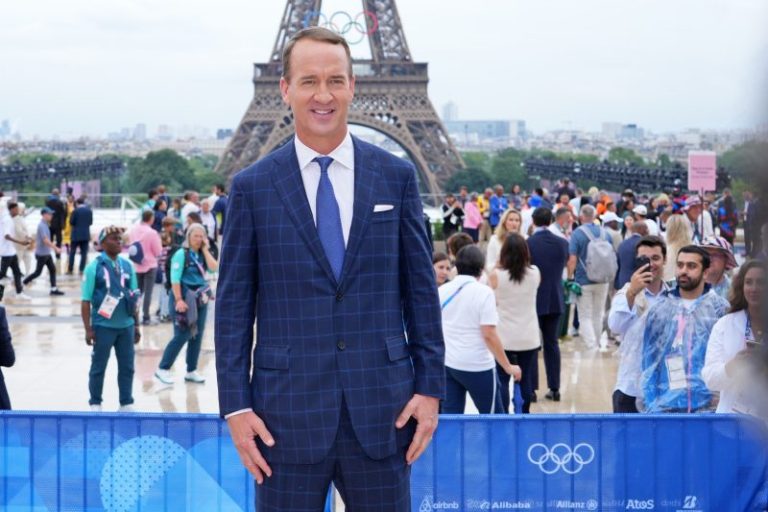
Perhaps no one arrived at the 2024 Paris Olympics more prepared than Peyton Manning.

During the 2024 Paris Olympics opening ceremony, Manning wore an oversized wristband while sitting on the set with fellow NBC hosts Mike Tirico and Kelly Clarkson. The accessory looked identical to those worn by quarterbacks that detail potential plays.

Manning, an 18-year NFL veteran who won two Super Bowls, told Tirico and Clarkson he had notes on each athlete available on the play sheet.

‘Hey, buddy. What’s going on there?’ Clarkson asked.

‘Oh, this is just my wristband,’ Manning said. ‘I have notes on all 200 countries, all 10,000 athletes.’

2024 Olympic medals: Who is leading the medal count? Follow along as we track the medals for every sport.

Quipped Tirico at the end of the segment, ‘That’s just Peyton Manning being Peyton Manning.’

Manning, who joined NBC’s coverage of the ceremony that saw each country and its athletes on parade, also cracked a Spygate joke when discussing the drone controversy involving the Canadian Olympic soccer teams that led to the dismissal of women’s coach Bev Priestman.

‘A little Spygate in soccer in the Olympics,’ Manning said, referencing the illegal filming tactics by the New England Patriots.

Manning has always been known to lighten the mood during his TV appearances, including his ‘ManningCast’ duties during the regular season and other cameos made by him and his brother and fellow NFL quarterback Eli Manning.

This post appeared first on USA TODAY