Archive

2024

Browsing

NBC’s Olympics primetime schedule tonight has plenty of big moments to show from as the 2024 Paris Games slate featured Simone Biles and the U.S. women’s gymnastics team competing for the first time of these Games. Elsewhere, the USWNT faced Germany in group play, and the U.S. men’s basketball team opened group play against Serbia.

As NBC airs its primetime program tonight, USA TODAY Sports will bring you live updates, coverage, highlights, medal wins and more. Follow along.

NBC primetime Olympics schedule tonight

NBC “Primetime in Paris” features today’s swimming finals, women’s gymnastics qualifying, women’s skateboarding street final and surfing Day 2 report.

How to watch Olympics primetime today

In primetime, starting at 8 p.m. ET (2 a.m. the following day in Paris), NBC’s marquee broadcast will air live and focus on the biggest events of the day with “Primetime in Paris.” That block will have a storytelling lens with more in-depth coverage opportunities. Mike Tirico will be the host from Paris’ famed Trocadero, with the Eiffel Tower serving as the backdrop. The show will typically open with highlights from a Team USA gold medal and the last hour of the show will revolve around the event of the night.

2024 Olympic medals: Who is leading the medal count? Follow along as we track the medals for every sport.

Medal count today

Our 2024 Paris Olympics medal count tracker updates after every single medal event. 

Olympic results today

Catch up on all of today’s Paris Olympic results, highlights, medal wins and more.

Will Simone Biles be featured on tonight’s programming?

Yes. Although this is not a medal round, Simone Biles will be seen on tonight’s primetime programming. Biles seemed to tweak her leg during warmups prior to any events, but that didn’t stop Biles. Cecile Landi, one of Biles’ coaches told reporters that there was no concern regarding Biles’ ability to compete in Paris. Landi added that Biles was dealing with ‘a little pain in her calf. She felt it a little bit on floor.’

Biles competed in the qualifying rounds for the floor routine, vault, and balance beam today. She earned the highest scores of all Americans in each event.

When will Simone Biles compete next?

Women’s team final | 12:15 p.m. ET Tuesday, July 30
Women’s all-around final | 12:15 p.m. ET Thursday, Aug. 1
Women’s vault final | 10:20 a.m. ET Saturday, Aug. 3
Women’s uneven bars final | 9:40 a.m. ET Sunday, Aug. 4
Women’s balance beam final (6:36 a.m. ET), floor exercise final (8:20 a.m.) on Monday, Aug. 5

How many Olympic Games has there been?

2024 is the 30th edition of the modern Summer Games, which started in 1896. 2024 is France’s third time hosting the Summer Games (1900, 1924).

How did the United States men’s basketball team perform today?

The U.S. men’s basketball team had their first game of Olympic group stage play today against Serbia. The United States won 110-84, backed by LeBron James’ and Kevin Durant’s 44 combined points.

The U.S.’s next game is scheduled for July 31 against South Sudan – the same team that took America to overtime during the showcase.

The U.S. women play tomorrow against Japan in their first game of the Olympics.

Paris Olympics 2024: How to watch the Summer Games across TV and streaming

Every event at the 2024 Paris Olympics will be aired live across NBC, USA Network, E!, CNBC, GOLF Channel, and there will be a Spanish broadcast on Universo and Telemundo. All events will be available to stream live on Peacock and NBCOlympics.com.

Date: July 24-Aug. 11
TV: Games broadcast across NBC, USA Network, E!, Telemundo, Universo, CNBC and Golf Channel
Streaming: Peacock, nbcolympics.com, fuboTV

We occasionally recommend interesting products and services. If you make a purchase by clicking one of the links, we may earn an affiliate fee. USA TODAY Network newsrooms operate independently, and this doesn’t influence our coverage.

This post appeared first on USA TODAY

PARIS — Simone Biles and the U.S. women’s gymnastics team put on quite a show for all the celebrities in the crowd during Olympic qualifying at the Bercy Arena on Sunday. That despite a hobbled Biles, who appeared to tweak her lower left leg during floor warmups.

The Americans, who are heavy favorites for gold with Russia not here, finished with 172.296 points, putting them more than five points ahead of Italy. No team came close to that in qualifying. The U.S. women had five scores of 14.5 or higher, including Biles’ 15.8 on vault, and counted only one score lower than a 13.6. The team finals are Tuesday night.

Biles and Suni Lee, the reigning Olympic champion, will compete in the all-around final. Jordan Chiles finished fourth in the all-around standings, behind Biles, Lee and Rebeca Andrade, but she’ll miss the all-around finals because of the two-per-country rule.

Simone Biles injury update: What we know

Cecile Landi, one of Simone Biles’ coaches, said after Sunday’s qualifying session that she doesn’t have concerns about Biles continuing to compete in Paris. Landi said it was Biles’ left calf that was bothering her and said ‘she felt better at the end (of the session), yeah.’

2024 Olympic medals: Who is leading the medal count? Follow along as we track the medals for every sport.

Landi went on to say there was no discussion about Biles not continuing to compete on Sunday. ‘Never in her mind,’ Landi said. Landi also said there was no discussion about Biles doing just one vault or watering down her planned skills. Landi was then asked what Biles did with her leg: ‘Just a little pain in her calf. She felt it a little bit on floor. And we taped it to kind of (tighten) it up.’ Biles finished competing in the qualifying session with her left ankle taped.

Chellsie Memmel, the technical lead for the U.S. women, said: ‘What she was able to do … was remarkable.’

Biles and the rest of the Team USA women did not stop to speak to reporters in the mixed zone, as planned, but Biles did smile at assembled media.

Here’s everything we know about Simone Biles’ injury and her tweaked calf.

When will Simone Biles compete next?

Here is when Simone Biles is set to compete next at the Paris Olympics.

Qualifying for Biles and the U.S. women started at 5:40 a.m. ET. NBC will re-air the session in prime time Sunday.
The women’s team final begins at 12:15 p.m. ET Tuesday, July 30.
The women’s all-around final is at 12:15 p.m. ET Thursday, Aug. 1.
The women’s vault final is at 10:20 a.m. ET Saturday, Aug. 3.
The women’s uneven bars final is at 9:40 a.m. ET Sunday, Aug. 4.
The women’s balance beam final (6:36 a.m. ET) and floor exercise final (8:20 a.m.) are Monday, Aug. 5.

Simone Biles’ floor routine

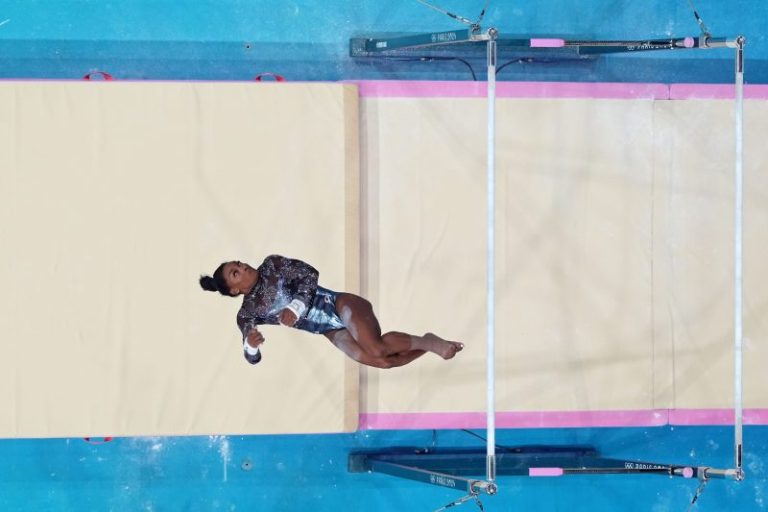
When she took the floor, her face was grim after having her ankle taped. Still, Biles opened with the triple-twisting, double somersault, better known as the Biles II. It’s both incredibly difficult and demands a lot from every part of her leg. She took a few steps out of bounds on the landing, but that is not unusual. She did the same at meets earlier this summer. The only noticeable difference in her routine was that she took out a stag leap at the end of the Biles I.

Still, Biles looked somber as she finished the routine, for which she earned a score of 14.600. She walked gingerly off the mat and took a seat on the steps at the edge of the podium. Cecile Landi, one of her coaches, came and asked her if she was OK, and Biles nodded. She continued to sit there until Laurent Landi, Cecile Landi’s husband and Biles’ other coach, came to her. He put his arm around her and she nodded as she whispered in her ear.

Finally, Biles got up and joined her teammates.

Simone Biles on vault

Biles spotted her parents when the Americans moved to vault, their next event, and she could be seen smiling and laughing again. After landing one practice vault, she motioned to teammates and then jokingly crawled partway toward the runway. Then she got up and hopped on her right leg. ‘I’m going to need a wheelchair,’ she said, according to the Peacock broadcast, though she appeared to be making light of the apparent left calf injury. 

Biles then did a monster Yurchenko double pike, the most difficult vault being done by any woman, and nailed it. Yes, she took a big step back with her left foot to steady herself on the landing, but that’s a minor flaw. She scored a 15.8, including a 9.4 for execution. She then followed it with the second-hardest vault, a Cheng, taking another hop back on the landing. But Biles was visibly limping as she walked off the podium, and hopped down the steps using only her right foot. 

Simone Biles on balance beam

Simone Biles absolutely crushed her routine on balance beam, the U.S. women’s first event. Whether it was her aerial series or individual flips, she did them with more ease and grace than most people walk on flat ground. And she was far from the ground, mind you, 4 feet off on a balance beam that is a mere 4 inches wide. 

When she landed her dismount, taking a small hop back, a wide grin crossed Biles’ face and coach Cecile Landi jumped up in the air. She scored a 14.733 and few, if any, other gymnasts will be able to match that the rest of the day. 

And with that, she and the Americans were off and running. There are always some nerves before the first event, especially when it’s balance beam. Biles was the last of the Americans to go on beam, and she looked somewhat nervous as she watched them compete. As she waited for Suni Lee’s score to post, Biles stood at the edge of the beam, blowing out her breath and saying a few last words to herself. But once she was on the beam, she was her usual spectacular self. 

Suni Lee comes up clutch on uneven bars

The U.S. had three women competing in all four events Sunday, but only two per country can make the all-around final. And with Simone Biles’ brilliance, that meant Suni Lee and Jordan Chiles were essentially competing against one another for a single spot.

Chiles was narrowly ahead of Lee going into the group’s final rotation, uneven bars — but unfortunately for her, that happens to be Lee’s best event. And the reigning Olympic all-around champion delivered. In a pressure-packed moment, she registered a score of 14.866 — six-tenths better than Chiles — to squeak into the second all-around qualification spot.

‘We knew it was going to be a battle going in, and it really was. Back and forth throughout the day,’ U.S. women’s technical lead Chellsie Memmel said. ‘… I know it’s going to sting (for Chiles). It’s going to take time.’

At the end of the second rotation, Biles, Lee and Chiles occupied the top three spots in the all-around standings.

Jade Carey explains fall on floor, says she hasn’t been feeling well

U.S. gymnast Jade Carey said she has been fighting an undisclosed illness in recent days, citing the bug as the reason for her uncharacteristically poor performance on floor exercise in Sunday’s gymnastics qualifying round at the 2024 Paris Olympics.

Carey, 24, told Olympics.com that she hasn’t ‘been able to eat or anything’ over the past few days due to the illness and wanted to disclose the issue so fans didn’t assume she was being affected by nerves. USA Gymnastics had previously announced that her coach and father, Brian Carey, missed the team’s podium training Thursday because he was not feeling well.

‘I had, like, no energy today and didn’t really have a sense of what was going on in my head,’ Carey told Olympics.com. ‘So, I just kind of wanted people to know that so, they know that there’s actually something wrong.’

US gymnastics Olympic qualifying scores

Suni Lee and Jordan Chiles competed alongside Simone Biles to try to qualify for the all-around. That meant Jade Carey and Hezly Rivera, at 16 the only member of the team who isn’t a returning Olympian, did two events apiece: Carey on vault and floor exercise, where she’s the reigning Olympic champion, and Rivera on uneven bars and balance beam.

Balance beam: Biles (14.733), Lee (14.033), Chiles (13.600), Rivera (12.633).
Floor exercise: Biles (14.660), Chiles (13.866), Lee (13.100), Carey (10.633).
Vault: Biles (15.300, two vaults), Carey (14.433, two vaults), Chiles (14.216), Lee (14.133).
Uneven bars: Lee (14.866), Biles (14.433), Chiles (14.266), Rivera (13.900).

Suni Lee balance beam routine

Suni Lee went third on balance beam for the U.S., ditching the mount that’s been giving her trouble and going to the straddle. Lee scored a 14.033.

How Brazil gymnastics did at Olympic qualifying

If any team has a chance to finish without shouting distance of the U.S. women in Tuesday’s team final, it’s expected to be Brazil. Though the Brazilians will need to improve on their performance in qualifying to make that a reality.

Led by reigning all-around Olympic silver medalist Rebeca Andrade, Brazil qualified comfortably for the final but placed a surprising fourth, behind Italy and China in addition to Team USA. The three countries were separated by less than 0.5 points in Sunday’s qualification round — and all three finished more than five full points behind the U.S.

Japan, Canada, Great Britain and Romania placed fifth through eighth, respectively, to also punch their tickets to the team final.

Celebrities show out for Olympic gymnastics qualifying

A who’s who of A-list celebs – Tom Cruise, Anna Wintour and Lady Gaga, just to name a few – were on hand to watch Biles, reigning Olympic champion Suni Lee, Jordan Chiles, Jade Carey and Hezly Rivera. Even the Americans were impressed, their mouths dropping open when the celebrities were shown on the Jumbotron.

Simone Biles, Snoop Dogg trade dances at Olympic gymnastics

As they rotated to floor, Simone Biles and company spotted Snoop Dogg dancing in the front row. Then Biles and Jordan Chiles started dancing. Needless to say, the Olympics are way more fun with fans.

How does Olympic gymnastics scoring work?

A gymnastics routine gets two scores: One for difficulty, also known as the D score or start value, and one for execution. Every gymnastics skill has a numerical value, and the D score is the sum total of the skills in a routine. The execution score, or E score, reflects how well the skills were done. A gymnast starts with a 10.0, and deductions for flaws and form errors are taken from there. Add the D and E scores together, and that’s your total for an apparatus. (Vault scores will always be higher because it’s a single skill.)

How many medals does Simone Biles have?

Simone Biles is the most-decorated gymnast of all time, with 37 medals at the world championships and Olympics. To put that in perspective, that’s more than any men’s team has. Combined. China’s initial five-man team had 37 medals, but they made a switch before qualifying and now only have 34. Oh, the men do two more events than the women do, too. Which means Biles has amassed her collection despite having fewer opportunities to do so. 

How does Olympic gymnastics qualifying work? 

Every gymnast, whether they’re competing as part of a team or as an individual, has to go through qualifying. How many events they do depends both on whether they’re trying to make the all-around final and, if their country is one of the 12 in the team competition, where they’re needed most.

Four gymnasts compete on each event in qualifying, and teams can drop their lowest score. The top eight teams after qualifying advance to Tuesday’s team final, where scores start over, and the U.S. women are the heavy favorites to win gold.

The top 24 in the individual all-around make Thursday’s final, where Biles is expected to become only the third woman, and first since 1968, to win a second Olympic title. The top eight gymnasts on each event advance to the event finals, which are Aug. 3-5.

But there is a limit of two gymnasts per country in the all-around and each event final, meaning there is likely to be at least one American who will get sidelined.

What Simone Biles’ teammates say it’s like training with her

Simone Biles saves her coaches time. And headaches. When the greatest gymnast the sport has ever seen is grinding away every day, it makes it a little hard for anyone else to slack off. When one of the world’s most famous athletes is at the gym before most people have had their coffee or brushed their teeth, the other gymnasts better be up and at ‘em early, too.

And if Biles can pick herself up after the entire world has had a front-row seat to her lowest moment, bouncing back from a bad meet seems a little more doable.

‘Training with Simone is, like, once in a lifetime,’ said Joscelyn Roberson, who moved to WCC after the US championships in 2022. ‘She’s always so bubbly in the gym. Plus, she can hit. All the time. Like, she never has a bad day, which is insane to me.’ Read about where Simone Biles trains and what it’s like to train with her.

The USA TODAY app gets you to the heart of the news — fast. Download for award-winning coverage, crosswords, audio storytelling, the eNewspaper and more.

This post appeared first on USA TODAY

PARIS — United States women’s rugby player Naya Tapper was a high school All-American in track and field but had football aspirations.

Tapper’s older brother, Mark LeGree, played football and was ultimately drafted by the Seattle Seahawks in the fifth round of the 2011 NFL draft. Tapper had hoped to follow his footsteps.

“I wanted to play football growing up because I watched my brother. He had an amazing career playing from little league all the way to the NFL. Watching him and also having the characteristics of being really aggressive and having a lot of energy the dream of football came about,” Tapper told USA TODAY Sports. “But as you get older you realize as a woman that’s not really an option right now. When I realized that and ended things with track and field, I found rugby and kind of blossomed from there.”

Tapper’s athletic career has blossomed wonderfully in rugby. She started playing the sport at 18 years old at University of North Carolina and hasn’t looked back. In 2016, she began playing professionally and turned into a mainstay.

Tapper made her Olympic debut at the Tokyo Olympics where the U.S. women’s team finished sixth. She is currently the U.S. women’s sevens all-time career leader in tries. In Paris, Tapper is Team USA’s rugby captain in what she plans to be her final Olympics.

2024 Olympic medals: Who is leading the medal count? Follow along as we track the medals for every sport.

“It feels amazing. I have to remind myself everyday that’s actually what the situation is right now because I could have never imagined coming to my second Olympics and being a captain,” Tapper said. “I appreciate my coach for raising me up for the characteristics I have rather than putting me down and putting me in this position to be a great representation for the young Black girls watching me.”

U.S. women’s rugby coach Emilie Bydwell said before the Olympics that Tapper has been a vital leader and top performer in the sport.

“Naya has solidified herself as one of the greats to play the game in this relatively new women’s professional era, combining power, pace and determination to help drive the team,” Bydwell said. “Beyond her on-field contributions Naya has served as a transformational leader and a key driver in the development of the culture that we have as a team.”

The 29-year-old helped the women’s club rout Japan 36-7 in the opening round and defeat Brazil 24-5 to start 2-0 in Pool C.

The U.S. women’s squad faces Olympic host country France on Monday before the quarterfinals begin. They have a chance to earn their first ever Olympic medal in rugby sevens, which would be a remarkable conclusion for the former track and field athlete, who wanted to play football but found her calling in rugby.

“That would end my career in the most beautiful way,” Tapper said. “If that happened, it would make it really hard to leave but it would mean so much to the sport and the organization in the U.S. where we are really trying to grow the sport and bring new fans and players.’

This post appeared first on USA TODAY

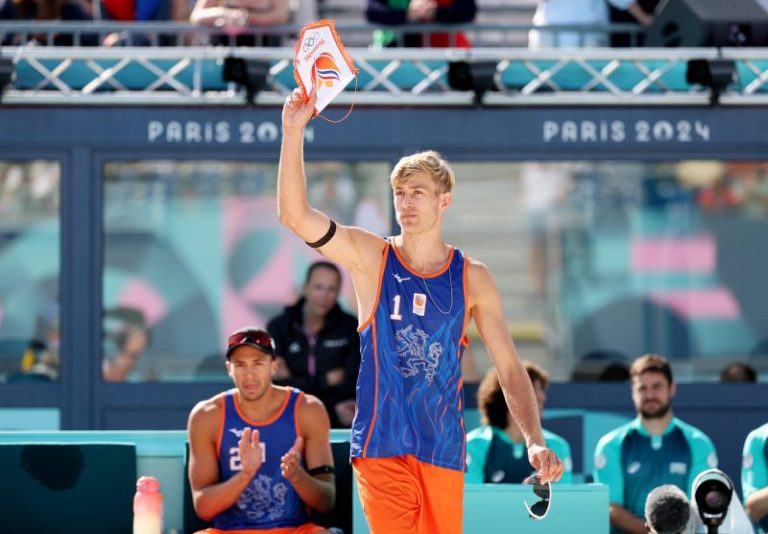
PARIS – On a flawlessly sunny Sunday morning at the base of the Eiffel Tower, a convicted child rapist played and lost an Olympic beach volleyball match.

Such a beautiful setting for such an ugly sentence.

Those who don’t know the tale of Dutch beach volleyballer Steven van de Velde, I envy you. It’s the nastiest storyline going in regards to the proud athletes of these Paris Games, and it could have been avoided had someone stood up for what’s right. But no one has, all the way from the Netherlands to the International Olympic Committee.

In 2014, van de Velde, then 19, traveled to Milton Keynes, England to see a 12-year-old girl he’d met online. According to the MK Citizen’s 2016 account of the trial, van de Velde knew her age, took her virginity and authorities were notified when she sought the morning-after pill.

2024 Olympic medals: Who is leading the medal count? Follow along as we track the medals for every sport.

Repeat: She was 12 years old.

It was revealed in court, too, that she had “since self-harmed and taken an overdose.”

Van de Velde hasn’t denied what happened. In a 2018 interview with Dutch NOS Sport, he admitted his actions and expressed regret for “the biggest mistake of my life.”

“I made that snap decision,” he said. “I booked that ticket in the morning and flew out in the afternoon. Yeah, and as you know, things happened. We had sex, and I came back the next day. I can’t get around it. I can also keep blaming myself a hundred thousand times for it happening and how it happened.”

As van de Velde was sentenced in England to four years in prison (he served about a year due to differing laws in the Netherlands), the judge Francis Sheridan told him (per the MK Citizen), “Prior to coming to this country you were training as a potential Olympian. Your hopes of representing your country now lie as a shattered dream.”

You’d have thought so, huh?

Not only is van de Velde being allowed to compete in Paris. He’s being given special treatment. He’s not staying with other athletes or his teammate Matthew Immers in the Olympic Village. He’s permitted to skip mandatory media availability and dodge the interview area after his matches.

He therefore missed out on the uncomfortable questions that Immers faced after Sunday’s loss to Italy’s Adrian Carambula and Alex Ranghieri.

“He’s not here because he just wants to rest his mind and focus on the game,” Immers said.

“The main reason is we want to talk about sports, especially him,” said John Van Vliet, press officer for the Netherlands team. “We are very much aware that if we bring out Steven here, it won’t (be) about his sport and his performance. … It’s something that shouldn’t be brought up through sports in a tournament which he qualified for.”

Shouldn’t be brought up through sports?

Then he shouldn’t be competing here. Period.

It’s being brought up constantly. Sunday’s victorious Italian opponents even stormed off from a post-match interview session, scolding reporters for asking solely about the controversy.

That Dutch officials feel compelled to protect van de Velde and hide him away from the world’s greatest sporting spectacle demonstrates why he should not have been allowed to be a part of it in the first place.

But no one ever made that decision. His inclusion was the result of the Netherlands Volleyball Federation (Nevobo) backing him publicly. So did the country’s Olympics leadership, and IOC spokesperson Mark Adams deferred to that support Saturday when asked about van de Velde’s participation.

‘I am grateful to the Dutch Volleyball Federation,’ van de Velde said in an earlier statement released by Nevobo, ‘because they offered me, with clear conditions and agreements, a future in this beautiful sport again. But I also think back to the teenager I was, who was insecure, not ready for a life as a top class athlete and unhappy inside, because I didn’t know who I was and what I wanted.’

The whole situation is disgusting.

Anyone who’d like to view an Olympics as a unifying and inspirational force on our complicated planet – and they are – should be appalled at van de Velde’s inclusion. And appalled, too, at how those in van de Velde’s orbit keep handling the global controversy it has ignited, putting athletics ability over ethical responsibility at the one place it should be the most paramount.

Maybe something was lost in the transition to English, but I heard a lot of concern for van de Velde from Immers and Van Vliet on Sunday. Not much regard, though, for his victim or for advocates of sexual assualt victims who’ve been rightfully bothered by his presence in these Olympics.

Immers said he was “disappointed” at how “big” the story has become. Asked if he was disappointed, though, by van de Velde’s action, he replied, “No, not at all. I don’t want to talk about (those) actions at this point and all the big attention. I’ve known the guy for three years, four years now, and we’ve played every tournament, and right now they make a really big discussion of it.”

In clarifying that comment, Van Vliet said, “(Immers) has been playing with (van de Velde) many, many tournaments the last three years. It has never been an issue.”

It’s not difficult to understand why it’s an issue now, though. The Olympics isn’t like those many, many tournaments, nor should it be compared to them.

I’m all for second chances, but any attempt to coerce sympathy for van de Velde or explain his actions as some youthful mistake should cease right here:

She was 12 years old.

Nothing else matters.

Except, evidently, the Dutch winning a beach volleyball match. On Sunday morning, they didn’t even do that.

They lost. And the Paris Olympics did, too.

Reach sports columnist Gentry Estes at gestes@gannett.com and on the X platform (formerly known as Twitter) @Gentry_Estes.

This post appeared first on USA TODAY

PARIS − The rivalry that has defined the last decade of men’s tennis will add one more chapter, Olympic style.

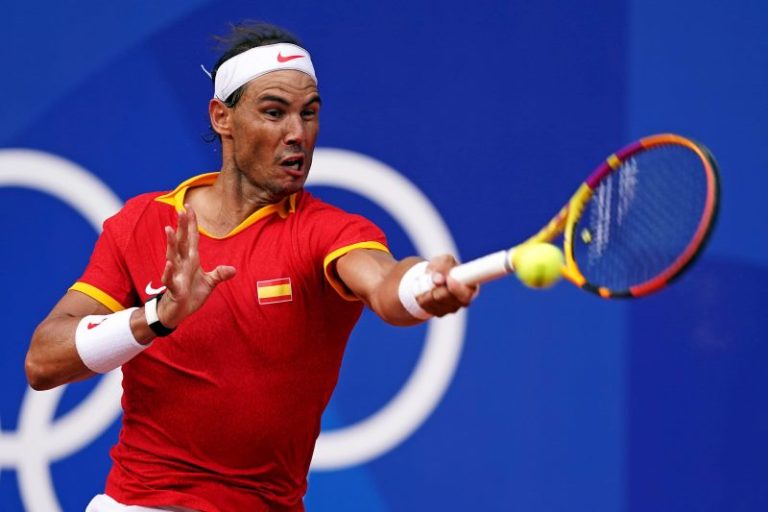
After coming through a tight three-setter over Hungary’s Márton Fucsovics on Sunday, Rafael Nadal will face Novak Djokovic for the 60th time in their careers. It is expected to start Monday at around 7:30 a.m. ET.

It’s only a second-round match at the Paris Olympics. But the implications will reverberate around the globe.

‘It’s been always super special to play against Novak, no doubt about that,’ Nadal said.

2024 Olympic medals: Who is leading the medal count? Follow along as we track the medals for every sport.

Nadal, 38, is clearly nearing the end of his career. For two full years, he has struggled just to get on the court − and, yes, pointed to the Olympics here at Roland Garros, where he won the French Open 14 times, as part of his motivation to keep going. Even here, he has been battling some kind of leg injury, showing up with a heavy strapping on his right thigh. It was uncertain he’d even play singles until after his warm-up Sunday morning.

‘I’m a bit tired of course, long match, but at the same time happy, no?’ Nadal said. ‘Was a good test and a good thing is, I was able to pay at a good level of tennis for awhile. That always give hope, and then the more negative stuff is I was not able to hold that great level, no? So let’s see. Tomorrow another story, another kind of opponent, of course, different situations in our careers. His moment is coming from being in the final of a Grand Slam (at Wimbledon). I come without being very competitive the last three years. Let’s see. It’s in a special place and just try to give my best and enjoy as much as possible.’

Get Olympics updates in your texts! Join USA TODAY Sports’ WhatsApp Channel

Djokovic, too, has had an injury-plagued season − but has also had his sights set on Olympic gold for many years. It’s the one big prize in tennis that has eluded the 24-time Grand Slam champion. And at 37 years old, it may well be his last chance to do it for Serbia.

Nadal, who won the gold medal in 2008, is clearly the underdog here. His 6-1, 4-6, 6-4 victory over Fucsovics was more evidence that he’s far from the force of nature that has won 22 Grand Slam titles, struggling with dips in energy, a shaky serve and groundstrokes that don’t consistently dictate play the way they once did.

‘I started the match playing very well first set, then I lost the rhythm, the concentration a little bit, and I let him be more comfortable on court, no?’ Nadal said. ‘I think he played from better positions and I was more defensive, more predictable, and then the match was very complicated.’

But he had enough to get through this first-round test. And on the court where he’s experienced his greatest success, maybe he’ll have enough in the tank for one more special performance.

‘Normally we have been playing for finals or semifinal,’ said Nadal, who has won 29 of their meetings to Djokovic’s 30. ‘This is second round. Of course it’s an Olympics so every match is super special, but almost every single match against Novak I arrive with a different situation than I am today. So that makes the match more difficult for me and more unpredictable, but I always have hope, I always believe and I gonna give my best.’

The USA TODAY app gets you to the heart of the news — fast.Download for award-winning coverage, crosswords, audio storytelling, the eNewspaper and more.

This post appeared first on USA TODAY
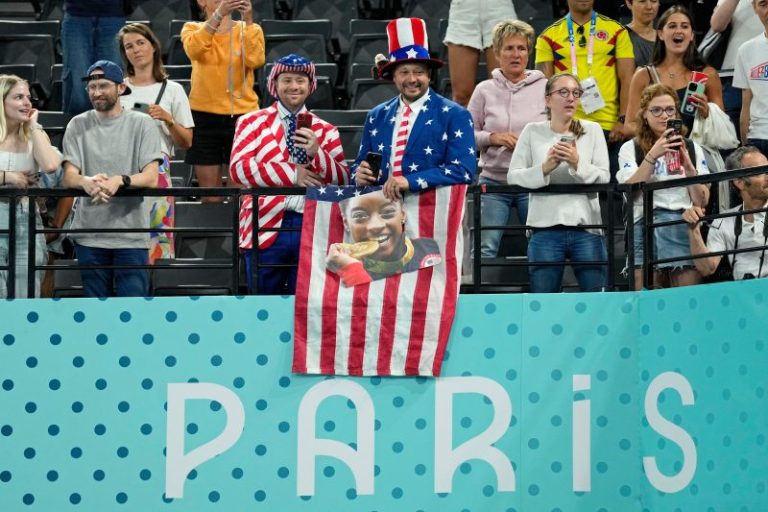
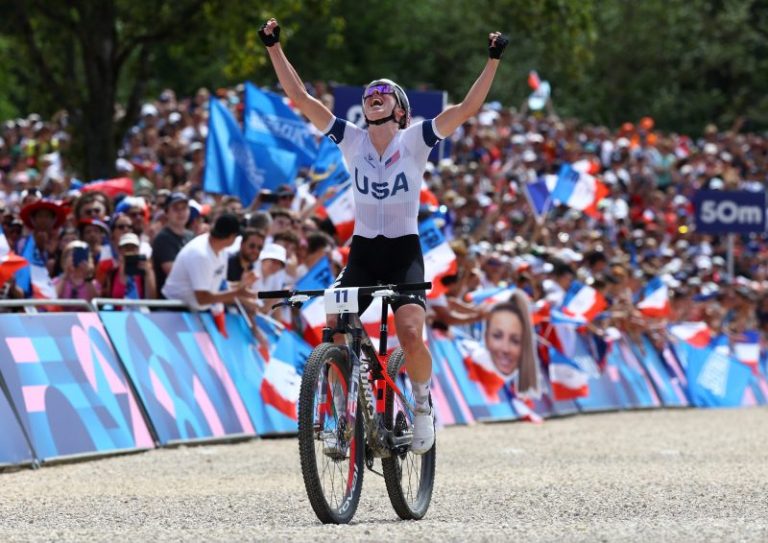
ELANCOURT, France − Not even a broken rear wheel could stop Haley Batten in the women’s mountain biking competition at the Paris Olympics on Sunday, earning the silver medal with a time of 1:28:59 despite having to ride much of the fourth lap with a barely-serviceable bike.

France’s Pauline Ferrand-Prevot pulled away from the field early and commanded gold in a time of 1:26:02, leaving Batten and Sweden’s Jenny Rissveds to control all the drama by battling for silver over the second half of the race. Rissveds took the bronze (1:29.04), but it was Batten who overcame.

Her broken wheel came with poor timing, as Batten was a long way from reaching the pit at the time. The 30.8km course featured seven laps of 4.4 kilometers each, and Batten’s wheel broke almost exactly at the midway point. She felt lucky her bike held together long enough for her to get the repair.

Get Olympics updates in your texts! Join USA TODAY Sports’ WhatsApp Channel

2024 Olympic medals: Who is leading the medal count? Follow along as we track the medals for every sport.

‘It was the bottom of the main rock garden on the first descent, so it was a long time (to get assistance). I had quite a few switchbacks and a couple more rock gardens to make it through, so I was lucky it stayed together,’ she said. ‘… I hit a rock pretty dang hard and I smashed my wheel. I broke it completely. I was able to ride the wheel with the tire on it for the last half of that descent to be able to make it to (the pit) and I have one of the best mechanics in the world. He fixed it so fast. So I moved quite a few positions down, but I think that fueled my fire even more. It gave me an extra boost.’

Once she had a new wheel, Batten began a quick recovery to reach medal contention again. She and Rissveds battled over the sixth lap, trading second and third place back and forth, before Batten pulled away in the final lap. Meanwhile, Ferrand-Prevot’s gold medal was well-secured and drew raucous cheers from home-country fans. Ferrand-Prevot’s gold was her first medal in her fourth Olympic Games. Batten and Ressveds rode within a few seconds of one another for much of the sixth lap.

‘We’ve had the most epic and most exciting battles all year,’ Batten said of Ressveds. ‘We both got concussions this year. We’ve had some of the best fights this year. I know Jenny really well and we support each other. I’ve actually looked up to her for a long time. … She did one big attack and I was able to hold on. I knew my strength is to be strong in the end of the race, so I waited for that and chose my moment.’

The USA TODAY app gets you to the heart of the news — fast.Download for award-winning coverage, crosswords, audio storytelling, the eNewspaper and more.

Batten’s first medal comes in her second Olympic appearance, having finished ninth in Tokyo in 2021. She won her first national title at age 14 and turned professional by age 17, becoming the youngest member of Team USA mountain biking upon her qualification to compete in the Tokyo Games.

Batten, 25, of Park City, Utah, is coached by former Team USA cyclist Kristin Armstrong, a three-time Olympic gold medalist. On Saturday, Armstrong also coached Team USA’s Chloe Dygert to a bronze medal in the women’s road cycling individual time trial.

Team USA mountain bikers have won just two Olympic medals previously, by Susan DeMattei (1996, bronze), when the sport made its debut in Atlanta, and Georgia Gould (2012, bronze).

The women’s mountain biking event was held at the Paris Games’ Elancourt Hill venue, and is the highest point in the Paris area at an altitude of 231 meters. Team USA’s men’s mountain biking team will compete at Elancourt Hill on Monday with riders Riley Amos and Christopher Blevins.

Both the men’s and women’s competitions include 36 riders.

Reach Tuscaloosa News columnist Chase Goodbread at cgoodbread@gannett.com. Follow on X @chasegoodbread.

This post appeared first on USA TODAY
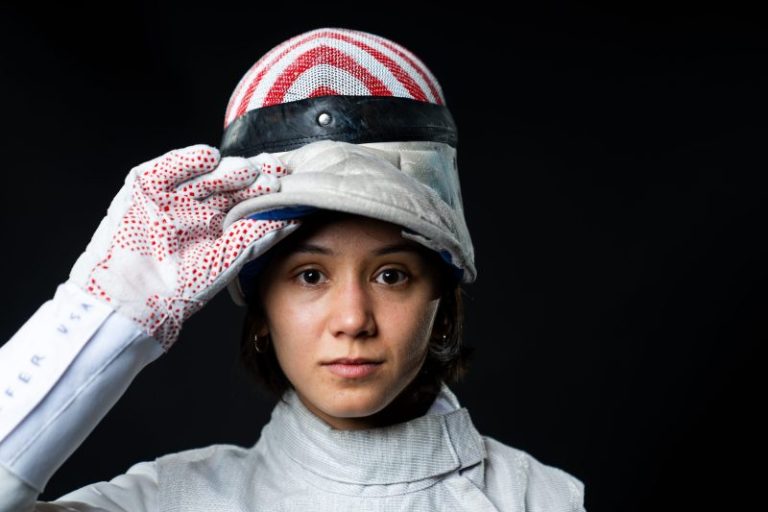
WASHINGTON — Lee Kiefer made her Olympic fencing debut about two months after graduating from high school, as a wide-eyed 18-year-old with no expectations and no worries − ‘a baby,’ she said, at least by Olympic standards.

Fast forward 12 years and it feels like everything has changed.

Kiefer, 30, arrived in Paris as the reigning Olympic gold medalist in women’s foil and arguably the face of the sport in the United States. Since her first trip to the Games, she’s graduated from college, enrolled in medical school, gotten married, traveled the world and, most recently, started picking up shifts as a help-line volunteer at a Kentucky non-profit that helps people in the state get access to abortion care.

Kiefer knows her fencing career is closer to its end than its beginning − though she also bristles at the idea of being beholden to some arbitrary timeline.

2024 Olympic medals: Who is leading the medal count? Follow along as we track the medals for every sport.

‘I think people are just trying to rush me to outcomes,’ she told USA TODAY Sports, ‘where the journey is super important, too.’

The latest stop in that journey? Another Olympic gold medal.

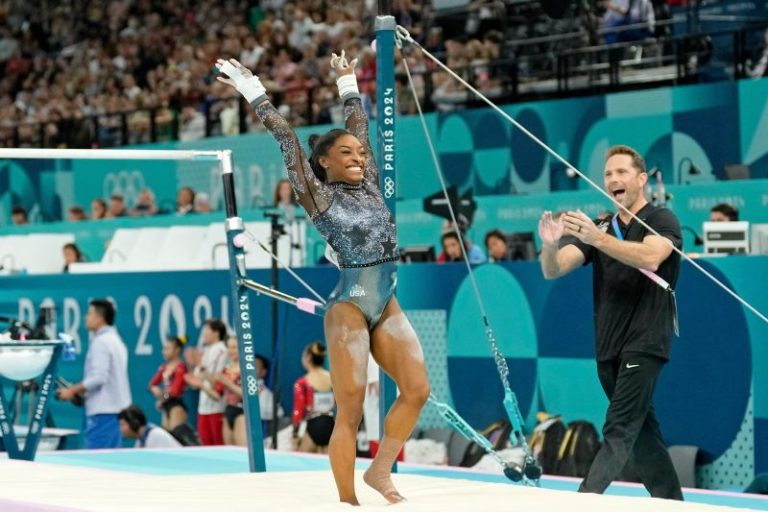
After winning gold in 2021 to become the first American to win an Olympic medal in individual foil − one of the three disciplines in a sport that dates back to the original iteration of the Games − Kiefer did it again Sunday, putting on a clinic in the gold-medal bout to beat fellow American Lauren Scruggs..

Kiefer thought about retiring and shifting her focus back to medical school after the Tokyo Olympics but ultimately decided to give it another go. She said she and her husband, fellow U.S. fencer Gerek Meinhardt, never expected to still be fencing at this level at this point in their lives. And while she won’t say whether she thinks these Olympics will be her last, she acknowledged that she is approached Paris with a different perspective − trying to be more present during the whole experience, soaking up little moments and memories along the way.

‘I do want time to slow down,’ Kiefer said. ‘That is for sure.’

‘A gold medal is different’

On the first day of a fencing competition in Washington earlier this year, Kiefer could hardly walk a few yards without stopping to say hello or exchange a hug with a fellow competitor or coach. Some would view this as a sign of celebrity. She is not one of those people. ‘I’ve been a part of this world for a long, long time,’ Kiefer explained.

She started fencing at 5 years old, learning the fundamentals of the sport from her father, Steve, in the family’s dining room. Steve Kiefer had captained the fencing team at Duke before going on to become a neurosurgeon, and all three of his kids went on to follow the same paths; Kiefer, her older sister Alex and their younger brother Axel all fenced collegiately before enrolling in medical school.

Kiefer has said she hated fencing at first, though it didn’t take long for that to change and for her talent to emerge. She made the senior national team at 15, won her first world championship medal at 17 and was off to the Summer Olympics at 18.

‘She has an incredible sense of timing and creativity,’ said Kiefer’s younger brother Axel, who went on to compete alongside her in college at Notre Dame. ‘She’s not the most imposing athlete in terms of her size, but she’s very quick and she’s able to use all of her physical attributes to her advantage in a really savvy way.’

Kiefer said her first two Olympic experiences could hardly have been more different. In 2012, she arrived at the London Games as a carefree kid just wanting to bask in the atmosphere and was thrilled to finish fifth. Four years later, she went to the 2016 Rio Olympics with a goal of winning a medal, put too much pressure on herself and finished a disappointing 10th.

Then, in Tokyo, the trajectory of Kiefer’s career permanently changed. Competing in front of mostly empty seats due to COVID-19 restrictions, she said she was able to learn from her 2016 experience and better handle the pressure of the moment. She squeaked past the Olympic champion from the Rio Games, Inna Deriglazova of Russia, to become the first American foilest ever to win Olympic gold − a triumphant moment both for herself and the U.S. fencing community broadly.

‘A gold medal is different than silver medals,’ Kiefer’s longtime coach Amgad Khazbak said. ‘A gold medal is great with everything – with the confidence, with how the people (see her). She’s a star if she goes to any competition, (with) hundreds of people around her.’

Why Lee Kiefer decided to return

Kiefer and her husband both downplayed the impact that winning Olympic gold has had on her life, though they said it did lead to a difficult decision. After Tokyo, they each grappled with whether to retire from fencing or continue on toward Paris − which, in Kiefer’s case, meant taking another extended leave from medical school at the University of Kentucky.

It also meant going through an Olympic cycle with a metaphorical target on her back and perhaps more pressure on her shoulders.

‘I think a lot of that difficulty, related to her decision, was about expectations she felt were in place for her to return,’ Meinhardt said. ‘Sometimes you put more pressure on yourself when you’re committed fully to one thing.’

Ultimately, Kiefer said she decided to return in part because she still felt like she had room to grow in the sport − even as the reigning Olympic champion and world No. 1. She plans to resume her third-year coursework at Kentucky’s medical school in 2025.

‘Even compared to last Olympics, I feel like I’m so much more versatile,’ Kiefer said at a media roundtable event in April. ‘(I’m) always thinking about, ‘how can I grow my game? What are my holes? What’s that person doing that I can borrow their idea and add to my game?”

All the little technical nuances and tactical questions are still fascinating to her, she said, even 25 years after she first started fencing. Axel Kiefer said he’s been amazed by all the consistency in training − and perspective − that his sister has put in to keep her career going, especially in a sport like fencing where the lack of financial resources can push athletes out.

‘Throughout all these Olympics and stuff, Lee has just maintained her love of the sport, which I think can get lost a lot of times,’ Axel Kiefer said. ‘It becomes a job for people, or they get burnt out. But I feel like Lee has always found a way.’

Lee Kiefer’s new adventures, new passions

As she’s gotten older and more experienced, Kiefer said she’s focused more on training smart − taking a step back when a small injury crops up, for instance, to ensure it doesn’t become a serious one.

She and Meinhardt have also tried to take more time outside of fencing just to enjoy their life and marriage. After training together almost exclusively during the COVID-19 pandemic, they’ve spent the past few years turning fencing competition trips into extended international vacations − often sticking around after an event to explore sights like Machu Picchu or the ruins at Pompeii.

‘I feel like our relationship is definitely both of our secret weapon,’ Kiefer said. ‘We spend so much time together − maybe too much for a normal couple.’

Kiefer described herself as ‘a pretty shy, reserved person,’ but while training for Paris, she’s also become an outspoken advocate for reproductive rights. It’s a cause that hadn’t truly resonated with her until the U.S. Supreme Court revisited, and ultimately overturned, Roe v. Wade in 2022.

Kiefer was one of more than 500 female athletes who signed an amicus brief urging the court to protect women’s rights to abortion care. When the court didn’t, she looked for ways to get involved. Last fall, she began working shifts as a help-line volunteer with the Kentucky Health Justice Network, a non-profit organization that provides funding and education for Kentuckians seeking care.

Because abortion is illegal in Kentucky, Kiefer said part of her role is helping women arrange travel to Illinois, Ohio or Virginia for various appointments. She said many of the callers can’t afford what’s required, or give up because it’s so complicated, even with the non-profit organization’s help.

‘It’s scary, and I think it’s getting worse all the time,’ Kiefer said. ‘But I think women, women athletes, people having a voice … they can show our world the U.S. is in a shit spot, but there’s still people out there who can help.’

When asked if she planned to speak out about reproductive rights while at the 2024 Paris Olympics, as permitted by the International Olympic Committee in certain settings, Kiefer indicated that she will be focused only on competing. As the reigning gold medalist, she knows it will be a pressure-cooker atmosphere. ‘Of course she’s under pressure,’ Khazbak said. ‘She feels she’s the best one.’

For Kiefer, one of the strangest challenges of this Olympic cycle was managing the varied expectations of her. She thought some people probably wonder why she’s even still fencing, when she could be focusing on medical school. And other people probably thought her choice will only be justified if she defends her Olympic gold. She’s tried to remind herself that ‘this journey is worth it and fulfilling, even if it doesn’t end in medals.’

‘I mean, most people don’t get medals at the Olympics,’ she said. ‘You don’t realize that, but they have crazy stories and crazy hard work that they put into it that kind of goes unnoticed if they don’t have something shiny. So yeah. I’m one of the lucky ones.’

Contact Tom Schad at tschad@usatoday.com or on social media @Tom_Schad.

This post appeared first on USA TODAY
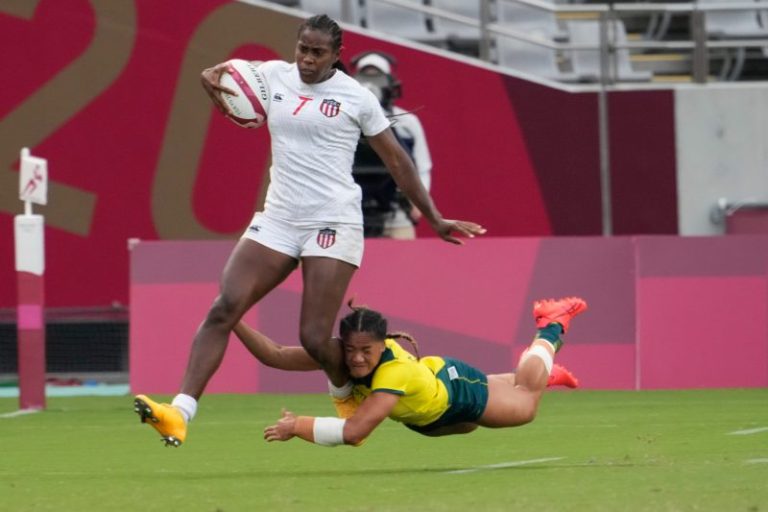
PARIS — Relax, everybody. Simone Biles appears to be OK.

Biles powered through the rest of Olympic gymnastics qualifying on Sunday after tweaking her calf during warmups on floor exercise. Cecile Landi, who is one of Biles’ personal coaches and also coach of the U.S. women’s team, said she has no concerns about Biles being able to continue competing at the Paris Olympics.

‘She felt better at the end, yeah,’ Landi said.

The team final, where the Americans are heavy favorites to win gold, is Tuesday. The all-around final, where Biles is expected to become just the third woman to win a second Olympic title, is Thursday.

Get Olympics updates in your texts! Join USA TODAY Sports’ WhatsApp Channel

2024 Olympic medals: Who is leading the medal count? Follow along as we track the medals for every sport.

Chellsie Memmel, the technical lead for the U.S. women’s team, had said last week that Biles doesn’t have to do all four events in team finals if she doesn’t want to. Although that was done so Biles doesn’t feel as if she’s a ‘gold-medal token’ as she was made to feel in Tokyo, having that option available could take on additional importance now.

‘First and foremost, I just want to make sure she’s physically OK and then we’re just going to go from there,’ Memmel said, noting that she hadn’t had a chance to talk with Biles yet.

During warmups on floor exercise, Biles landed the Biles I, a double layout with a half-twist, and appeared to pull her left leg up. She had a conversation with Laurent Landi, Cecile Landi’s husband and Biles’ co-coach, and then left the mat with a grim look on her face.

After talking with Cecile Landi, she then left the floor with Dr. Marcia Faustin, the team doctor. Biles had felt something in her left calf a couple of weeks ago, Cecile Landi said, ‘but after, it stopped. And then just a little again today.’

When Biles and Faustin returned from backstage, another member of the medical team taped her ankle tightly. She looked somber as she walked around, as if to test it.

Asked if Biles gave any thought to withdrawing from the competition, Cecile Landi said no.

‘Never in her mind,’ she said.

Biles might have been in pain, but it didn’t affect her gymnastics. She opened her floor routine with a triple-twisting, double somersault, better known as the Biles II. Aside from being an incredibly difficult skill, it demands a lot — a lot, a lot — of every part of her leg. She went out of bounds on the landing, but that is not out of the ordinary. She did the same thing at meets earlier this summer.

The only thing Biles didn’t do in her floor routine was the stag leap that usually follows the Biles I, a very minor omission. Though there are still three more subdivisions to come, her score of 14.6 is likely to stay as the highest on the event.

Biles also did her signature Yurchenko double pike (15.8), a vault so difficult few men even do it, and finished with only a slight mistake on uneven bars, where she wobbled briefly on a handstand. When she finished bars, she went over to salute a crowd of U.S. fans, smiling and waving.

“Yeah,’ Biles quipped after her score, a 14.433, posted. ‘That’s good.’

Then she flashed a big grin.

‘Incredible,’ Memmel said, laughing, when asked her reaction to Biles’ performance. ‘She is an outstanding gymnast and a person and an overall human. So, what she was able to do, with looking like she had some soreness or something in her lower leg, is remarkable.’

Though the injury had to have put a scare in Biles — she has talked of these Olympics being ‘redemption’ after a case of ‘the twisties’ kept her out of most of the Tokyo Olympics — she perked up as the meet went on. She spotted her parents while she and her teammates were warming up on vault, and was smiling and laughing as she waved at them.

After landing one practice vault, she motioned to teammates and then jokingly crawled partway toward the runway. Then she got up and hopped on her right leg. ‘I’m going to need a wheelchair,’ she said, according to the Peacock broadcast, though she appeared to be making light of the apparent ankle injury. 

When she was waiting to go on uneven bars, she spotted her brother and her toddler niece in the stands and waved enthusiastically. She also acknowledged several U.S. fans with waves and smiles.

‘What she did today? I mean, it was pretty amazing. (A score of) 59.5 and four-for-four (hits),’ Cecile Landi said. ‘Not perfect, so she still can improve with it. Just really good.’

And good for Biles.

That there was even a question of her availability was devastating after her experience at the Tokyo Games. Biles withdrew after one event in the team final with a case of “the twisties,” which caused her to lose her sense of where she was in the air. Unwilling to risk her physical safety, Biles also withdrew from the all-around, vault, uneven bars and floor exercise finals.

She returned for the balance beam final, winning a bronze medal with a reworked routine. But Biles returned home, questioning whether she’d ever be able to do gymnastics again, uncertain she could trust herself. Or her gymnastics.

But she has put in work through therapy and set boundaries to reduce the anxiety that contributed to the twisties, and has been better than ever since her return. She easily won her sixth world title in 2023 and ninth U.S. title in June and, so long as she’s able to compete, is certain to get the redemption here that she seeks.

That, and several more gold medals.

This post appeared first on USA TODAY
All cap. And a very little Speedo.

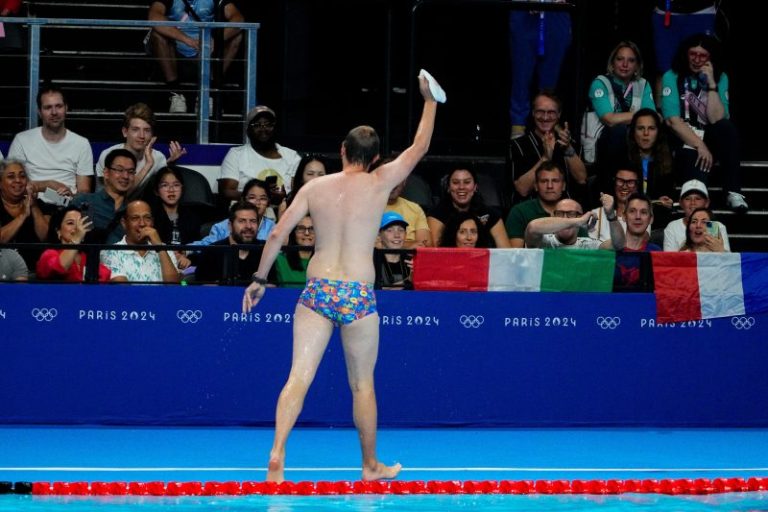
The 2024 Paris Olympics are underway, and as is the case with the Olympic Games, sometimes those who aren’t athletes take center stage. Enter ‘Bob the Cap Catcher.’

During the women’s 100-meter breaststroke on Sunday morning, American swimmer Emma Webber lost her swimming cap at the bottom of the pool. While common sense would dictate that a swimmer would just jump in after it, that’s, apparently, not the case.

Instead, a hero came to the rescue, in all his glory: Dubbed ‘Bob the Cap Catcher’ by the NBC broadcast booth, a man of unknown origins in a small, flowery Speedo walked across the stage for all to see and dove to the rescue.

Of course, the whole ordeal went off faster than a Speedo-ing bullet, with the man retrieving the cap and exiting the pool in a timely manner, without much fanfare or pomp. Well, there was a little bit of fanfare and pomp: The crowd buzzed as he walked across, and he even was greeted with some catcalls from the audience.

2024 Olympic medals: Who is leading the medal count? Follow along as we track the medals for every sport.

As he exited the pool, he gave the crowd a wave, which cheered in appreciation. Whether that was for his retrieval of the swimming cap, his swimwear or both is unclear.

When the music started again, Webber finished eighth in her heat, with South Africa’s Tatjana Schoenmaker, Japan’s Satomi Suzuki and Lithuania’s Rūta Meilutytė taking the podium steps.

The next time a swimmer loses a cap, make sure your significant other is looking away from the TV, or else ‘Bob the Cap Catcher’ will steal their hearts once again.

This post appeared first on USA TODAY
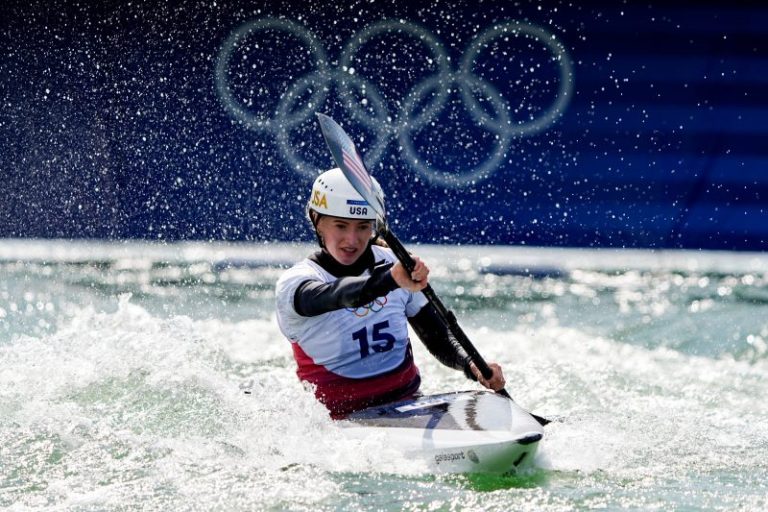
VAIRES-SUR-MARNE, France — Evy Leibfarth made a few ‘mistakes’ in her kayak slalom semifinal race Sunday at Vaires-sur-Marne Nautical Stadium, but in failing to make the finals in her first event at the Paris Olympics, Leibfarth said she feels more prepared to medal in her next two events.

‘The gates are going to be in the same place and for those of you who aren’t familiar with the sport, we don’t get to practice the gates where they are until the day of the race,’ Leibfarth said. ‘So to kind of have that experience already paddling through the gates and just kind of getting a sense for where they are and where the water’s moving, kind of all like the little feeling elements of it, it’s really crucial because even though canoeing’s a lot different, I think it’s a lot smoother, a lot more using the water, kind of feeling it out, you’re still gong on the same rapids and to have that feeling is so important.’

Leibfarth, ranked 19th in the world in kayak slalom, finished 15th in her 22-racer semifinal in a time of 1:09.54. She suffered a 2-second penalty for striking the 19th gate with her paddle, but even without the penalty would have been just short of a qualifying time.

Australia’s Jessica Fox won gold with a time of 50.05 seconds in the 12-person finals. Fox, Australia’s flag bearer and the world’s top-ranked kayak slalom racer, won a silver and two bronze medals in the event at the past three Olympics.

Poland’s Klaudia Zwolinska won silver Sunday, and Great Britain’s Kimberly Woods took bronze.

2024 Olympic medals: Who is leading the medal count? Follow along as we track the medals for every sport.

Leibfarth, 20, has a grueling schedule at this year’s Olympics, competing in all three slalom events.

Canoe single heats begin Tuesday, with the semifinals and finals on Wednesday, and the first of potentially four straight days of competition in the new Olympic sport of kayak cross is Friday.

Fox and Zwolinska also are in all three events.

‘Doing three events (is) really intense because not only are you out there physically giving your all every single day, it’s also really taxing mentally,’ Leibfarth said. ‘It’s hard to reset after each run and go into each day feeling the same confidence and the same positive, so it’s definitely really exhausting. We’re out here, our runs are 90 seconds, hopefully, but we’re out there for an hour and a half warming up before, another 30 minutes to cool down after so it’s pretty long days.’

➤ The USA TODAY app gets you to the heart of the news — fast. Download for award-winning coverage, crosswords, audio storytelling, the eNewspaper and more.

Leibfarth said she felt confident Sunday after a strong performance in Saturday’s qualifying round, where she placed fourth, behind Fox, Zwolinska and France’s Camille Prigent.

‘Today it was a really hard course and I went out there and I gave it my best shot,’ she said. ‘And I did make some mistakes. They changed just a couple moves on the course to make it harder, so there’s one where you have to actually go like backwards through a gate and then get onto a wave and surf it across and I lost a lot of time there. There’s another move that I lost some time at.’

With no event to race Monday, Leibfarth said she planned to give her body and mind a break by walking around the Olympic Village with friends and maybe sketching some portraits.

She said she’s excited for kayak cross, where competitors drop off a raised platform and race through a gated course.

‘It’s a lot of just kind of being aware of your surroundings, aware of where the other girls are and you’ve got to really want it cause I mean, it’s kind of a contact sport so you’ve got to be fricking going for it,’ she said.

And she said feels ‘really confident’ in canoe slalom.

‘My goal is to just go out there and have a run that I’m proud of,’ she said. ‘Not going to share my goals, but I’m feeling good about it.’

This post appeared first on USA TODAY