Archive

2024

Browsing

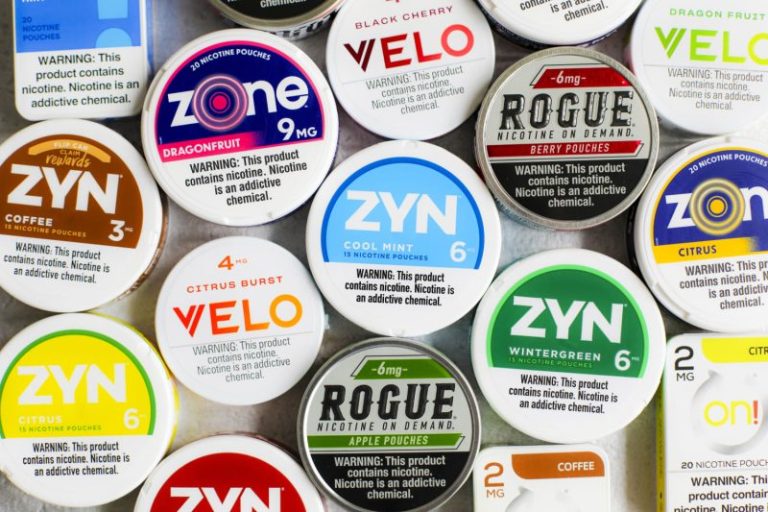
Philip Morris International said on Tuesday it would invest $232 million to expand production capacity for ZYN nicotine pouches at its Ownesboro, Kentucky plant, to meet the strong demand.

The investment will be made through one of PMI’s Swedish Match affiliates, and comes about a month after the tobacco giant announced an investment of $600 million to open a ZYN manufacturing facility in Colorado.

Shipments of ZYN slowed to a growth of 54% in the second quarter, reported in July, as demand for the product created short-term supply chain constraints and impacted volume growth.

ZYN, an alternative to traditional chewing tobacco products, is a nicotine pouch, which, according to Philip Morris, does not contain tobacco.

Philip Morris bought Zyn-parent Swedish Match in a $16 billion deal in 2022, as tobacco companies vied for alternatives to traditional tobacco products in their portfolio amid greater health awareness and stricter regulations.

In June, PMI suspended online sales at ZYN.com across the U.S. after it received a subpoena from the District of Columbia requesting information about its compliance with D.C.’s 2022 ban on the sale of all flavored tobacco.

There were also concerns that illicit sales of ZYN — amid supply gaps — could chip away at the numbers for PMI during the company’s second-quarter conference call in July.

Construction for expansion of the Kentucky facility was underway, and PMI expects to complete it by the second quarter of 2025.

In order to boost production, the facility will operate at a 24-hour, seven-days-a-week basis starting from the fourth quarter this year, PMI said.

The company had said in July the expansion was expected to provide around 900 million cans of capacity for ZYN for 2025.

This post appeared first on NBC NEWS

Another game, another broken record. 

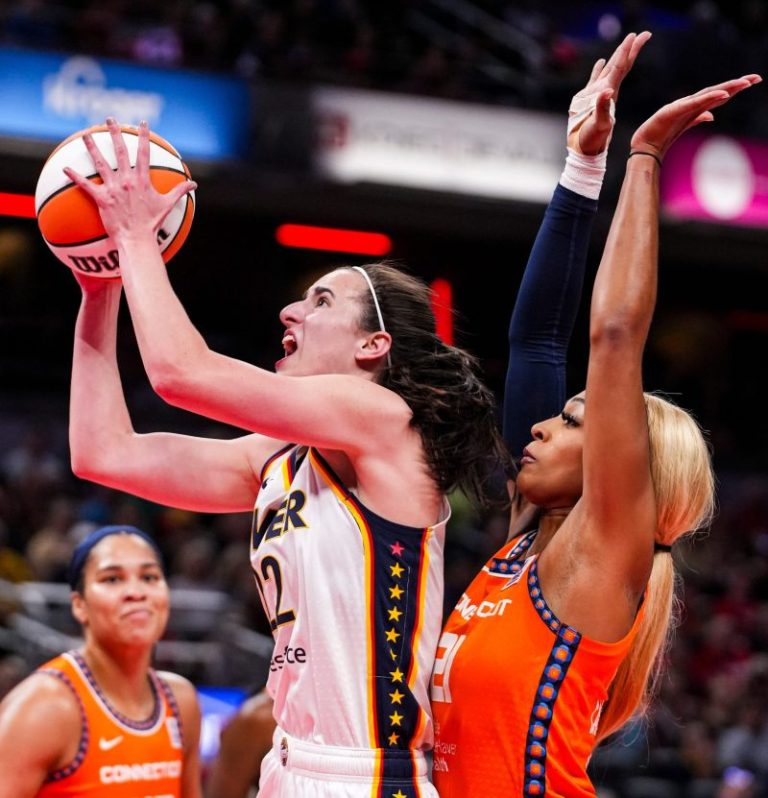
Caitlin Clark became the WNBA rookie with the most 3s in league history Wednesday, when the first-year sensation connected on her 86th 3 of the season less than three minutes into the Indiana Fever’s 84-80 win over the Connecticut Sun. It was Indiana’s first win over the Sun in four tries this season.

Clark, who finished with 19 points, added to the record with three made 3s in the win. Rhyne Howard of Atlanta, the No. 1 pick in 2022, previously held the record with 85 made 3s in her first season. She was the 2022 Rookie of the Year. 

The favorite right now to win 2024 Rookie of the Year honors, Clark chipped in five rebounds, five assists, one steal and one block (she also had seven turnovers). She went 7-for-17 from the field, including 3-for-12 from 3.

It was an impressive win for the Fever, who are inching closer to a .500 record and securing a playoff spot; Indiana hasn’t been to the postseason since 2016 — Clark’s freshman year of high school — when it lost in the first round. 

Connecticut jumped out to an 8-2 lead early before the Fever cranked out a 20-7 run to take a 33-26 lead at the end of the first quarter. They led 51-42 at half, and 69-66 at the end of the third. Tied 80-80 with 2:31 to play, Clark scored on a drive to the basket to give the Fever an advantage. After the teams traded missed shots, Lexie Hull iced the game with two made free throws. 

All five Fever starters scored in double figures, led by Kelsey Mitchell, who had 23. The Fever shot 43.3% from beyond the arc, connecting on 13-of-30 3s. 

It was a star-studded event Wednesday. Clark commands a crowd anywhere she goes, but she wasn’t the only celebrity athlete in the building, as Olympic gold medalists Simone Biles and Gabby Thomas were also in attendance. 

This post appeared first on USA TODAY

Compared to the 2024 Paris Olympics, the Paralympics – which began with Wednesday’s opening ceremony – will receive a fraction of the coverage.

All 22 sports will be streamed live on Peacock in the United States, however – up from 12 at the 2012 London Games. That is a sign of moving in the right direction, International Paralympic Committee chief brand and communications officer Craig Spence said.

‘We’re seeing more coverage than ever before,’ Spence said.

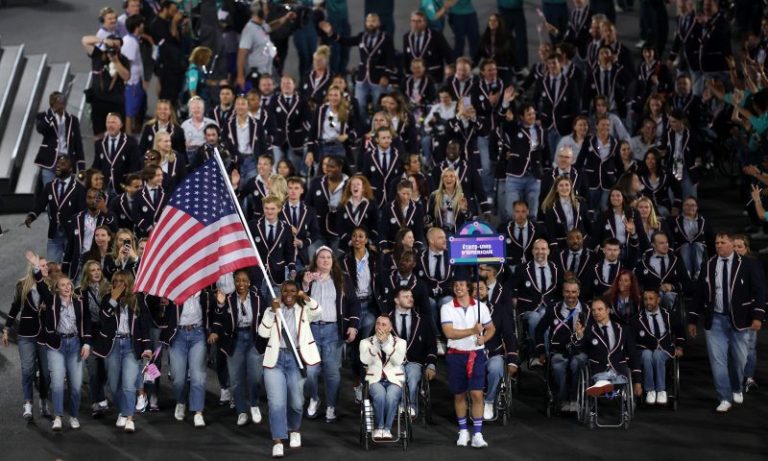
For Steve Serio, the captain of Team USA’s wheelchair basketball team and a flagbearer during the opening ceremony, the improvements are promising while acknowledging there is a long way to go. A longtime goal of his was to have the gold medal game shown on network television, ‘big’ NBC; his team made an appearance during one of NBC’s two primetime telecasts at the Tokyo Games three years ago.

“We are in no way satisfied,” Serio said after he participated in a Paralympic discussion group hosted by NBC, an opportunity that was unimaginable to him a decade ago.

2024 Paris Olympics: Follow USA TODAY’s coverage of the biggest names and stories of the Games.

He added: “We want more awareness. More coverage. Because when I was growing up, I didn’t see athletes that looked like me.”

Swimmer McKenzie Coan echoed this sentiment, recalling the impact of seeing billboards featuring Paralympic athletes from Great Britain during the 2012 London Games. She hopes the Paris Paralympics can raise the profile of some athletes ahead of the 2028 Summer Games in Los Angeles.

“Now Team USA is getting there, but it has always felt like we’ve been a little bit behind in that sense,” Coan said. “It feels like it’s been a long time coming, and it should have happened a lot sooner. And I understand with progress, that’s what happens sometimes, but we’re getting there.”

Evan Medell, a para-taekwondo athlete, said the U.S. Olympic and Paralympic Committee (USOPC) has done a suitable job in making everything equal for the athletes between able-bodied and Paralympic athletes. What he would like to see is the USOPC increase the pressure placed on each sport’s national governing body (NGB) to create parity.

Medell’s journey into para-taekwondo was serendipitous, as he only learned about the sport after competing against able-bodied athletes at nationals for three years. Finally, somebody told him about the para programming within the sport.

The struggle to balance work with training and competitions is a common challenge among Paralympic athletes. Medell, who previously worked as a welder and washed semitrucks, often avoids discussing his competition schedule with potential employers, fearing it might jeopardize job opportunities since attending competitions often requires weeks of time off between travel and training.

“We’re athletes, too,” he said. “We have to support ourselves.”

The gap between the Paralympics and the conclusion of the Olympics puts the Paralympics at a disadvantage from a visibility standpoint. Running the competitions simultaneously would increase costs for the host city and create a scheduling nightmare, as many venues are used for both. A bigger Athletes Village, additional transport and a surplus of volunteers are other detractors.

Starting the Paralympics immediately after the Olympics is also not an option, Spence said. Captivating the world’s attention for six weeks is an impossible task and no media organization could sustain remaining on site for that length of time.

Medell had an idea for bringing more eyeballs to the Paralympics.

“If they had it before,’ Medell said, ‘and it warmed people up to the Olympics.”

Medell said it could be like the undercard for an anticipated fight night. But the movement itself doesn’t see it that way.

“We joke with the IOC that the Olympics is our best test event,” Spence said.

Each Games has ‘teething issues’ that require resolution, and Spence is happy to let the IOC work out the kinks.

‘We’re happy with the format that we’ve got, where we go second,” he said. 

Going second doesn’t diminish the Paralympics’ importance, Spence said. He was adamant that the upcoming four-year stretch before Los Angeles is the most pivotal in U.S. Paralympic history. 

Following the 1996 Atlanta Games, the Paralympic movement failed to make a tangible impact. Current Team USA athletes felt that effect. Serio had no disabled role models. Medell had to compete against able-bodied athletes.

“We can’t afford an Atlanta,’ Spence said. ‘It’s really important that we make the breakthrough in this country that we wanted to achieve 20, 30 years ago.” 

“We’ve got to get it right.” 

This post appeared first on USA TODAY

Wednesday has been a great day to be ShoheiOhtani and his dog, Decoy.

The Los Angeles Dodgers held another Shohei Ohtani bobblehead night on Wednesday, except this was a special one that included his beloved pup. Given out to the first 40,000 fans, according to the Dodgers, there were also some special golden bobbleheads sprinkled into the fold.

Lines were forming outside Dodger Stadium well before noon for a 7:10 p.m. local time first pitch, and as the hours went by, hundreds if not thousands of people were waiting to get their hands on the coveted piece of memorabilia.

The vibes were off to a great start inside Dodger Stadium. Since the night was celebrating the two Ohtanis, the slugger brought Decoy to the stadium. Of course, the ceremonial first pitch was thrown − or fetched − by Decoy to his dad, delivering right down the middle of the plate and celebrating with a high five as the dog rocked his own Dodgers jersey.

Inspired by his golden son, Ohtani started the game off with a bang. Batting leadoff in the bottom of the first inning, he took a Corbin Burnes pitch to right field pavilion for a homer.

All things Dodgers: Latest Los Angeles Dodgers news, schedule, roster, stats, injury updates and more.

Already a fun night, Ohtani continues to chase history in Los Angeles. After becoming the sixth person to join the 40/40 club — 40 home runs and 40 stolen bases in the same season — he is attempting to become the first member of the 50/50 club. He now has 42 homers with 42 stolen bases after picking up two steals later in Wednesday’s game.

This post appeared first on USA TODAY

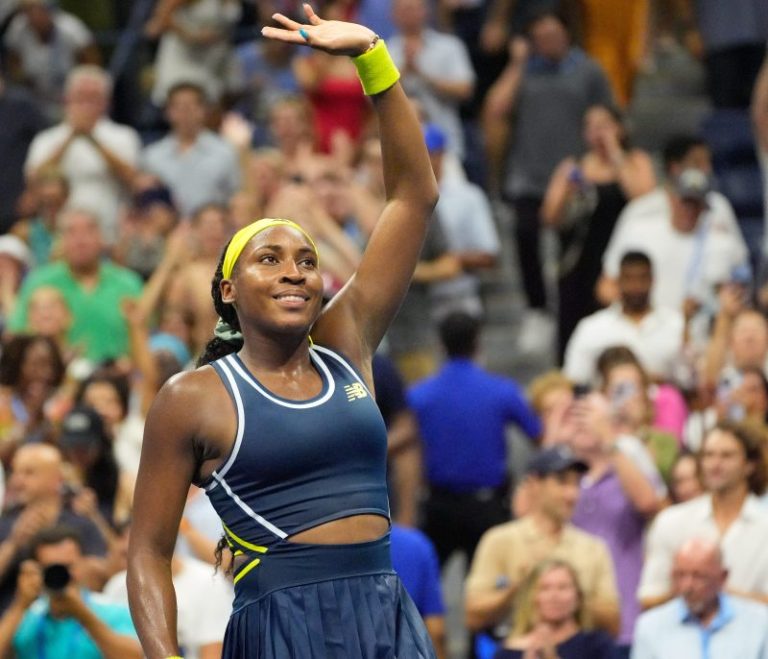
NEW YORK – Now the work really begins for Coco Gauff.

The 20-year-old defending US Open champion has taken the stance that there was more pressure on her last year to win this title, when she was playing the best tennis on the women’s tour, as opposed to this summer, when her game has been slightly off.

“I really have nothing to lose,” Gauff said in her on-court interview Wednesday after beating Tatjana Maria of Germany. “I am 20 years old, I have one under my belt and I have the potential to do more whether it happens this year or in the future.”

It’s hard to know whether Gauff has found her form in New York because the opposition through two rounds has been favorable. Despite playing scratchy tennis for much of the first set, Gauff managed to take it from Maria and then play more freely after that for a 6-4, 6-0 victory.

But things get a lot tougher starting now. In the third round, the third-ranked Gauff will face No. 27 seed Elina Svitolina, who has made a US Open semifinal and quarterfinal in her last three appearances here. Svitolina may not be quite as consistent these days as she was when she finished in the top five every year from 2017 to 2021, but her top level – and her ability to thrive in long rallies – has the potential to frustrate Gauff.

The two have only played twice, but their meeting in January ended with Gauff taking a 6-7, 6-3, 6-3 victory in a 2-hour, 23-minute Auckland final.

Here’s everything else you missed from Day 3 at the US Open:

Match of the day

Andrey Rublev, who often overheats emotionally, was calm this time. It was his body temperature that was the problem.

On the most brutal day of the US Open, with temperatures reaching 90 degrees, Rublev had tried everything from ice packs and cold air hoses to stay cool. By the time he was on the verge of winning the match – having fought from two sets down – he needed to see medical personnel and was complaining of stomach problems.

But after 4 hours, 6 minutes, Rublev had prevailed 4-6, 5-7, 6-1, 6-2, 6-2 over France’s Arthur Rinderknech, who seemingly spent all the energy he had trying to win the first two sets.

Rublev, the No. 6 seed, has made 10 Grand Slam quarterfinals – including four at the US Open – but never managed to reach a semifinal.

Upset of the day

There’s no real pattern to Barbora Krejcikova’s results. She won the French Open in 2021 but lost in the first round the next three times she played it. She had never accomplished much at Wimbledon as a singles player before winning it out of nowhere this year. And though she’s been consistently good at the Australian Open on a hard court, her US Open record is poor.

Krejcikova’s boom-or-bust year continued with a second-round loss to No. 122-ranked Elena-Gabriela Ruse of Romania, 6-4, 7-5. Though she came into the tournament carrying a thigh injury and hadn’t played since the French Open, Krejcikova was still expected to get through this match. But perhaps all the obligations she’s had since winning Wimbledon, something she talked about before the US Open, finally took their toll.

Non-upset upset of the day

Peyton Stearns, the 22-year-old former NCAA champion at Texas, feels like the kind of player who should and will be seeded at the Grand Slams but hasn’t made it there quite yet. Ranked No. 47 coming into the tournament, no seed wanted Stearns in their part of the draw and with good reason.

Daria Kasatkina, the No. 12 seed, found out why as Stearns rolled to a 6-1, 7-6 win.

Seven months ago, Kasatkina managed to eke out a three-set win over Stearns in the first round of the Australian Open. But since then, Stearns has started to find her footing on the WTA Tour, won a 250-level title in Morocco in May and recently made the quarterfinals of the WTA 1000 in Canada. She’ll face recent Olympic silver medalist Donna Vekic in the third round.

Big American clash set

With their respective victories Wednesday, Ben Shelton and Frances Tiafoe advanced to face each other Friday in the third round. Shelton, the No. 13 seed, beat Roberto Bautista Agut in straight sets, while 20th-seeded Tiafoe was dominating Alexander Shevchenko 6-4, 6-1, 1-0 when his opponent retired.

The two Americans played in last year’s US Open quarterfinals, with Shelton pulling the upset 6-2, 3-6, 7-6, 6-2.

“I’m excited,” Shelton said. “These are the type of matches I love; that I live for. To do it a little bit earlier in this draw, it still feels the same. It feels like a huge match and one that I’m really excited for. I know that the people love him here, probably more than me. He’s electric here, and his crowds are electric here. We’re good friends, and it’ll be a battle. It’ll be a war like the last two times we’ve played, but I’m more than excited to be out there with him again.”

Last year, Tiafoe was feeling the pressure of trying to repeat his semifinal run in 2022 and came out flat against Shelton. This year, the roles are reversed: Shelton is a year removed from his semifinal star turn in New York and will be considered the favorite. But Tiafoe, after playing below his standards for much of the year, has started to show signs of life in the past several weeks, starting with his close five-set loss to Carlos Alcaraz in the third round at Wimbledon.

‘It’s not easy waiting for this tournament all year,” Tiafoe said before the US Open began. “I’m so amped up. It’s circled on the calendar every year. I love these two weeks and I love playing tennis after Wimbledon in the States. There’s no better time for me.”

Serving up a statement

When you talk about the best servers in men’s tennis, American Brandon Nakashima’s name doesn’t come up too often. But the statistics say that Nakashima’s serving, at least this season, is elite.

As Gill Gross of Tennis Channel pointed out on social media, Nakashima is ranked No. 8 among the top 50 players in how often he’s held serve this year. And though his serve isn’t necessarily the hardest, he’s been able to combine good placement with the ability to finish points on the next shot after the return.

That trend has held up through two matches in New York. In Tuesday’s 6-4, 6-4, 6-2 victory over Arthur Cazaux, Nakashima only faced two break points. He saved all six break points in his dominant first-round win over Holger Rune. For the tournament, Nakashima is making 67% of his first serves and has 23 aces.

Nakashima will face No. 18 seed Lorenzo Musetti in the third round, an opponent who has been in great form lately reaching the Wimbledon semifinals and winning bronze at the Paris Olympics.

Thursday’s top matches

Two-time champion Naomi Osaka vs. last year’s semifinalist Karolina Muchova
No. 6 seed Jessica Pegula vs. Sofia Kenin, an unseeded American who won the Australian Open title in 2020
No. 7 seed Hubert Hurkacz vs. Australian Jordan Thompson

This post appeared first on USA TODAY

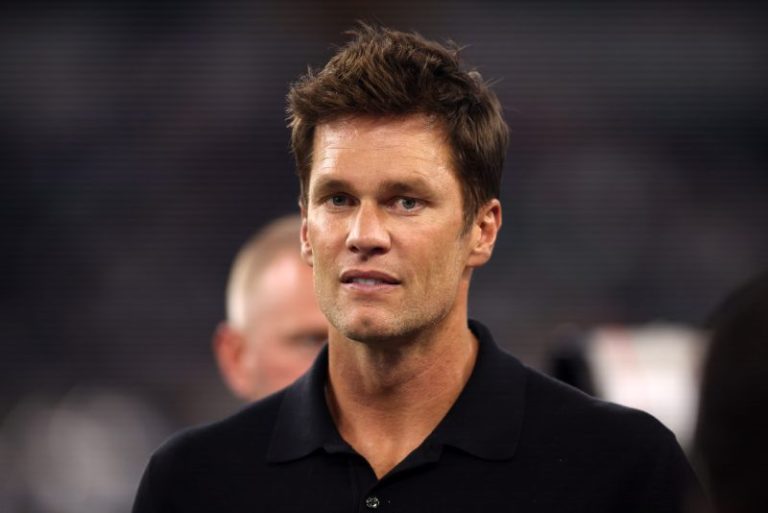
If Tom Brady does become a partial owner of the Las Vegas Raiders, it’ll make his broadcasting job quite the challenge.

In addition to being subjected to the league’s anti-gambling and tampering policy, should Brady be an owner, he will be prevented from:

Entering another team’s facility
Watching practices
Attending broadcast production meetings, in-person or virtually
Criticizing officials or teams

While Brady still will be able to call games on Fox, it would be without participating one of most critical aspects of the job. Meetings with coaches and players gives the commentary team additional insight for the contest they will broadcast. Other Fox members working with Brady would not be subjected to any of the restrictions.

NFL STATS CENTRAL: The latest NFL scores, schedules, odds, stats and more.

The limits could complicate Brady’s decision to become an owner for Las Vegas. It was first reported in May 2023 Brady was in discussions to join the the team’s ownership group, months after he retired from playing professional football. But Brady’s bid is still stuck being discussed by the league’s finance committee, the first step needed to become an official owner.

It is unknown what percentage of the Raiders franchise Brady would obtain, or how much he is paying for it. During the NFL owners meetings in Orlando in late March, an NFL owner who requested anonymity told USA TODAY Sports that he believed the conflict-of-interest question had been resolved. The owner did not want to be identified due to the sensitive nature of the issue.

Brady is set to begin the first season of his 10-year, $375 million contract at Fox alongside Kevin Burkhardt on the network’s No. 1 team. The seven-time Super Bowl winning quarterback’s first assignment will be the Week 1 matchup between the Dallas Cowboys and Cleveland Browns.

This post appeared first on USA TODAY

Venezuelan President Nicolás Maduro is turning to his friend, Russian President Vladimir Putin, to help him put down opposition to the recent outcome of the presidential election which most outside observers say was rigged.

Maduro’s claim to victory sparked widespread protests that have led to the arrests of 2,200 people, including opposition figures and journalists. 

Amid the tension, Putin sent his Baltic Fleetto a port near Caracas as opposition politicians have called on members of the military and security forces to respect the will of the people. The security forces have remained fiercely loyal to Maduro and show no signs of backing down.

Ukrainian President Volodymyr Zelenskyy recently posted on social media platform X, ‘Worrying reports of Russian Wagner mercenaries being spotted in Venezuela alongside government forces.’

Putin called Maduro to congratulate him on his win and invited him to the next BRICS summit to be held in Russia in October.

Analysts say Russia’s intervention in Venezuela’s crisis and the growing links between the two countries is a warning sign for the U.S. as Putin looks to shore up authoritarian allies and oppose U.S. policies in the Western Hemisphere.

‘Russia’s involvement in Venezuela is problematic for both the Venezuelan people and the United States,’ Jorge Jraissati, Venezuelan foreign policy expert and president of the Economic Inclusion Group, told Fox News Digital.

‘If Venezuela becomes a military hub for powers like Iran and Russia, the region will become more unstable and autocratic. This is bad for business, human rights, and security,’ Jraissati added.

Jraissati also notes that the growing presence of the Wagner Group in Venezuela highlights the involvement of Russian military contractors in activities ranging from the protection of Maduro to the gathering of corporate intelligence.

Ariel Gonzalez Levaggi, senior associate at the Center for Strategic and International Studies Americas Program, told Fox News Digital that Wagner mercenaries made appearances in Venezuela during the last presidential crisis in 2019 and are on the ground to improve presidential security and train special military forces. 

In the 2019 crisis, when the opposition-controlled National Assembly refused to recognize Maduro’s victory and opposition leader Juan Guaidó declared himself acting president, Russia sent the same S-300 Air Defense Systems to back up Maduro that were provided to help keep Bashar al-Assad in power in Syria.

Levaggi notes that even following the death of Wagner leader Yevgeny Prigozhin in 2023, the group still ‘represents a threat to the region, since not only is it used as a tool of military influence by Moscow, but it also allows for the extension of authoritarian governments in the region.’

Maduro, who has been in power since 2013 following the death of Hugo Chavez and was seeking a third six-year term, declared himself the winner on July 28 but has refused to provide the data to show that he won. The government-backed National Electoral Council said that Maduro won 6.4 million votes, and Gonzales won 5.3 million.

Venezuela’s main opposition, led by Edmundo González Urrutia released data from polling stations across the country that showed that González Urrutia received nearly 7 million votes compared to just over 3 million for Maduro.

The U.S. rejects Maduro’s claim that he won the election and recognizes González Urrutia as the official victor. 

‘Given the overwhelming evidence, it is clear to the United States and, most importantly, to the Venezuelan people that Edmundo González Urrutia received the most votes in Venezuela’s July 28 presidential election,’ a State Department spokesperson told Fox News Digital.

Secretary of State Antony Blinken, in a statement, also sent congratulations to González Urrutia and called on all Venezuelan parties to begin an inclusive and peaceful negotiated transition for the Venezuelan people.

Along with the U.S. response, the European Union has not recognized Maduro’s claim to victory and says he has not shown the necessary evidence to prove that he won the election. Leaders of regional heavyweights Brazil, Mexico and Colombia have attempted to mediate the dispute. The three leftist presidents, led by Brazil’s Luiz Inácio Lula da Silva, Colombia’s Gustavo Petro and outgoing Mexican President Andrés Manuel López Obrador, maintain friendly relations with Venezuela and generally prefer to stay out of regional affairs. The trio called on Maduro to release the election data but stopped short of saying he should step down.

So far, mediation efforts have failed, and Maduro continues his crackdown on dissent with assistance from Putin.

Moscow uses its influence in Venezuela as leverage against the U.S. and to thwart American power in the Western Hemisphere as a response to U.S. support for countries in Russia’s historic backyard, including Georgia and Ukraine. Similar to Russia’s support for Assad in Syria, Putin wants to preserve his strongman ally, Maduro, from falling to popular protests or democratic elections.

Venezuela expert Jraissati said Russia has maintained a close military relationship with Venezuela and has deployed the S-300s, Mi-35M and Mi-26 helicopters, military trainers, and Wagner mercenaries to the country. Moscow has also sent nuclear-capable Tu-160 backfire bombers over the years, and Venezuela has purchased over $20 billion worth of military equipment since 2006.

Russia’s ties to Venezuela also include close links in the energy sector, as Russia’s energy firms began establishing relations with Venezuela’s state-owned oil company, Petróleos de Venezuela, S.A. and worked on joint projects starting in the early 2000s. Russia’s state-owned Gazprom won the rights to explore for gas offshore Venezuela in 2006.

Jraissati said the U.S. approach to Venezuela needs reassessment.

‘The foreign policy approach of the Biden administration has weakened America’s global standing, including in Latin America and Eastern Europe. Doing so is essential to guarantee America’s military, commercial, and energy interests,’ he said.

This post appeared first on FOX NEWS

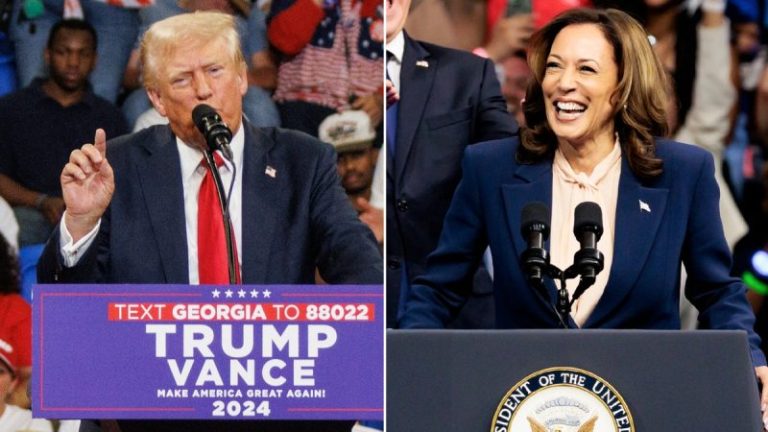
There are 68 days until Election Day on Tuesday, Nov. 5.

But if Americans vote like they did in the last two election cycles, most of them will have already cast a ballot before the big day.

Early voting starts as soon as Sept. 6 for eligible voters, with seven battleground states sending out ballots to at least some voters the same month.

It makes the next few months less a countdown to Election Day, and more the beginning of ‘election season.’

States have long allowed at least some Americans to vote early, like members of the military or people with illnesses. 

In some states, almost every voter casts a ballot by mail.

Many states expanded eligibility in 2020, when the COVID-19 pandemic made it riskier to vote in-person.

That year, the Fox News Voter Analysis found that 71% of voters cast their ballots before Election Day, with 30% voting early in-person and 41% voting by mail.

Early voting remained popular in the midterms, with 57% of voters casting a ballot before Election Day.

Elections officials stress that voting early is safe and secure. Recounts, investigations and lawsuits filed after the 2020 election did not reveal evidence of widespread fraud or corruption. 

The difference between ‘early in-person’ and ‘mail’ or ‘absentee’ voting.

There are a few ways to vote before Election Day.

The first is , where a voter casts a regular ballot in-person at a voting center before Election Day.

The second is , where the process and eligibility varies by state.

Eight states vote mostly by mail, including California, Colorado, Nevada and Utah. Registered voters receive ballots and send them back.

Most states allow any registered voter to request a mail ballot and send it back. This is also called mail voting, or sometimes absentee voting. Depending on the state, voters can return their ballot by mail, at a drop box, and/or at an office or facility that accepts mail ballots.

In 14 states, voters must have an excuse to vote by mail, ranging from illness, age, work hours or if a voter is out of their home county on Election Day.

States process and tabulate ballots at different times. Some states don’t begin counting ballots until election night, which delays the release of results.

Voting begins on Sept. 6 in North Carolina, with seven more battleground states starting that month

This list of early voting dates is for guidance only. For comprehensive and up-to-date information on voter eligibility, processes and deadlines, go to Vote.gov and your state’s elections website.

The first voters to be sent absentee ballots will be in North Carolina, which begins mailing out ballots for eligible voters on Sept. 6.

Seven more battleground states open up early voting the same month, including Pennsylvania, Georgia, Wisconsin, Michigan and Nevada.

September deadlines

In-person early voting in bold.

Sept. 6

North Carolina – Absentee ballots sent to voters

Sept. 16

Pennsylvania – Mail-in ballots sent to voters

Sept. 17

Georgia – Absentee ballots sent to military & overseas

Sept. 19

Wisconsin – Absentee ballots sent

Sept. 20

Arkansas, Montana, Nebraska, North Dakota, Ohio, Utah, Wyoming – Absentee ballots sent to military & overseas
Minnesota, South Dakota – In-person absentee voting begins
Virginia – In-person early voting begins
Indiana, Kentucky, West Virginia – Absentee ballots sent

Sept. 21

Alabama, Alaska, Colorado, Connecticut, Florida, Kansas, Massachusetts, Maryland, Michigan, New Hampshire, New York, Oregon, South Carolina, Washington – Absentee ballots sent to military & overseas
Indiana, New Mexico – Absentee ballots sent
Maryland, New Jersey – Mail-in ballots sent

Sept. 23

Mississippi – In-person absentee voting begins & absentee ballots sent
Oregon, Vermont – Absentee ballots sent

Sept. 26

Illinois – In-person early voting begins 
Michigan – Absentee ballots sent
Florida, Nevada – Mail-in ballots sent
North Dakota – Absentee & mail-in ballots sent

Sept. 30

Nebraska – Mail-in ballots sent

Oct. 4

Connecticut – Absentee ballots sent

Oct. 6

Michigan – In-person early voting begins 
Maine – In-person absentee voting begins & mail ballots sent
California – In-person absentee voting begins & mail ballots sent
Montana – In-person absentee voting begins
Nebraska – In-person early voting begins 
Georgia – Absentee ballots sent
Massachusetts – Mail-in ballots sent

Oct. 8

California – Ballot drop-offs open
New Mexico, Ohio – In-person absentee voting begins
Indiana – In-person early voting begins
Wyoming – In-person absentee voting begins & absentee ballots sent

Oct. 9

Arizona – In-person early voting begins & mail ballots sent

Oct. 11

Colorado – Mail-in ballots sent
Arkansas, Alaska – Absentee ballots sent

Oct. 15

Georgia – In-person early voting begins
Utah – Mail-in ballots sent

Oct. 16

Rhode Island, Kansas, Tennessee – In-person early voting begins
Iowa – In-person absentee voting begins
Oregon, Nevada – Mail-in ballots sent

Oct. 17

North Carolina – In-person early voting begins 

Oct. 18

Washington, Louisiana – In-person early voting begins
Hawaii – Mail-in ballots sent

Oct. 19

Nevada, Massachusetts – In-person early voting begins 
Alaska, Arkansas, Connecticut, Idaho, North Dakota, South Carolina, Texas – In-person early voting begins 
Colorado – Ballot drop-offs open

Oct. 22

Hawaii, Utah – In-person early voting begins 
Missouri, Wisconsin – In-person absentee voting begins

Oct. 23

West Virginia – In-person early voting begins

Oct. 24

Maryland – In-person early voting begins

Oct. 25

Delaware – In-person early voting begins

Oct. 26

Michigan, Florida, New Jersey, New York – In-person early voting begins 

Oct. 30

Oklahoma – In-person early voting begins 

Oct. 31

Kentucky – In-person absentee voting begins

This post appeared first on FOX NEWS

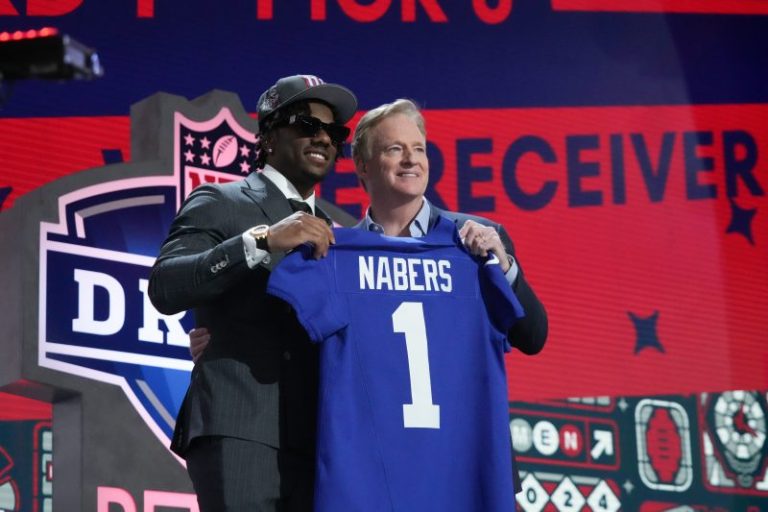
That’s notable, since the number has been retired by the team since 1935.

The Giants announced Wednesday that Nabers has received permission to don the digit from the family of the late Ray Flaherty, who was a standout end for the G-Men in the late 1920s and early 1930s. According to the team, Flaherty’s No. 1 was the first jersey number retired in pro football.

‘Thank you to the Flaherty family for allowing me to wear Number 1 for the New York Giants,’ Nabers, the sixth overall pick in the 2024 draft, said in a statement released by the team. ‘I understand the responsibility, and I will do everything in my power to honor the Flaherty family and this organization.

‘I will wear the number with great pride. Can’t wait for the season to start.’

All things Giants: Latest New York Giants news, schedule, roster, stats, injury updates and more.

Nabers wore No. 8 in college and No. 9 throughout the preseason, but both numbers already were claimed by veterans on the team (QB Daniel Jones and kicker Graham Gano, respectively). That sent Nabers searching for a new number with opening day fast approaching.

“Everybody else’s number was really taken,” Nabers said in a release from the team. “I looked into retired jerseys and No. 1 stood out. So, I asked (team owner) John Mara about it. He was like, ‘We could give it a shot.’ So, we gave it a shot.”

Mara spoke with the Flaherty family about returning the number to circulation.

‘I understood that Malik was interested in wearing No. 1, and we initially told him, ‘No, it’s been retired for many years,” Mara said in the team’s release. “Then I thought, I think we’d be willing to allow it if the Flaherty family would be agreeable to it. I spoke with Ray Flaherty Jr. a couple of weeks ago and I’ve had several conversations with him since, and they called me today to tell me that they would be agreeable to allowing Malik to wear the number.’

Flaherty, a three-time All-Pro, was also a successful coach after his playing days, leading Washington to two championships. He was inducted into the Pro Football Hall of Fame as a coach in 1976 and died in 1994 at the age of 90.

Mara said in the team’s release that No. 1 will return to retirement when ‘Malik’s career, which hopefully will last many years, is over.’

New York Giants’ retired numbers

1 – Ray Flaherty
4 – Tuffy Leemans
7 – Mel Hein
10 – Eli Manning
11 – Phil Simms
14 – Y.A. Tittle/Ward Cuff
16 – Frank Gifford
32 – Al Blozis
40 – Joe Morrison
42 – Charlie Conerly
50 – Ken Strong
56 – Lawrence Taylor
92 – Michael Strahan

This post appeared first on USA TODAY

PARIS — Under dry skies and a cool summer breeze, the Paralympic opening ceremony opened Wednesday at the Place de la Concorde.

It was quite the juxtaposition from the rainy Olympic opening ceremony that took place just over a month ago. It fit the theme for the night. 

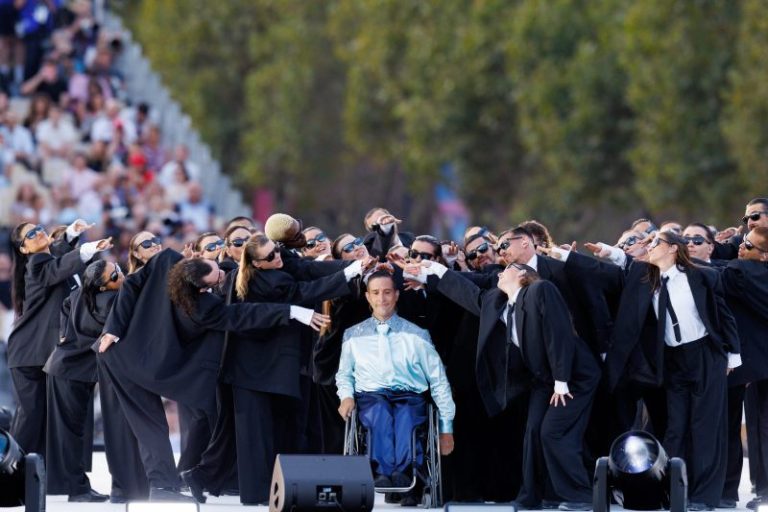
Taking place in a square formerly named Place de la Révolution, the ceremony called for a revolution in para-athletics, beginning the event with “discord” and finishing with “concord.” The almost four-hour event took those watching on a journey that focused on the inclusion of those with disability. 

The outdoor venue offered the perfect environment for the first Paralympic opening ceremony outside of a stadium, and in the heart of its host city. 

French President Emmanuel Macron declared the 2024 Paralympic Games open at 10:37 p.m. local time, 4:37 ET,  setting off the 11-day event which will feature 168 delegations and 4,400 Paralympians. From dance numbers to videos highlighting the lack of inclusion for the disabled, the opening ceremony had a wide variety of segments highlighting the 2024 theme “Paradox: From Discord to Concord.” 

2024 Paris Olympics: Follow USA TODAY’s coverage of the biggest names and stories of the Games.

There was a lot happening, and even more so to accommodate the simultaneous performances at just one site — many of which were not visible on NBC’s broadcast. So, here are five things you missed on the broadcast. 

Getting into the ceremony 

The City of Lights hosted a memorable Paralympic Games opening ceremony at the iconic Place de la Concorde and Champs-Élysées. Unlike the Olympics, the ceremony was a free public event to honor the Games’ mission of inclusivity and accessibility.

The inclusivity did come with a couple of hiccups. Spectators had long, chaotic lines getting through security to enter the outdoor venue. As the ceremony continued, the stands continued to fill with 15,000 spectators while 35,000 people filled the square. 

On stage, the event was a visually stunning spectacle. Artistic director Thomas Jolly and creative director Alexander Ekman crafted a program meant to reflect not only the culture of the home country but also to embrace the place that those with disabilities have in society. 

The entrances between some of the artists and the spectators varied. 

As performers filed in, NBC viewers saw a video of former Paralympian and TV actor Théo Curin carlifting other Paralympians on his journey to the ceremony, all of whom were French.  

Sporting a red Toyota covered with replicas of the Paralympic mascot “Phryge,” Curin swept into the outdoor venue and left the same way he came — down a street toward the Bassin Octogonal. 

After he left, there was a jarring shift in music before the red car returned about 14 minutes into the show, dropping off artist Christine and the Queens.

Fans get to interact with athletes

Not featured for the majority of the broadcast was the fans’ interactions with athletes as they went through the parade. 

The Brazilian supporters were especially boisterous. The athletes started the wave with the fans and played off the visiting crowd’s energy as they entered. Canada and Denmark’s delegation also had fun interacting with fans during the parade of athletes. 

The home-country France, of course, received the loudest ovation when they entered the stadium to a spirited rendition of Les Champs-Elysees as the crowd welcomed their own. 

All-in-all, the night felt like a large festival environment for the attendees. Fans danced with one another in the stands and participated in chants and songs throughout the almost four-hour ceremony. 

Turning over sets 

Unlike the Olympics, where performances unfolded across different venues, the Paralympic opening ceremony required coordination behind the scenes to transform sets and move on to the next act. 

While the fans and cameras were focused on the display of red, white and blue smoke from French flyer jets that enveloped the arena, an army of volunteers quickly swept away debris and dust left over from the spectacle.

The props and scenery also required a lot of work out of sight to make sure the event ran smoothly. Performers went behind the stage to quietly grab canes while the show on the main stage continued — unbeknownst to the viewer. There were also officials along the sides of the venue who made sure performers were able to get in and out of the stage with little slowdown.

Athletes exit after parade 

Members of the American delegation passed up their seats following the parade, opting for the exit. When you view the Paralympic schedule, the option to leave makes sense. 

The Paralympics get started with para-badminton at 8:30 a.m. local time, a pretty tight turnaround from the opening ceremony that was pushing midnight. The Americans weren’t alone. 

Several countries begin play early in the morning, and the Chinese delegation had more open seats than when the parade began. 

Where’s the torch? 

For most in the outdoor venue, the NBC broadcast displayed on circular screens offered helpful views. Once the cauldron — which also lit up the skies during the Olympic Games — took flight on Wednesday, it was the only time many in the venue could see it. 

As the broadcast concluded, fans saw a celebratory scene to cap off the successful night of ringing in the Paralympic Games.

This post appeared first on USA TODAY