Archive

2024

Browsing

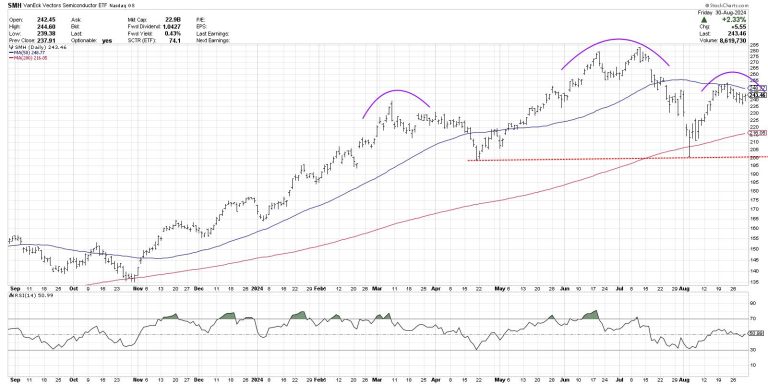
After Nvidia (NVDA) dropped after earnings this week, investors are once again reminded of the importance of the semiconductor space. I think of semis as a “bellwether” group, as strength in the VanEck Vectors Semiconductor ETF (SMH) usually means the broader equity space is doing quite well. Today, we’ll look at a potential topping pattern forming for the SMH, what levels would confirm a top for semiconductors, and what weakness in this key group could imply for our equity benchmarks.

Presenting the Dreaded Head-and-Shoulders Top Pattern

Ralph Edwards and John Magee, in their classic text Technical Analysis of Stock Trends, laid out the analytical process for defining a head-and-shoulders top. I’ve found that any price pattern like this consists of three important phases.

First, we have the “Setup” phase, where the price action begins to take on the appearance of a certain phase. This is when your brain tells you, “This is definitely a head and shoulders topping pattern.” In this case, we’re looking for a significant high surrounded by two lower highs, creating the appearance of a head and two shoulders.

We can clearly observe the setup phase on the chart of the SMH, with the June and July highs forming a somewhat nontraditional, but still valid, head. The lower peaks in March and August complete the picture. It’s worth noting here that, in each of those peaks, we can see a bearish engulfing pattern, serving as a wonderful reminder for longer-term position traders: ignore candle patterns at your own risk!

What Would Confirm This Topping Pattern for Semis?

But the setup phase only means there is a potential pattern forming here. Next we need the “trigger” phase, where the price completes the pattern by breaking through a key trigger level on the chart. For a head-and-shoulders top, that means a break below the neckline, formed by drawing a trendline connecting the swing lows between the head and two shoulders.

Using the bar chart above, that would suggest a neckline around $200, over $40 below Friday’s close. Another school of thought involves looking at closing prices only, for a cleaner perspective and more simple measurements.

Using closing prices, we get an upward-sloping neckline which currently sits just below the 200-day moving average around $215. In either case, until we break below neckline support, this is not a valid head-and-shoulders topping pattern. The third phase, which I call the “confirmation” phase, involves some sort of follow-through beyond the breakout level. This could mean another down close after the break, or perhaps a certain percentage threshold below that support level. And once all three phases are complete, then we have a valid topping pattern.

Gauging Potential Broad Market Impact

So let’s assume that semiconductors do indeed complete the topping pattern. What would that mean for the broader equity landscape?

As of Friday’s close, the SMH is up about 38.2% year-to-date. That compares to the S&P 500 (SPY) at +18.9%, the Nasdaq 100 (QQQ) with +16.2%, and the equal-weighted S&P 500 (RSP) at +12.1%. So semiconductors have certainly been a stronger leadership group in 2024. But what about since the July market peak?

Now we can see that, while the S&P 500 is almost back to its July peak, the Nasdaq is still 4% below that day’s close and semis are a full 11% below the market peak in July. And the equal-weighted S&P 500 is actually above its July peak already, speaking to the strength that we’ve observed in non-growth sectors off the early August low.

There is no doubt that semiconductors are looking a bit vulnerable after Nvidia’s earnings this week. But given the strength that we’re seeing outside of the semiconductor space over the last two months, weakness in the SMH does not necessarily mean weakness for stocks. Remember that it’s always a good time to own good charts!

RR#6,

Dave

P.S. Ready to upgrade your investment process? Check out my free behavioral investing course!

David Keller, CMT

Chief Market Strategist

StockCharts.com

Disclaimer: This blog is for educational purposes only and should not be construed as financial advice. The ideas and strategies should never be used without first assessing your own personal and financial situation, or without consulting a financial professional.

The author does not have a position in mentioned securities at the time of publication. Any opinions expressed herein are solely those of the author and do not in any way represent the views or opinions of any other person or entity.
In this StockCharts TV video, Mary Ellen reviews the broader markets, including NASDAQ weakness, and the outperformance in the equal-weighted S&P 500. She examines NVDA and shares how you should trade the stock depending on your investment horizon. Last up, Mary Ellen reveals top stocks in leadership areas.

This video originally premiered August 30, 2024. You can watch it on our dedicated page for Mary Ellen on StockCharts TV.

New videos from Mary Ellen premiere weekly on Fridays. You can view all previously recorded episodes at this link.

If you’re looking for stocks to invest in, be sure to check out the MEM Edge Report! This report gives you detailed information on the top sectors, industries and stocks so you can make informed investment decisions.

Athletes, in increasing numbers, across all sports, are beginning to vocalize something about gamblers, and everyone should pay close attention. Athletes feel sports leagues’ close association with gambling companies has created a dangerous environment. A violent one. A threatening one.

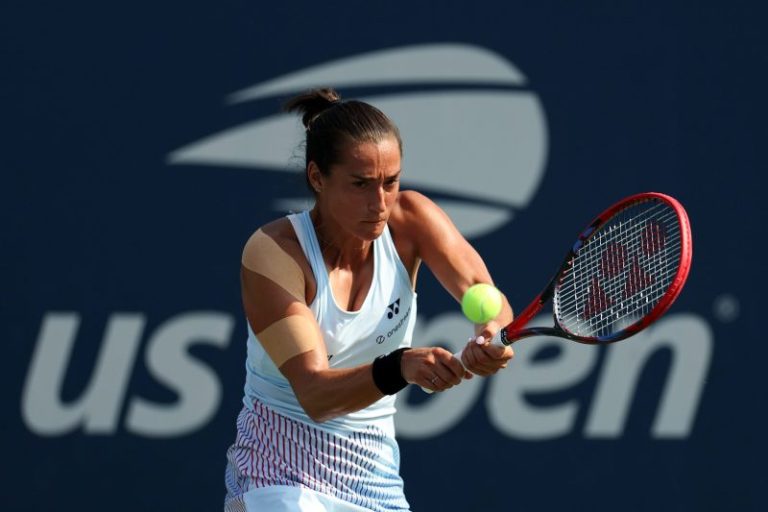
Few have expressed what that danger represents better than tennis star Caroline Garcia just did. She posted on X about the impact of what she called ‘unhealthy betting.’

What Garcia said, and what others have as well, including Charlie Baker, president of the NCAA — whose comments on the impact of gambling on the mental health of college athletes flew totally under the radar — are critical. They state what many of us have believed for some time: That the unencumbered embrace of gambling by sports leagues would lead to massive financial profit but also disastrous consequences for the athletes themselves.

That was Garcia’s point (more on that in a moment) and she is far from alone in believing that.

Over the past few months, there’s been a trail of interviews showing how huge the problem is, but they have been more like spots dotting the landscape, people not seeing the pattern, but they all serve as proof of the ugliness athletes face, and may for some time.

Baker, for example, spoke in April about the vitriol college athletes face when it comes to betting.

“It’s probably the No. 1 issue I’ve heard student-athletes I’ve talked to, talk to me about,’ Baker said, ‘which is the harassment and beatdown that comes not only from the betting community but also their own school mates.”

In June, USA TODAY Sports’ Bob Nightengale wrote an excellent and stunning story about the abuse some MLB players receive because of gambling, particularly following the league’s pairing with gambling companies, and how they fear for their safety.

‘You hear it all, man,’ Arizona Diamondbacks closer Paul Sewald told USA TODAY Sports. ‘You blow a save, you don’t come through, you get it all. “(Expletive) you. You suck. You cost me all of this money. (Expletive) you. (Expletive) your family. I’m going to kill you and then kill your family.’

‘It gets ugly really quickly. It’s scary, and it’s sad. It used to be fans who were upset because you blew the game for the team, but now it’s gambling. These people don’t really care about the Diamondbacks. They just care about their bets, and we’re talking about money they don’t have that they are losing. So, it’s a very scary spot.’

One MLB general manager told Nightengale that he received credible death threats that led to police protection at his home.

‘I remember being followed home one time when I was playing for Cleveland,’ Diamondbacks reliever Logan Allen said. ‘I had a really bad game, and this guy follows me home, and starts cussing at me, telling me I cost him all of this money. It’s scary.’

Tennis player Jessica Pegula, when responding to Garcia’s social media post about the abuse, wrote: ‘Yep. The constant death threats and family threats are normal now. Win or lose.’

Said Coco Gauff: ‘You could be having a good day, and then somebody will literally tell you, ‘Oh, go kill yourself.’ You’re like, ‘OK, thanks.”

Some of this is just the normal vile abuse athletes get. What’s also happening is that athletes are abused and threatened so much by gamblers now, it’s all just normal.

There’s no definitive study (at least that I’m aware of) that shows what it was like for athletes, say, 10 years ago, versus now. Anecdotally, however, this is perhaps one of the worst threat environments when it comes to gambling that we’ve ever seen for athletes.

‘You get some messed up stuff, a lot of nasty DMs (direct social media messages),’ San Francisco Giants ace Logan Webb told Nightengale. ‘People are really passionate about teams, and now that you add money to it, it’s bigger than ever. My first year, there wasn’t that much gambling going on. It was just, ‘Oh, you suck. You shouldn’t be on the team.’ Just things like that.

‘Now, you’re getting, ‘You just cost me money.’ They say some (messed) up (expletive). I get a lot of that with strikeouts. ‘Hey, I got money on you for strikeouts. Are you going to hit it?’ I always look up and say, ‘Probably not.’ There are times it gets pretty serious.’

This all leads to what Garcia said. This was the key part of her post on X:

‘Tournaments and the sport keeps partnering with betting companies, which keep attracting new people to unhealthy betting,’ Garcia wrote. ‘The days of cigarette brands sponsoring sports are long gone. Yet, here we are promoting betting companies, which actively destroy the life of some people.’

She added: ‘Don’t get me wrong, I’m not saying they should be banned as people are free to do whatever they want with their money. But maybe we should not promote them. Also, if someone decided to say this things to me in public, he could have legal issues. So why online we are free to do anything? Shouldn’t we reconsider anonymity online?’

Absolutely yes and sports leagues should do something else: Better protect their players.

Because it is extremely ugly for them.

This post appeared first on USA TODAY

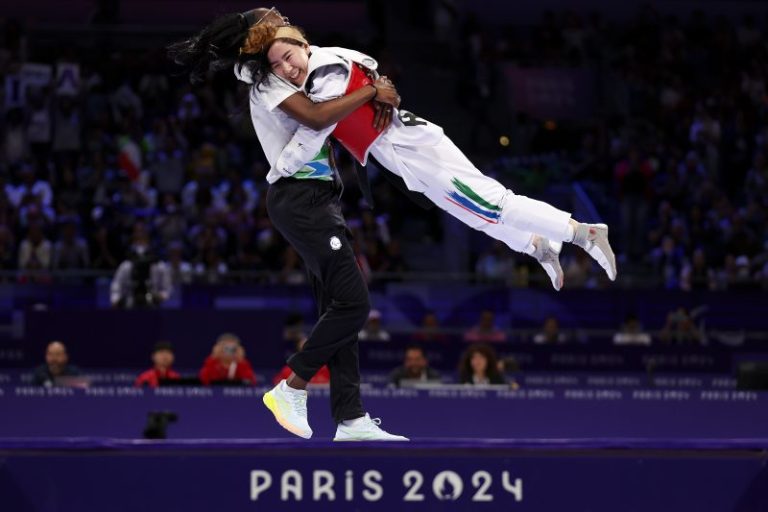
Overwhelmed with joy, Zakia Khudadadi threw herself and her equipment into the air as she celebrated making history Thursday by winning the Refugee Team’s first medal at a Paralympic Games. 

Originally from Afghanistan, Khudadadi, 25, won the bronze medal in the women’s taekwondo K44 -47kg category at the Grand Palais in Paris after defeating Turkey’s Nurcihan Ekinci.

‘I went through so much to get here,’ Khudadadi told reporters after her victory. ‘This medal is for all the women of Afghanistan and all the refugees of the world. I hope that one day there will be peace in my country.’

Khudadadi competed for Afghanistan at the 2021 Tokyo Paralympics, where she reached the Round of 16. Khudadadi and fellow Afghan athlete Hossain Rasouli narrowly escaped the Taliban’s 2021 takeover of Afghanistan to compete in Tokyo following what International Paralympic Committee President Andrew Parson described as a ‘major global operation’ to clandestinely evacuate the pair to France.

Khudadadi secretly started taekwondo as a child at a gym in her hometown of Herat, Western Afghanistan, according to the Associated Press.

2024 Paris Olympics: Follow USA TODAY’s coverage of the biggest names and stories of the Games.

The Taliban have since banned women from sports and areas of public life. 

‘For me, the bronze, it’s like gold because I come to France. Before I am in Afghanistan and in Afghanistan it’s not possible (to do) the sport,’ Khudadadi told Olympics.com after her win.

Khudadadi now lives and trains in Paris. She had the support of a lively home crowd that held up ‘Zakia’ signs and cheered as she took a victory lap with her French coach Haby Niare, who won a silver medal in Rio.

‘I won because of the great support from the crowd,’ Khudadadi said.

UN High Commissioner for Refugees Filippo Grandi awarded the medals at the victory ceremony.

‘This historic win for the Refugee Paralympic Team embodies the power, determination and grit of Zakia and her fellow refugees,’ Grandi said.

‘Standing on the podium tonight, she represents 120 million people forcibly displaced worldwide,’ Grandi added. ‘Zakia is a role model for us all. Despite the challenges she has faced, she has become a Paralympic medalist achieving the highest pinnacle of sporting success. The night is hers!’

The Refugee Olympic and Paralympic teams have competed in every edition of the Games since Rio 2016. Paris 2024 also saw the Refugee Olympic Team win its first medal as Cindy Winner Djankeu Ngamba took home bronze in the 75kg class of women’s boxing earlier this month. 

This post appeared first on USA TODAY

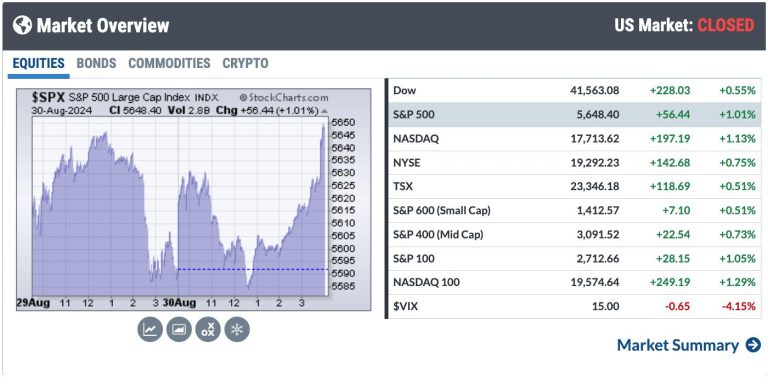
It’s a quiet end to August, with the broader stock market indexes wavering higher and lower. The Market Overview panel on the StockCharts Dashboard shows equity indexes closing higher. And yes, the Dow Jones Industrial Average ($INDU) closed at a record high.

FIGURE 1. MARKET OVERVIEW PANEL IN THE STOCKCHARTS DASHBOARD. All broader indexes were up on Friday.Image source: StockCharts.com. For educational purposes.

Stock Market Outlook

With August behind us, we now prepare for one of the worst months in the stock market. PCE data came out today, and it was pretty much in line with estimates. This means an interest rate cut in the next FOMC meeting is pretty likely. The Fed’s next meeting isn’t until September 18, and, given historical seasonality patterns, don’t expect too much upside in the first half of the month.

FIGURE 2. SEASONALITY CHART OF THE S&P 500 INDEX ($SPX). September is usually a weak month for large-cap stocks. Image source: StockCharts.com. For educational purposes.

The seasonality chart for the S&P 500 shows that August typically sees a 1% rise in the index. In 2024, the index’s performance was slightly higher, with a 2.28% rise. September looks dismal, but this is an election year, so things may turn out differently.

The S&P 500 has recovered from its August pullback, breaking a downtrend line (see chart below). Since then, the index has been trading sideways, refusing to reach its July 16 all-time high. Yet it’s trading above its 21-day exponential moving average, which is trending up.

FIGURE 3. DAILY CHART OF S&P 500 INDEX. The index is trading sideways, close to its all-time high. The Stochastic Oscillator indicates that momentum is slowing slightly.Chart source: StockCharts.com. For educational purposes.

The stochastic oscillator is displaying some slowdown in momentum, as the oscillator shows a slight decline amidst the relatively flat movement in the S&P 500.

More interesting is the S&P 500 Equal Weighted Index ($SPXEW), which hit all-time highs. The relative strength index (RSI) and moving average convergence/divergence (MACD) indicate there could be room to rally. This suggests that investors are rotating out of the mega-cap stocks and into smaller-cap ones.

FIGURE 4. WEEKLY CHART OF S&P 500 EQUAL-WEIGHTED INDEX. The index is at a new all-time high. The RSI and MACD indicate there’s room for more upside move.Chart source: StockCharts.com. For educational purposes.

This begs the question of how mid-cap stocks perform. The daily chart of the S&P 500 Mid Cap Index ($MID) shows that mid-caps are trading sideways, but the index is close to its all-time highs, which happen to be close to the upper end of the trading range.

FIGURE 5. S&P 500 MID-CAP INDEX ($MID). The index is trading sideways but is trading close to the top of the range. Market breadth is also expanding, favoring bulls.Chart source: StockCharts.com. For educational purposes.

Market breadth in the mid-caps looks to be broadening, with 73.25% of mid-cap stocks trading above their 50-day simple moving average. The advancers also outnumber the decliners.

You’ll likely find a similar situation with the S&P 600 Small Cap Index ($SML).

Stockchart Tip!

Click the above chart of $MID and change the symbol to $SML. Voila! You’ll get an updated chart specific to $SML.

So, which stocks in the mid and small-cap asset class should you focus on? This is when it helps to revert to the seasonality chart. Going through all the sector ETFs, Energy, and Utilities tend to be the leaders in September. Out of the two, the chart of Utilities Select Sector SPDR (XLU) shows a well-defined trend.

CHART 6. DAILY CHART OF XLU. Utilities have been in a sharp uptrend. The RSI and MACD indicate there’s room for more upside. Chart source: StockCharts.com. For educational purposes.

All moving averages overlaid on the chart are trending higher. The RSI and MACD also support the upward trend.

Closing Bell

So, while large-caps typically decline in September, it makes sense to consider investing a portion of your portfolio in mid and small-cap utility and energy stocks.

On Your Dashboard, click the Sector Summary link (bottom right of Sector Summary panel).Select One Month from the Period dropdown menu.Click Utilities Sector Fund in the Name column.Click the name of the top-performing Industry within the sector.Sort the columns by Universe (U column) by clicking the up and down arrows to the right of U.Scroll down to the mid-cap stocks and analyze away.

Enjoy your Labor Day weekend, and be ready for market action to resume on Tuesday.

End-of-Week Wrap-Up

S&P 500 closed up 0.24% for the week, at 5648.40, Dow Jones Industrial Average up 0.94% for the week at 41,563.08; Nasdaq Composite closed down 0.92% for the week at 17713.62$VIX down 5.42% for the week closing at 15Best performing sector for the week: FinancialsWorst performing sector for the week: TechnologyTop 5 Large Cap SCTR stocks: Insmed Inc. (INSM); FTAI Aviation Ltd. (FTAI); Carvana Co. (CVNA); SharkNinja, Inc. (SN); Tenet Healthcare Corp. (THC)

On the Radar Next Week

Aug ISM Manufacturing PMIAug S&P Global Services PMIAug ISM Services PMIAug Non Farm PayrollsFed Beige Book

Disclaimer: This blog is for educational purposes only and should not be construed as financial advice. The ideas and strategies should never be used without first assessing your own personal and financial situation, or without consulting a financial professional.

It’s All Still Relative

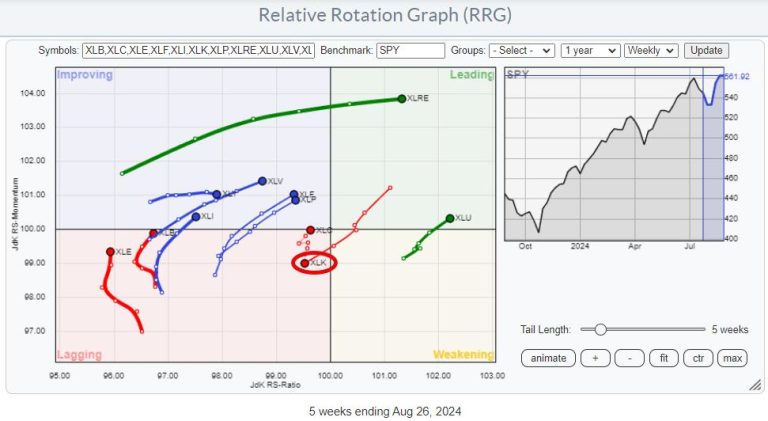
The weekly Relative Rotation Graph, as it looks toward the close of this Friday (8/30) shows a clear picture — out of Technology, into everything else.

Simple enough, right? However, this is a relative comparison, so it only tells us whether a sector is in a relative up- or downtrend or whether its relative trend is improving or weakening. This means that when SPY starts to move lower, these sectors will likely outperform SPY, but their prices will still go down.

When just looking at the JdK RS-Ratio value as a gauge, there are only two sectors on the right-hand side of the graph with a reading above 100. These are Real Estate and Utilities. All other sectors are below 100 on the RS-Ratio scale and, therefore, technically still in a relative downtrend vs. SPY.

However, except for XLK, all these other sectors are on a positive RRG-Heading, between 0 and 90 degrees, which is a positive takeaway. There is still a risk that these tails may roll over while still inside the improving quadrant and continue their relative downtrend, but XLV, XLF, and XLP are looking especially strong, as they are getting close to crossing over into the leading quadrant.

XLY, XLI, XLB, and XLE are still too low on the RS-Ratio scale for consideration, imho.

SPY is Hitting Resistance

SPY pushing against resistance is creating an interesting situation. 565 is clearly a very important overhead resistance level for SPY. Only when this barrier can be convincingly broken will there be new upside potential for SPY to continue the longer-term uptrend. However, it is questionable whether SPY can break that barrier without the help of the technology sector. At the end of the day, that is now more than 30% of the total market capitalization of the S&P 500.

Over the last few weeks, SPY started to trade in a range between 555 and 565. When 555 gives way to the downside, significant downside risk will be unlocked, targeting the recent gap area between 545-548, followed by intermediate support around 537.5-540 and then 510, which is the level of the last major low.

Given the importance of the tech sectors in the current environment, I see the risk of a break below 555 as greater than the potential of a break above 565.

Semis / Tech Are Key

So, the tech sector, and especially the group semiconductors, will play an important role in the coming weeks to determine the faith direction of the general market.

This RRG shows the members of the Technology sector. The big elephant NVDA is clearly visible inside the weakening quadrant and rotating toward the lagging quadrant at a negative RRG-Heading.

The semiconductors and semiconductor equipment group is now the largest industry inside the technology sector, weighing more than 40%. NVDA itself is now the second-largest stock in the technology sector, with a weight of 20%. So when it moves, it moves, making the industry and the sector move.

NVDA is BIG, But Not the Only Semiconductor Stock

When I isolate the semiconductor stocks on the RRG, we see this image:

Most of these stocks are moving in the same direction as NVDA, on a negative RRG-Heading, weighing in on the industry and then on the sector. However, this is an extremely important group of stocks that deserves at least a minimal allocation in each portfolio “just in case it all turns around and starts to go up again.” From that perspective, it makes sense to look for alternatives as long as NVDA is rotating on a negative heading, digesting its recent gains and relative outperformance.

Searching for stocks on a positive RRG-Heading provides a few potentials.

Combining the positions on the RRG and looking at the individual charts. MPWR and TXN could be interesting alternatives if NVDA maintains its negative RRG-Heading.

#StayAlert and have a great weekend. –Julius

Financial sector stocks are at an all-time high, fueled partly by earnings beats, a favorable and higher interest rate environment, and sector sentiment. Investors are seeing value buying opportunities in many beaten-down financial stocks. Should you follow their lead?

According to Fed Chief Powell’s latest remarks, rate cuts are on the horizon. Lower interest rates can cut both ways, narrowing net interest margins and pressuring bank earnings while boosting the broader market and lifting stocks, including financials.

When navigating such fundamental uncertainty, it helps to step back and consider the broader patterns at play. Consider seasonal trends and how technical price action might inform your short-term strategy. Let’s start with seasonality.

5-Year Seasonality Chart of XLF

The StockCharts seasonality chart can help you identify how XLF performs each month and the average price change (see below).

CHART 1. FIVE-YEAR SEASONALITY PROFILE FOR XLF. Note September’s negative performance.Chart source: StockCharts.com. For educational purposes.

The numbers above the bar signify the percentage of higher closes. The numbers at the bottom of each bar signify the average % return for the time period being analyzed — in this case, five years.

Key points from the XLF seasonality chart are as follows:

September is the worst month for XLF, averaging zero higher closes over the last five years with a return of -4%.October, November, and December make up XLF’s strongest quarter with a higher-close rate of 50% and 75% and an average return of 4%, 7.2%, and 2.4%, respectively.

That’s the seasonality profile over the last five years, and the recent economic environment weighs in heavily on the data. But what happens if you zoom out to 10 years, which includes economic activity before the pandemic and inflationary pressures that shaped the last five years?

10-Year Seasonality Chart of XLF

CHART 2. 10-YEAR SEASONALITY PROFILE FOR XLF. September’s still a doozy.Chart source: StockCharts.com. For educational purposes.

Accounting for the sector activity before the economic challenges that came about during and after the pandemic, you can see that September is still an awful (though not the worst) month for XLF, raking in an average return of -1.6% with a higher-close rate of only 22%.

Like the five-year profile, October through December still comprises the strongest quarter, with November standing out as the strongest month with an 89% higher close rate and an average return of 6.2%.

Looking at these seasonality profiles, should you anticipate September’s weakness as a potential bullish setup for a strong fourth quarter?

Financials—A Sector Breadth Perspective

It helps to analyze the financial sector in terms of breadth and assess how many financial stocks within the ETF are participating in the uptrend versus those that aren’t. Below is a chart of the S&P Financial Sector Bullish Percent Index ($BPFINA) and XLF.

CHART 3. S&P FINANCIAL SECTOR BULLISH PERCENT INDEX. This indicator is entering oversold territory but can remain above 70 for an extended period if XLF continues trending higher.Chart source: StockCharts.com. For educational purposes.

StockCharts Tip!

To recreate the chart, click on the above chart or follow these steps.

Enter the symbol, in this case $BPFINA, in the symbol box. Select your preferred chart settings, such as chart style, time frame, log scale, etc. Enter horizontal line overlays using different parameters, i.e., 70, 50, and 30. Under Indicators, select Price from the dropdown menu, enter XLF in the parameters box, and position it above, below, or behind the BPI.

As XLF continues to trend higher (see price chart above the BPI chart), the financial sector as a whole is also entering overbought territory, according to the Bullish Percent Index (BPI).

Generally, a BPI line above 50% favors the bulls, while below 50% favors the bears. However…

A rise from below 30% (oversold) indicates potential bullishness.A decline from above 70% (overbought) suggests bearishness.

If the seasonality trend plays out, what might you anticipate in the weeks ahead? Let’s shift to the daily chart of XLF.

A Closer Look at XLF’s Daily Price Action

CHART 4. DAILY CHART OF XLF. No signs of stopping, yet note the divergence in CMF momentum.Chart source: StockCharts.com. For educational purposes.

In a nutshell:

XLF shows no sign of slowing, yet the near-term surge is going parabolic.The Chaikin Money Flow (CMF) shows that buying pressure is picking up, but note the divergence between it and the price trend, suggesting that momentum may or may not be sufficient to fuel a continued rise.Price is hugging and nearing the top of the Bollinger Bands; price tends to revert back toward the middle, which, coincidentally, will likely meet the “kumo” level of the Ichimoku Cloud indicator.

In short, it’s a wait-and-see moment. XLF’s entry into overbought territory, coupled with declining momentum, aligns with the seasonal tendency for September’s weakness. If a dip occurs and the fundamentals remain stable, a pullback toward the middle Bollinger Band or the “cloud” could present a strong buying opportunity.

Closing Bell

XLF is riding high (like, very high), but with September’s seasonal weakness and its low-momentum entry into overbought territory, it’s important to remain cautious. Keep an eye on how financial stocks perform in the coming weeks. If the anticipated dip happens and fundamentals stay solid, this could be your chance to buy in before the expected Q4 strength kicks in.

Be sure to save XLF in one of your StockCharts ChartLists.

Disclaimer: This blog is for educational purposes only and should not be construed as financial advice. The ideas and strategies should never be used without first assessing your own personal and financial situation, or without consulting a financial professional.

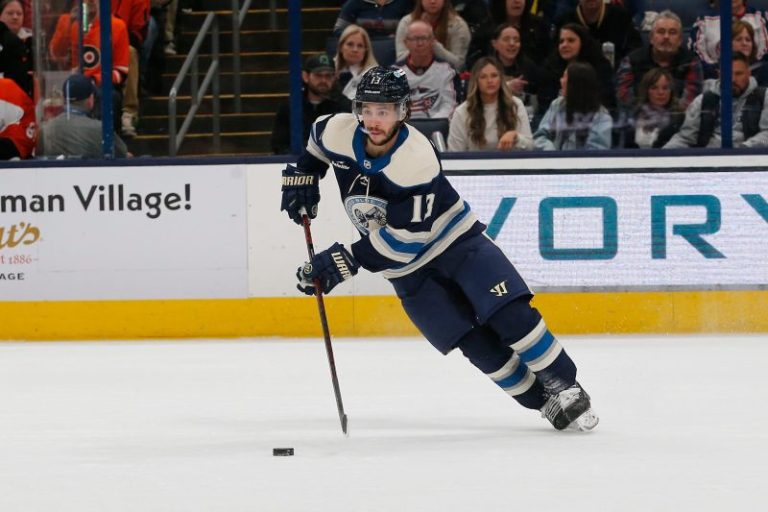
A suspected drunk driver has been charged in connection with the death of Columbus Blue Jackets star forward Johnny Gaudreau and his brother.

Johnny, 31, and Matthew, 29, were both killed while biking Thursday night in Oldmans Township, New Jersey. Sean Higgins, 43, was arrested on suspicion of driving while under the influence of alcohol and brought to Salem County Correctional Facility. State police said it charged Higgins, from Woodstown, New Jersey, with two counts of vehicular homicide in connection to the brothers’ death.

Officials have not yet indicated when Higgins will make his first court appearance.

Here’s what we know so far about the incident.

Driver admitted to being drunk, police report says

A police affidavit of probable cause stated that the trooper who responded to the scene ‘detected the strong odor of an alcoholic beverage emanating from (Higgins’) breath.’ The report also said that Higgins failed a sobriety test at the scene and that he later admitted to consuming five to six beers before the accident, saying the alcohol ‘contributed to his impatience and reckless driving.’

What happened to Johnny Gaudreau?

Johnny and Matthew Gaudreau both died in a bike accident after being hit by a suspected drunk driver while riding their bikes down a country road in Salem County, New Jersey, near their family hometown.

The Gaudreau brothers were riding their bikes on County Route 551 North when they were allegedly struck by Higgins from behind, according to the New Jersey State Police.

Higgins was driving a Jeep Grand Cherokee northbound behind a sedan, SUV and the Gaudreau brothers around 8:20 p.m. on Thursday evening, police said. According to state troopers, Higgins initially moved into the southbound lanes and passed the slower-moving sedan. The SUV in front of Higgins then moved to the middle of the road to safely pass the biking Gaudreau brothers on the right side of the road. However, Higgins then attempted to pass the SUV on the right, hitting Johnny and Matthew Gaudreau from behind and fatally injuring both brothers, according to the highway patrol.

Johnny Gaudreau planned to attend sister’s wedding Friday

Johnny and Matthew Gaudreau were in town because they planned to be groomsmen at their sister Katie Gaudreau’s wedding Friday in Philadelphia, according to their sister’s wedding website. Meredith Gaudreau, Johnny’s wife, was scheduled to be the maid of honor. According to Katie Gaudreau’s Instagram account, a rehearsal for the wedding was held Thursday evening – hours before the brothers’ death.

Blue Jackets statement on Johnny Gaudreau’s death

‘The Columbus Blue Jackets are shocked and devastated by this unimaginable tragedy. Johnny was not only a great hockey player, but more significantly a loving husband, father, son, brother and friend. We extend our heartfelt sympathies to his wife, Meredith, his children, Noa and Johnny, his parents, their family and friends on the sudden loss of Johnny and Matthew. Johnny played the game with great joy, which was felt by everyone that saw him on the ice. He brought a genuine love for hockey with him everywhere he played, from Boston College to the Calgary Flames to Team USA to the Blue Jackets.

‘He thrilled fans in a way only Johnny Hockey could. The impact he had on our organization and our sport was profound, but pales in comparison to the indelible impression he made on everyone who knew him. Johnny embraced our community when he arrived two years ago and Columbus welcomed him with open arms. We will miss him terribly and do everything that we can to support his family and each other through this tragedy. At this time, we ask for prayers for the Gaudreau family and that their privacy be respected as they grieve.’

A Blue Jackets spokesman said the team will not be making any further comments until a later date.

Flames statement on Johnny Gaudreau’s death

Gaudreau was drafted by the Calgary Flames in the fourth round of the 2011 NHL draft, and he played his first nine seasons with them.

‘It’s with great sadness, we mourn the tragic deaths of our friend Johnny Gaudreau and his brother Matthew Gaudreau. Our hearts are broken by this devastating loss. Johnny was and always will be a member of the Flames family and loved by all of Calgary.

‘It was our privilege to call Johnny our teammate for nine amazing years in Calgary. He came to Calgary as a young man and grew up here, not only as a superstar on the ice, but also a beloved member of our community. The pain we feel for Johnny’s wife Meredith, children Noa and Johnny, parents Jane and Guy, sisters Kristen and Katie, and the entire Gaudreau family is immense.

‘Ownership, management, players, and staff of the Calgary Flames express our heartfelt sympathies during their time of sorrow. You are in our thoughts and prayers.’

NHL Commissioner Gary Bettman statement on Johnny Gaudreau’s death

‘The National Hockey League family is shocked and saddened by the tragic passing of Columbus Blue Jackets forward Johnny Gaudreau and his brother Matthew. While Johnny’s infectious spirit for the game and show-stopping skills on the ice earned him the nickname ‘Johnny Hockey,’ he was more than just a dazzling hockey player; he was a doting father and beloved husband, son, brother and teammate who endeared himself to every person fortunate enough to have crossed his path.

‘Gaudreau often told the story of how his father taught him to skate as a child in his home state of New Jersey and he carried that same youthful passion throughout his 11 NHL seasons. A skilled playmaker, Gaudreau participated in the NHL All-Star Game seven times where he was always a fan favorite, particularly while showcasing his talents in the various skills competitions for which he was so well suited.

‘He will be remembered fondly in Calgary, where he played his first nine seasons with the Flames from 2013-14 to 2021-22, emerging as one of our League’s brightest young stars while compiling the franchise’s fifth-highest career points total. His loss also will be felt profoundly in Columbus, the city in which he chose to settle his family and where he was one of the respected, veteran leaders of a club building toward the playoffs. And both Johnny and Matthew will be mourned at Boston College, where they were teammates the year Johnny won the Hobey Baker Award in 2013-14, and at Gloucester Catholic High School in New Jersey, where both played and where Matthew was the head hockey coach following his own five-year pro playing career.

‘We send our most heart-felt condolences to his wife Meredith; their children, Noa and Johnny; his parents, Guy and Jane; and sisters Kristen and Katie. And we grieve alongside his teammates, members of the Blue Jackets and Flames organizations, his many friends in hockey and countless fans around the world for whom he created indelible memories on and off the ice.’

The Columbus Dispatch, part of the USA TODAY Network, contributed to this report.

This post appeared first on USA TODAY

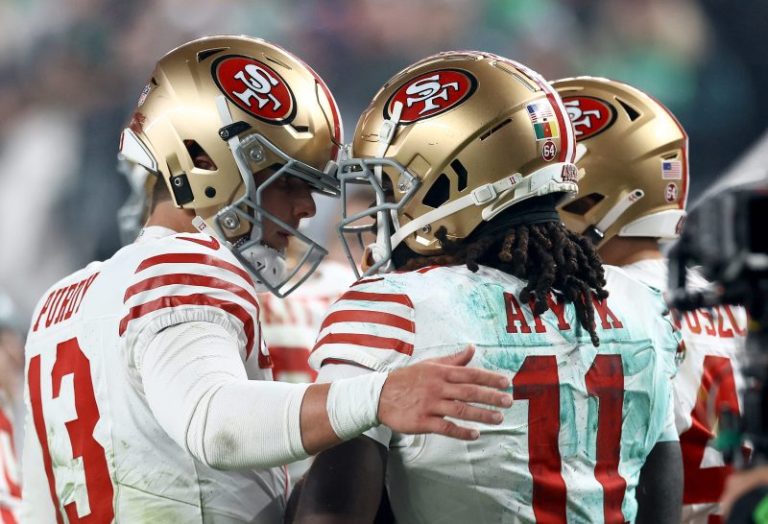
After all of that … Brandon Aiyuk will remain with the San Francisco 49ers for the long haul.

Following several months of tense negotiations – which included trade talks with other teams – and some mixed messages, the budding fifth-year wide receiver agreed to a four-year deal Thursday evening worth up to $120 million ($76 million guaranteed), per multiple reports. Thus ends one of the stranger NFL contractual standoffs in recent years.

But make no mistake, all this sound and fury will signify major ramifications in Silicon Valley (and elsewhere) at some point. The following parties seem most likely to benefit and, perhaps, be adversely affected by Aiyuk’s new arrangement:

WINNERS

Brandon Aiyuk

Duh. He’s coming off his best season (75 receptions for 1,342 yards and 7 TDs), yet has never been a first-team All-Pro, Pro Bowler or even the main threat in the Niners’ robust offensive attack. Nevertheless, Aiyuk becomes the sixth wideout (joining A.J. Brown, Tyreek Hill, Justin Jefferson, CeeDee Lamb and Amon-Ra St. Brown) with an extension averaging $30-plus million annually – all of them signed this offseason.

NFL STATS CENTRAL: The latest NFL scores, schedules, odds, stats and more.

Brock Purdy

After Mr. Irrelevant’s stunning breakout as a rookie in 2022, he took another huge step by developing into a Pro Bowler in 2023 – Aiyuk a major factor in Purdy’s growth. In 20 regular-season games played together after Purdy became San Francisco’s QB1 in Week 13 of the 2022 season, the duo has 94 connections for 1,634 yards and nine scores – Aiyuk clearly overtaking fellow WR Deebo Samuel as the primary pass catcher last season. Now Purdy, who’s in line for his own financial windfall some time next year, has his deep threat back as he tries to take this team back to the Super Bowl while making his own on-field negotiating statement.

John Lynch

Whether it’s Aiyuk or Samuel or DE Nick Bosa or TE George Kittle or LB Fred Warner, Lynch, San Francisco’s eighth-year general manager, continues to burnish his reputation for getting his stars under contract – typically in the summer, if often right under the Week 1 wire.

Tee Higgins

From a statistical and deployment perspective, his résumé is fairly similar to that of Aiyuk (269 career catches for 3,931 yards and 25 TDs in four seasons). Higgins has 257 grabs for 3,684 yards and 24 TDs over the same period despite often being perhaps the third option in the Cincinnati Bengals’ offense himself. But saddled with a $21.8 million franchise tag for this season, there’s little question deals like Aiyuk’s are likely to make Higgins a very rich man in 2025 – maybe more so than his 2020 draft mate – when he’ll almost certainly vacate Cincinnati for the free agent market.

2024 49ers

Since the start of the 2019 campaign, San Francisco has reached two Super Bowls – both gut-wrenching losses to the Kansas City Chiefs – and four NFC title games. The Niners seem as close as ever to that long-awaited sixth Lombardi Trophy after falling in overtime of Super Bowl 58 six months ago now that they’ve retained one of their most dangerous weapons in what could be a “Last Dance” kind of situation given they’re likely to lose some key pieces in 2025 when it’s time to pay Purdy.

Trent Williams

While Aiyuk reported to training camp, if not to practice (or collect fines), the 49ers’ perennial All-Pro left tackle has been holding out while seeking an adjustment to his own salary at a time when the positional pay scale has escalated in the wake of new contracts signed by the Tampa Bay Buccaneers’ Tristan Wirfs, Detroit Lions’ Penei Sewell and Minnesota Vikings’ Christian Darrisaw. With Aiyuk’s business concluded, time for Lynch to refocus in order to pull one more rabbit out of his salary-cap cap if he’s to get, arguably, his team’s best player back in the fold in time for the ‘Monday Night Football’ opener against the New York Jets on Sept. 9.

All NFL news, on and off the field. Sign up for USA TODAY’s 4th and Monday newsletter.

LOSERS

Trent Williams

He’s got three years remaining on a pact that’s out of guarantees and averages slightly more than $23 million per season, which slots Williams, widely regarded as the league’s premier tackle, sixth at his position. However he’s 36, will need time to get into football shape and has seemingly been on the backburner when so much focus has been devoted to Aiyuk. But make no mistake, the 49ers – Purdy and RB Christian McCaffrey, specifically – have shown to be a fundamentally different offense when “Silverback” isn’t part of it.

2024 NFC contenders

Just when it seemed like the conference’s preeminent power might be buckling amid its personnel crises, those matters continue to resolve. Not to say the Detroit Lions and Green Bay Packers can’t still knock off the Niners – as both very nearly did in the 2023 postseason – who could also face challenges from the Philadelphia Eagles, Atlanta Falcons, Los Angeles Rams and potentially others in 2024. But assuming Williams gets mollified and S Talanoa Hufanga and LB Dre Greenlaw reclaim something close to their peak forms once they’re back from injuries … well, San Francisco should remain very tough to derail.

Ja’Marr Chase

Higgins’ teammate with the Bengals, Chase is also striving to rocket past that now-established $30 million per year threshold reserved for elite wideouts. However unlike Aiyuk, Lamb and Jefferson, who all had one year left on their rookie deals, Chase, the No. 5 overall pick in 2021, has two remaining on his and a team owner (Mike Brown) known for taking a hard line on such matters. As Chase’s practice status becomes a daily story in Cincinnati, this now appears to be the fiscal showdown to monitor.

Russell Wilson and Justin Fields

The Pittsburgh Steelers’ current and future QB1s, respectively – book it in Fields’ case – they won’t be welcoming Aiyuk to a passing attack that really could’ve used some juice beyond WR George Pickens. The Steel City was Aiyuk’s preferred destination had a compromise not materialized in the Bay Area, but now the Steelers are left to feel like little more than the leverage ploy they ultimately were.

Deebo Samuel

With Aiyuk’s bag coming in, Samuel is officially WR2 here – his bank account included given his extension averages $23.85 million before expiring in the spring of 2026. How’s that gonna play moving forward? Could Samuel even be a roster casualty next spring, when it’s time to mint Purdy and given this year’s first-round investment in Ricky Pearsall, also a receiver (albeit different in style from Samuel)? Stay very closely tuned.

***

This post appeared first on USA TODAY

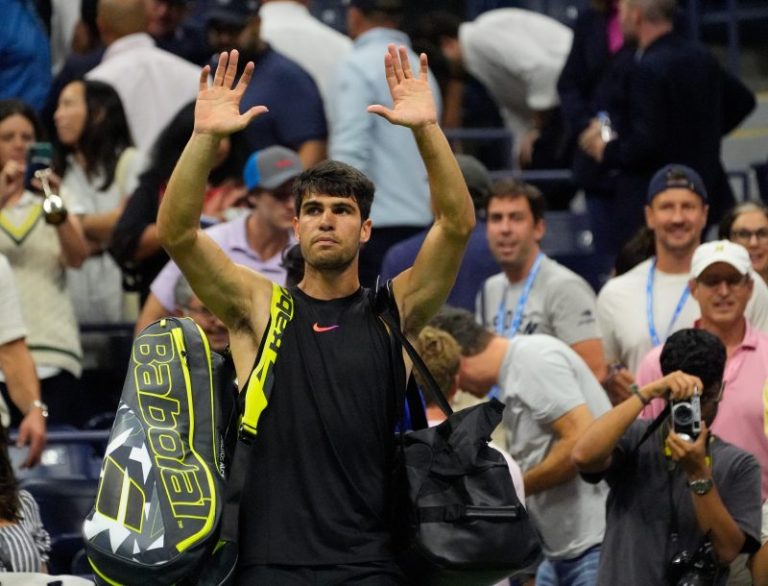
NEW YORK— Former champion Carlos Alcaraz’s Grand Slam winning streak came to a screeching halt at the US Open on Thursday as the Spanish third seed was thumped 6-1, 7-5, 6-4 by unseeded Dutchman Botic van de Zandschulp in the second round.

An off-colour Alcaraz never recovered from a shaky start and made unforced errors throughout at a stunned Arthur Ashe Stadium as the inspired Van de Zandschulp snapped the French Open and Wimbledon champion’s 15-match winning run at the majors.

It was the Paris Olympics silver medalist’s earliest exit at a Grand Slam since Wimbledon in 2021.

‘I don’t know what to say right now. First of all, I think he played great,’ Alcaraz said.

‘He didn’t make a lot of mistakes that I thought he was going to do so I was confused a little bit.

‘I didn’t know how to manage that.’

The 21-year-old was on the back foot early on as Van de Zandschulp claimed the opening three games with some resolute defending from the back of the court, and the Dutchman broke again in the sixth game en route to taking the first set.

Alcaraz produced a stunning forehand pass to hold serve in the first game of the next set but the four-time major winner’s struggles to close out points resurfaced as Van de Zandschulp broke for a 2-1 lead.

A tactical tweak to return serve from deeper helped Alcaraz break back immediately but the 2022 champion gifted his opponent another break with a double fault and Van de Zandschulp went on to comfortably double his advantage in the match.

After briefly leaving the court before the third set, Alcaraz found himself in deeper trouble after a wayward forehand handed Van de Zandschulp a break.

He hit back immediately and found his smile again, but world No. 74 Van de Zandschulp got his nose in front and completed a stunning upset on serve.

‘I didn’t feel well hitting the ball,’ Alcaraz said. ‘I think I made a lot of mistakes and when I wanted to come back … it was too late.’

Former New York quarterfinalist Van de Zandschulp, hampered by injuries to his left foot in the last two years, was lost for words after the biggest victory of his career.

‘It’s been an incredible evening. First time for me having a night session on Arthur Ashe. The crowd was amazing. Thank you for that. Unbelievable night,’ said Van de Zandschulp.

‘I think from point one here today I believed (I had) a chance. I had some nerves but if you want to beat one of these guys you have to be unbelievably calm and keep your head there.’

Van de Zandschulp will next face Britain’s Jack Draper.

This post appeared first on USA TODAY